




















Part 2
Akbar Jamal
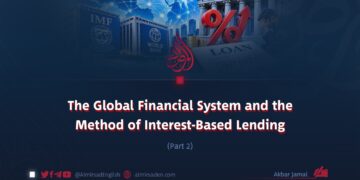
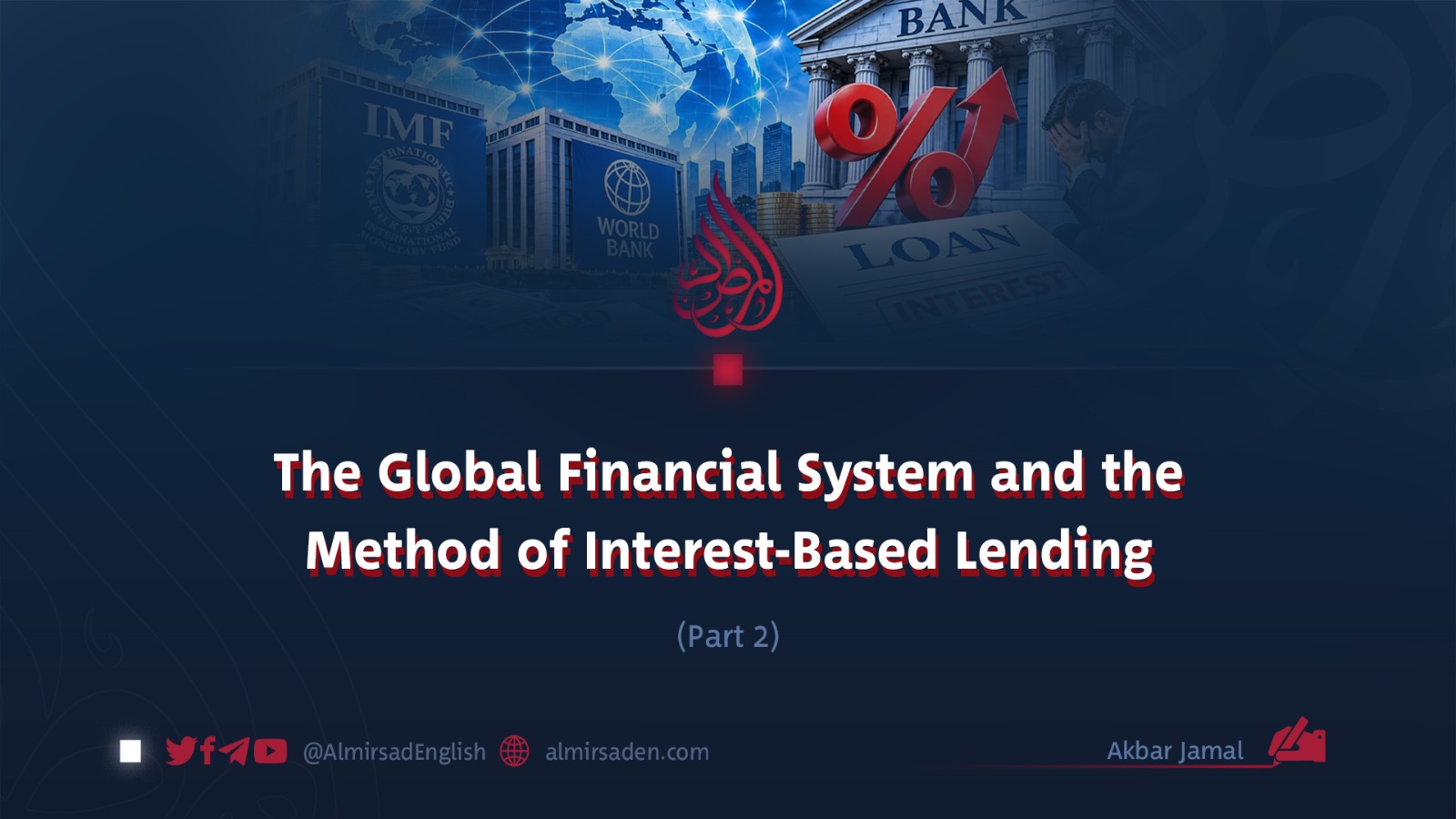
Once we understand how this simple principle and system works at the level of the local market, it becomes easy to see how the same exploitative system works at the global level. The whole global trade and financial system of the present age is built entirely on conventional interest-based principles. Just as a street shopkeeper charges rent in return for the passage of time, global financial institutions and major developed countries spread the same net of interest over poor and developing countries when they give loans or sell goods on credit.
One of the fundamental principles of the West’s conventional economic system is known as the “time value of money.” According to this theory, one dollar today is worth more than one dollar in the future. For this reason, in the view of this interest-based system, a person who lends money or goods to someone else for a long period has the right to receive extra money as interest in return for the delay.
To understand this global method better, we can take the example of recent oil agreements between Pakistan and Saudi Arabia, which in economic terms are called a “Deferred Oil Payment Facility.” Suppose Pakistan badly needs six billion dollars’ worth of crude oil over fifteen years to keep its domestic economy running and its industries turning, but its state treasury doesn’t have the cash dollars to pay on the spot. If the average price of crude oil on the international market is one hundred dollars ($100) per barrel, then for six billion dollars Pakistan would receive a total of sixty million (60,000,000) barrels of oil.
Pakistan asks Saudi Arabia: “Give us these sixty million barrels of oil on credit, and we’ll pay the actual price in installments over fifteen years.” Now, here the sacred principle of Islamic Sharia requires Saudi Arabia, because of the credit period, to raise the total price of these sixty million barrels from six billion dollars to, for example, six and a half billion dollars, and to set it as the final price from the start. In that case, this would be a lawful trade deal, that is, a “Bay’ al-Mu’ajjal.”
But since the whole global system runs on the principles of conventional financial loans, in global interest-based agreements this kind of exchange is carried out in a separate, exploitative way. Saudi Arabia’s financial fund gives Pakistan those same sixty million barrels of oil at the actual market price, one hundred dollars per barrel. The base price of the oil isn’t raised because of the credit. Instead, the agreement states: “We have given you six billion dollars’ worth of oil, and now those six billion dollars have become a financial debt that Pakistan owes us.”
Now, since you’ll repay this debt over fifteen years, interest of one point five percent (1.5%) will be charged every year on this six-billion-dollar debt. The global financial system uses the term “risk premium” to justify this interest. This means that over a long period there’s a risk of the debtor country going bankrupt or its currency losing value, and this interest is charged to compensate for that risk.
Now let’s examine, with a simple mathematical formula, the frightening economic difference this interest condition creates. If Pakistan had been able to buy the oil with cash, and had bought these sixty million barrels for cash dollars, it would have paid Saudi Arabia only the oil’s actual price, six billion dollars, and the deal would have ended there.
But since in this interest-based financing the deal is carried out on an interest-bearing loan, Pakistan will certainly repay the oil’s actual price, six billion dollars, over fifteen years, and in addition it will pay, separately, another ninety million dollars every year as 1.5 percent interest.
Over fifteen years this annual interest will slowly add up, and the total will reach one billion three hundred and fifty million dollars. As a result, Pakistan will pay a total of seven billion three hundred and fifty million dollars through the interest-based system for six billion dollars’ worth of oil bought on credit. This extra one billion three hundred and fifty million dollars isn’t part of the oil’s price; it’s only the “cost of time,” which, under the interest-based laws of global banking, is hung around Pakistan’s neck like a heavy yoke.
This is the method by which an item, once it leaves the merchant’s hands, turns into an interest-bearing debt and then squeezes the economic blood out of the debtor country.
On the other hand, in international trade no country carries out all its cash dealings or deals in goods on credit alone. The world’s great international banks and credit rating agencies are involved in this whole game too. When a country imports goods from abroad on credit, it’s forced to open a letter of credit (LC) through a bank in its own country. The financing costs between these banks and the late-payment penalties set in the agreements are tied to international interest-based benchmarks.
This means that if the debtor country doesn’t pay its installment on time, heavy penalties are charged on it under international financial rules, which is a form of taking interest on top of interest. This is the global financial structure that has trapped all the developing countries of the world in its net. No country, however much it wants, can easily extract itself from this system, because the roads into the international market pass through the corridors of these same interest-based banks and financial institutions.