




By Ehsan
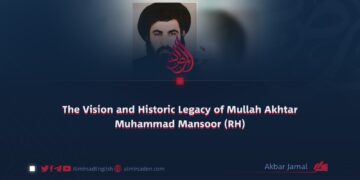
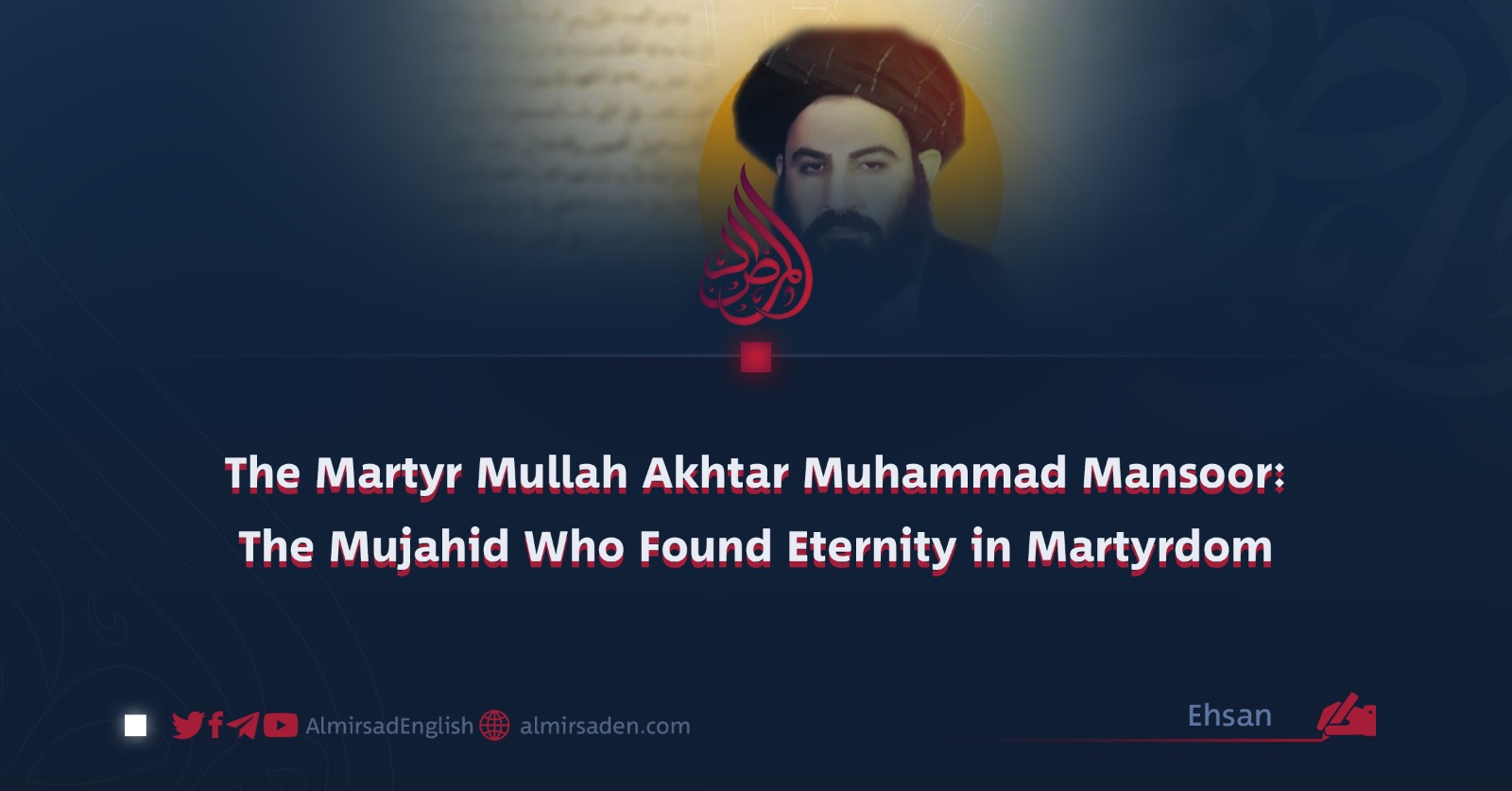
In the long and turbulent history of Afghanistan, the name of Mullah Akhtar Muhammad Mansoor (RH) was never recorded simply as that of an ordinary leader. It was recorded as a symbol of divine will and unshakeable faith. He was a man who combined courage with statecraft and excelled at both.
He proved something few men ever could: that a mujahid could welcome bullets in the trenches of war and, in the same lifetime, gather a scattered Ummah under one banner.
Who would believe that a man could return to the battlefield after thirteen deep wounds? This is not ordinary courage. It is a portrait of faith that breaks through the walls of physical limitation. In the Battle of Sanzari, Mullah Akhtar Muhammad Mansoor (RH) fought not only with weapons but with an unbreakable will, a will rooted in deep conviction that his path was righteous. With his wounded body, he showed others that jihad is not only a fight against an external enemy. It is also a struggle against the fear and weakness within oneself.
Allah Almighty says in the Holy Quran:
«وَالَّذِينَ جَاهَدُوا فِينَا لَنَهْدِيَنَّهُمْ سُبُلَنَا» (العنکبوت: 69)
“As for those who strive in Our cause, We will surely guide them to Our ways.”(Surah Al-‘Ankabut: 69)
Mullah Akhtar Muhammad Mansoor (RH) was one of the clearest living examples of this verse.
After the passing of Amir al-Mu’minin Mullah Muhammad Omar (RH), many believed the Islamic Emirate of Afghanistan (IEA) would splinter and fall apart. But in that critical moment, Mullah Akhtar Muhammad Mansoor (RH) drew on wisdom, patience, and foresight in a way that not only prevented the fracture but gave the jihad new shape and new strength. He turned divisions and contradictions into unity through reason and clarity of vision. He proved that a true leader is one who steers the Ummah’s ship to safety in the most treacherous of conditions.
He turned asymmetric warfare into an art. Military analysts might explain his tactics, but his real genius lay in the fact that every operation carried a distinct message. The offensives in Kunduz and Helmand were not merely military assaults. They were declarations to the enemy that the spirit of the mujahideen could never be broken, and assurances to the mujahideen that their path remained true and victory was drawing near.
His every move both unsettled NATO forces and stirred the hearts of believers with renewed resolve. This was no longer just war. It was the art of resistance in its purest and most elevated form.
And then the American drone found its target. That tireless mujahid, that shrewd and far-sighted leader, embraced martyrdom. The enemy believed that with his martyrdom, the road of jihad would be sealed shut. They did not understand what they were dealing with. Martyrdom is not the end of a mujahid’s road. It is the beginning of a new chapter.
Allah Almighty says in the Holy Quran:
«وَلَا تَحْسَبَنَّ الَّذِينَ قُتِلُوا فِي سَبِيلِ اللَّهِ أَمْوَاتًا بَلْ أَحْيَاءٌ عِنْدَ رَبِّهِمْ يُرْزَقُونَ» (آل عمران: 169)
“And never think of those who have been killed in the cause of Allah as dead. Rather, they are alive with their Lord, receiving provision.” (Surah Aal ‘Imran: 169)
With his martyrdom, Mullah Akhtar Muhammad Mansoor (RH) breathed new life into the very meaning of jihad. That meaning lives on today in the heart of every mujahid, and no drone, no bomb, can take it away.
Looking at his legacy now, one almost hears his voice, in that warm Kandahari accent, saying: “Every wound of mine was a window toward the light, and every apparent defeat was a step toward the final victory.”
And so, in the end, one question must be asked. What were all these sacrifices for? What was all this endurance for? Perhaps the answer is found in the deep, echoing silence of the mountains of Kandahar, those same mountains where the memory of this unforgettable hero still wanders and whispers: “Jihad has no final breath. This path is the path of light, and light never dies.”
إِنَّا لِلَّهِ وَإِنَّا إِلَیْهِ رَاجِعُونَ
“We belong to Allah, and to Him we return.”