


















Part 1
By Ehsan
Throughout Islamic history, movements have repeatedly emerged that, in the name of religion but on a completely deviant path, damaged the intellectual and social foundations of the Muslim Ummah. The first and most influential of these was the group that appeared in the first century of the Hijra and came to be known as the Khawarij.
They were the first to open the door to declaring Muslims apostates. Under the slogan of “There is no judgment except that of Allah,” they split from the Muslim community and declared the blood of those who disagreed with them to be lawful. They were crushed in their own time, but their ideology did not die. It kept coming back to life across different periods of history, in the form of new groups and sects.
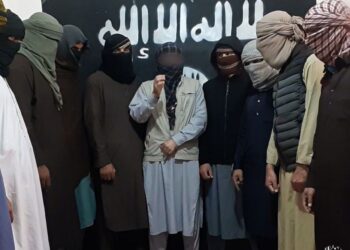
What the world today knows as the Islamic State of Iraq and al-Sham, or simply ISIS, is in reality a continuation of that same old deviant movement. Dressed in new clothes and using modern tools, ISIS pursues the very ideas upon which the Khawarij built their movement: the widespread excommunication of Muslims who disagree with them, rebellion against legitimate rulers, a shallow and distorted understanding of religion, and the belief that the blood of anyone who does not share their views is lawful.
The only real difference between the Khawarij and ISIS is in tools and technology, not in foundations or ideology. The Khawarij fought with swords and speeches. ISIS, however, has used advanced military equipment, online platforms, professional media networks, and high-quality film productions to commit some of the most brutal crimes of modern history in the name of Islam.
To properly understand ISIS and grasp its true nature, it is not enough to look only at what happened in Iraq and Syria in recent years. This takfiri group is the product of a complex interaction between three connected factors.
The first is its historical and theological roots, which go back to the Khawarij movement. Without understanding that legacy, any intellectual analysis of ISIS remains incomplete.
The second is the regional and political conditions that emerged in Iraq and Syria after the American occupation, the dismantling of state institutions and the army, sectarian discrimination, and years of civil war. These conditions created fertile ground for the growth of organized violence.
The third is the power vacuum that emerged as central governments weakened and exhausting wars dragged on. This vacuum gave ISIS the opportunity to transform itself from a hidden underground group into a self-declared state, one that came to control vast territories and generate revenues worth billions of dollars.
In this article, and in the series that will follow, we will first examine the roots of ISIS and the factors behind its emergence. We will look at the regional conditions, the power vacuum, and the role played by earlier takfiri movements in paving the way for its rise.
We will then examine and critique ISIS’s ideological foundations, particularly its views on concepts such as Tawhid, Takfir, the Caliphate, and Jihad.
After that, we will study the group’s practical methods, including its organized violence, media propaganda, recruitment strategies, and use of online platforms.
We will also examine the presence and activities of ISIS in Afghanistan and the crimes committed by the group during the years of foreign occupation.
Finally, we will analyze the security, social, intellectual, and cultural consequences of this movement for Afghan society and for the wider world.
The purpose of this series is to provide a documented basis for critiquing this takfiri movement and to help clarify for the public the intellectual and practical deviations that define it.