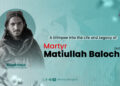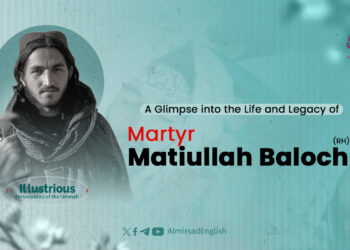








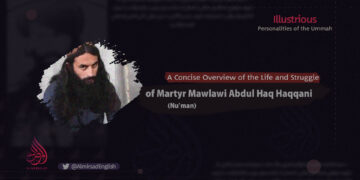
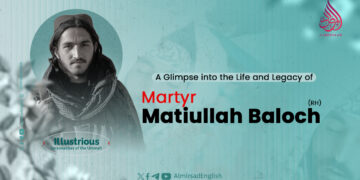

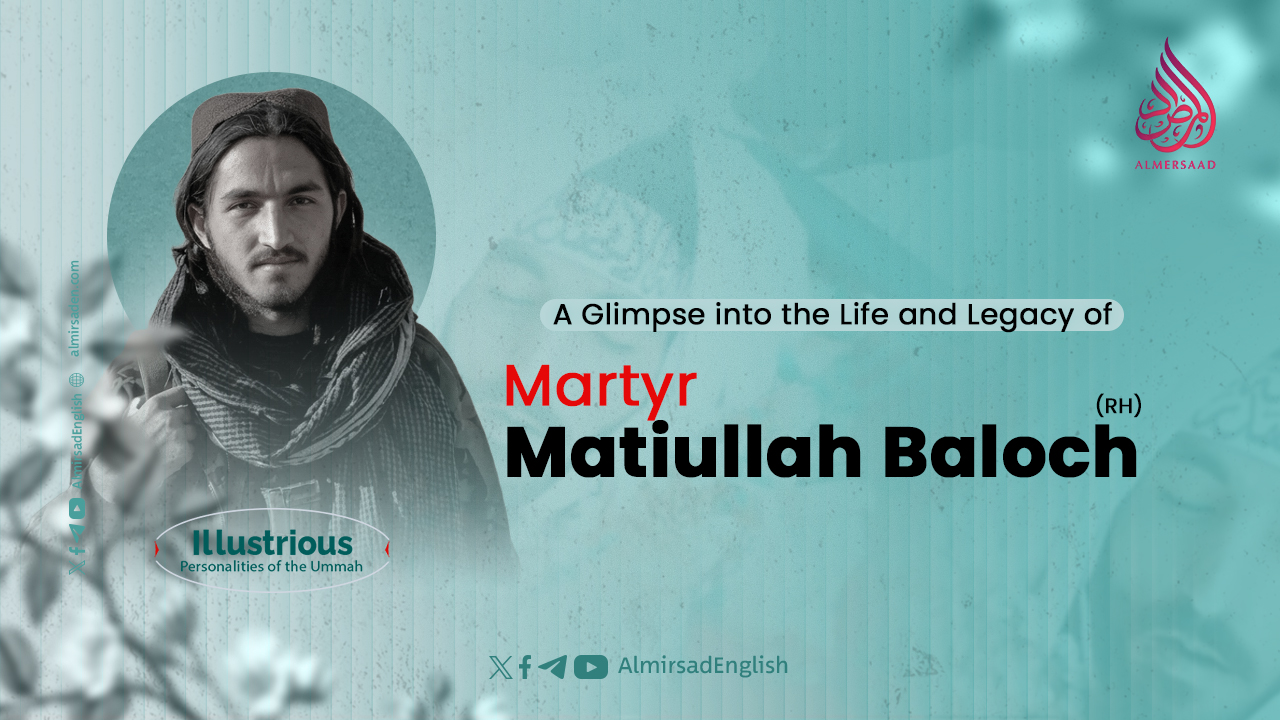
Martyr Matiullah Baloch (RH) was a bold, sturdy young man with Prophetic character and the beauty of Yusuf. He was the son of Zirgul and a resident of Olakhail village, Nerkh District, Maidan Wardak Province. He was born in 1377 (SH) into a religious and devout family committed to jihad and the cause of martyrdom.
His Education
He was still a young child when he began his basic religious and doctrinal studies with the imam of his village. The beauty of the Holy Quran and the light of religious knowledge took deep root in his heart. Later, he enrolled at Shahid Sabir Baryal High School, where religious studies and jihad training went hand in hand. During this period, he developed a deep understanding of the conditions in his village and district and witnessed firsthand the cruelty and abuses that the occupying forces and their local slaves were inflicting on Muslims.
The Start of Jihad, and His Struggle
Across the country, the cruelty of the occupiers and their local slaves had gone beyond all limits. Even Martyr Baloch’s family fell victim to this oppression. The local militias kept issuing warnings, threatening to drive the family out of their own village. Another of his brothers, Mawlawi Humayun (Hilal), a Hafiz of the Holy Quran, was a devout man and a leader of the istishhadi mujahideen in Kabul. He was thrown into the dark cells of prison, where he also became a Mawlawi while imprisoned at Bagram. Because of this, a cloud of hardship spread over their family. The savages of the Republic treated the families of mujahideen, devout people and the faithful with real cruelty.
His brother says: life was becoming increasingly difficult for our family and my brother. It was then that the Martyr Baloch, in 1391 (SH), raised the flag of his own faith and honor on the battlefield of jihad, in Bab al-Jihad, that is, Logar province. He spent the rest of his life in the hot trenches of jihad, fighting tirelessly to raise the religion of Allah and to free his country.
He was among the earliest and bravest mujahideen from Dand in Nerkh district: a man in love with his religion and his country, thirsty for martyrdom, a lover of the Messenger of Allah (PBUH), walking in the footsteps of the Sahaba (RA), devout, sincere, God-fearing and humble. He took an active part in numerous battles. Alongside his skill in combat, he became an expert in mines, a squad leader and the man responsible for his frontline post. He stood firm against both foreign and domestic enemies in his own district, to the point that he was present at every attack and every ambush in his area.
If you study the life of Khalid ibn al-Walid (RA) and compare it with the life and sacrifices of Martyr Baloch, you’ll see that Baloch followed the very same path and walked a straight course.
Baloch was deeply beloved by all believers, especially the young mujahideen. Everyone loved him and respected him.
He began his jihad in the Babus area of Logar province, then extended the reach of his sharp sword to Nerkh district, Maidan Shahr, Jalrez and other districts of Maidan Wardak province. He drove many savage enemies, including those who opposed the religion and mocked its rites, down into the pit of Hell. No spy or traitor ever found peace in his presence. Just hearing his name made every faithless man tremble, and that was clear proof of his faith and piety.
He also fought the Daeshis bravely and fearlessly. He travelled to Nangarhar province several times with his companions on organized deployments. He used to recount one incident from such a deployment:
“During a battle, a Khariji from Daesh announced that he was surrendering. But when he came closer to us, he tried to fire at our men. We did not let him shoot. We shot him in the head before he could fire. Our companions said among themselves, ‘Fighting the mujahideen is no easy task. By that time, we had captured many areas from the Daeshi Khawarij.’ Two days later, as we were heading back to our base, our companions said, ‘Let’s go and see what has happened to the body of that Daesh fighter.’ A foul, putrid stench was coming from his corpse. Meanwhile, our martyred companions would lie out in the sun on the battlefield for months after their martyrdom, yet their bodies would never decompose or begin to smell. This incident strengthened our faith even further.”
Memories of His Companions
In the words of Muhammad Alam Mubashir:
Matiullah Baloch was very brave. Whatever the situation, he encouraged his friends to be courageous. Whether it was a raid, a battle, an ambush or an assault, he always spoke about patience, steadfastness and obedience. His lips were always moving in remembrance of Allah. Baloch was a man of true honor and bravery, and to us, he held the status of a commander. He longed for martyrdom like a man possessed, with no attachment whatsoever to this world or anything in it. He was a model of good character throughout the region, and that is why his memory remains with us to this day.
In the words of Nasibullah Baloch:
When the hero Baloch was wounded in battle, no one knew about it except the fellow mujahideen who were with him at the time. Baloch didn’t even tell his own mother that he’d been wounded. My younger brother and I were the only ones who knew Baloch had been wounded, and he’d been moved to Chak district from Nerkh district for treatment, for a long stretch of time. Some time later, he went right back to his jihad, just as before. For a long while, he kept a small scarf wrapped around his head. Baloch had been wounded on the head by shrapnel from a grenade launcher. Much later, we were all sitting together at home, and the scarf slipped from his head a little. His mother noticed it: where he’d been hit, the hair had been cut short. His mother said, “Son, why is your hair like this, long in some places and short in others?” Then she looked at us. “What’s going on here? You two didn’t say anything happened to him. We heard he went out with other wounded men, meaning he himself was wounded too.” Baloch told her, “I wasn’t wounded. The other companions were wounded, I just went along with them.”
The Story of His Martyrdom, in His Brother’s Own Words
On the night of 20 Sawr 1397, it was extremely difficult and frightening. The whole night passed under the savage bombing of the occupiers’ planes, drones and helicopters. It was the kind of night when the stillness of the sky was shattered by the crash of bombs, when the shadow of death spread across the land in every direction and hearts trembled over the fate of their loved ones.
He says: I had gone to Siwaki Bazaar, the market located in Band-e Chak district, Maidan Wardak province, where the mujahideen used to find a lot of what they needed during the days of the revolution. I’d spent the day exhausted from a long journey. When I came home in the evening, there was a strange silence hanging over the courtyard and the rooms of the house. Only my elder brother and my younger nephew were at home.
While we were eating, Mother turned to me and said:
“Where’s Baloch? Where did he go?”
I told her:
“It was his turn on the front line. His shift began this evening, but he still hasn’t contacted us.”
My mother put her hand into her pocket and pulled out a white cloth, with the blessed kalima “There is no god but Allah, Muhammad is the Messenger of Allah” written on it. She showed me the cloth and said:
“When Baloch left the house today, he told me: Mother, keep this kalima with you. If I’m martyred, wrap it around my head. Mother, this is my last visit with you.”
I smiled and told her:
“May Allah SWT not take him so soon!”
But my mother fell silent. What Baloch had said to her had stirred an unfamiliar fear deep in her heart. She didn’t know whether her son’s words would really turn out to be his last message of farewell, or just the emotional words of a passing moment.
But fate had written things differently. Those very words turned out to be the last meeting between his mother and her son, Matiullah Baloch.
He says: we finished our meal. My elder brother called out:
“Ahmadi! The congregational prayer is about to end, hurry up!”
At that time, our younger brother Nasibullah was known as Ahmadi. After Matiullah Baloch’s martyrdom, he became known as Baloch.
I headed toward the mosque with my brother. Along the way he said to me:
“There don’t seem to be any surveillance aircraft tonight. Don’t go anywhere!”
I told him:
“In these circumstances, nothing can be trusted. We’ll make our arrangements after the prayer.”
We reached the mosque. The congregation had begun, and people were standing in prayer. We hadn’t even finished the closing greeting when suddenly the sound of B-52s, drones and helicopters rose up overhead. Moments later, heavy bombing began. The sound of explosions shattered the silence of the night and filled the whole area with fear and horror.
We finished the prayer. The crash of bombs kept spreading. My elder brother let out a cry of pain and worry:
“Ah! It seems like they’ve martyred them!”
He knew that Baloch and his companions were on the front line, and that this was likely an enemy raid against them.
It was around eight at night. The light of the fourteenth-night moon had broken through much of the night’s darkness, and you could see far into the distance. I stepped out of the mosque and pulled my radio from my pocket. I could hear the voices of the mujahideen. The drones and helicopters were circling closer and closer, the sound of bombs and gunfire growing by the minute. All the mujahideen were shouting Allah’s name, telling each other that the mujahideen on the guard line were surrounded.
Everyone was trying to contact the mujahideen on the line to find out their condition and hear their voices.
I came home. My mother saw how anxious I was and asked:
“What’s going on?”
I told her:
“Mother, I don’t know. There’s fighting down in the valley, or maybe a raid on someone.”
My mother asked, worried:
“Is it a raid on Baloch?”
I answered quickly:
“No, Mother. It’s down in the valley. Drones, helicopters and B-52s are bombing hard.”
I turned off my radio. I didn’t want my mother worrying any more over her son’s fate. I finished the rest of my prayer. My mother came into the room and sat with me. Before I had even turned my head to finish the prayer, she said again:
“Contact Baloch. There’s a raid on them!”
I brought the radio close to my mouth and called out:
“Baloch! Can you hear me? Baloch!”
A voice came back:
“I can hear you, Ahmadi. No time to talk. Alhamdulillah, everyone’s fine. Keep praying for us!”
These few short words only deepened my mother’s worry. She said to me:
“Look, it’s a raid on them!”
I told her:
“No, Mother. It’s not on them.”
I stepped out of the room into the courtyard. The others were also asking about Baloch and his companions. We tried to contact one of the mujahideen on the line. He told us everything was fine, but the sound of bombing still hadn’t stopped. Drones, helicopters and B-52s kept striking, one wave after another.
I turned back to the radio. The mujahideen were calling out to each other:
“Our brothers on the line are with us, do something!”
But between each explosion, the shadow of worry only grew heavier. In one corner of my heart, fear had already raised its head, but I kept telling myself Baloch and his friends were probably safe.
I went back into the room and picked up my rifle. I wanted to leave the house and retrieve the rusty ammunition for the rifles, so I could take it to the mujahideen on the front line and help them. But my mother grabbed my hand and said firmly:
“For God’s sake, don’t go!”
When my mother held my hand, she was doing more than stopping her son from leaving. It was the cry of an anxious mother’s heart, a mother who didn’t want another piece of her own heart walking into the jaws of death.
I told her:
“Alright, Mother. I won’t go. Don’t you go outside either.”
The bombardment continued. The sounds of drone strikes and B-52s grew nearer, then faded into the distance. The aircraft dropped two heavy bombs in succession on the mujahideen, once again turning the silence of the night into terrifying explosions.
I turned back to the radio. Suddenly a mujahid’s voice rose up:
“Our friends have been martyred! No mujahid is to leave his position!”
Those words hit my heart like a thunderclap. For a few moments my mind went blank. I didn’t know what to do. On one side, a fire of worry was burning over my brother’s fate. On the other, my mother sat right beside me, asking about Baloch with every word.
Mother leaned out of the window again and said:
“Call out to them. Ask how Baloch and his companions are!”
I told her:
“Mother, they are down there, and the bombardment is taking place above them. There is no precise information yet. They bombed the lower area once, and now they have attacked in Dadal Valley. Don’t go outside. Stay inside. Nothing is wrong.”
But I was saying all this only to reassure Mother. Inside me, the truth was burning like flames. How could I tell her that the piece of her heart, her dear Baloch, might be facing death? How could I hide the news of her son’s martyrdom from her when my own heart was breaking at the very thought of it?
I could neither leave the radio switched on nor bring myself to ignore its sounds. Every moment, I strained my ears for Baloch’s voice. I kept hoping I’d hear him again, hoping he’d say once more: “Ahmadi! Everyone’s fine.”
But that night passed between hope and worry. One moment my heart would brighten with the light of hope, the next the crash of bombs would spread a dark shadow of fear over that same light.
It was an extremely hard night. I didn’t know what to do with myself. On one side, there was a raid on my brother’s front line. On the other, my mother held my hand and wouldn’t let me go outside. I had neither the strength to go help my brother nor the heart to tell my mother the truth. The pain in my heart wouldn’t leave my lips, and the worry in my eyes couldn’t be hidden from my mother.
And so the whole night passed under the shadow of the occupiers’ savage bombing.
Finally, morning came.
The terrifying sounds of the night had given way to the silence of dawn, but this was no silence of peace. It was a sign that a great tragedy was about to unfold. We performed the dawn prayer and set off with my elder brother toward the guard post, the very place from which reports of the bombardment and raid had reached us during the night, the place to which all our hopes were tied.
The other men said that our friends had been martyred there.
We headed toward the martyrs too. With every step we took, our hearts pounded harder. Countless questions circled in my mind. Would Baloch be among them? Had he come out safe? Were those final words of his last night truly his last words in this life?
When we arrived, the other mujahideen of the village, young men and elders, had already gotten there before us. They had carried the martyrs up and laid them on the veranda of the mosque.
We came closer.
Among the martyrs, he lay there too, that young man, tall as a tree, intoxicated with love for jihad, dark-eyed, the one who, just yesterday, as he left the house, had entrusted his mother with a white cloth, spoken of the day of his martyrdom, and told her this was their last meeting.
Yes, Matiullah Baloch too had fallen, drenched in blood.
That night, which his mother spent waiting for her son’s return, became the heaviest night of her life. The son who had placed the white cloth bearing the kalima in his mother’s hands the previous evening now lay on the veranda of the mosque, stained with the sacred blood of martyrdom.
Those few short words from that night came back to my mind once again:
“Mother, keep this kalima with you. If I’m martyred, wrap it around my head.”
And I remembered my mother’s silence too, the silence she chose after her son’s words. Perhaps her heart had already sensed the coming of this parting, but even a mother’s heart didn’t want her son’s own words to become true.
But life sometimes has moments like this, when all a person’s hopes fall silent before fate.
After that night’s storm of bombs and raid, Matiullah Baloch could no longer answer his mother’s call. That voice his mother had waited for all night had gone silent forever. But his final words, the white cloth in his mother’s hand, and the sight of his martyrdom on the veranda of the mosque, remained in our hearts as a memory that will never fade.
کذالک والله حسیبه