












Ali Ansar
Afghanistan is a land of brave and honorable people. Since the day its people embraced Islam, they have remained firm and unshaken in their faith, like an anvil. For this Islam and this truth, they have offered many sacrifices. They have been tested, wounded and made to suffer. They have remained host to invasions, occupations, colonialism and raids, yet they have never been broken or forced to retreat. They never abandoned their religion or their cause. Rather, they made the invaders and uninvited guests pay dearly.
In the early years of the twenty-year occupation of Afghanistan, the Muslim homeland was once again waiting for the horrors and new trials brought by those who claimed to be humanitarian. There was no telling what the morning or evening would bring. Black smoke from bombs rose in every direction. The cries of the wounded mixed together, rivers of blood flowed, and innocent bones lay buried beneath collapsed mud walls. Fasts were broken in the middle of the night, the adhan was filled with sobs, the imam would be martyred beside the mihrab, and in the cells of the madrasas, the pages of books would be soaked in blood. This bloody plunder had been brought by those whose claims of humanity reached the heavens, yet everything here turned out to be the opposite.
But if on one side there were these devils and evil whisperers standing against Islam and the sacred Sharia, on the other side there were young men and true men who had both the will and the ability to destroy the nests of these devils, kill them and push them into the deepest pits of Hell. Jihad, one of the fundamental and important duties of Islam, had become fard ‘ayn against America and its allies. The ranks of jihad were formed and the armies of faith were brought together. This path had its stages of preparation, ribat, qital and istishhad, and those were chosen for it who had a firm connection with Allah Almighty.
This movement began once again under the leadership of Mullah Muhammad Omar (RH) with a large number of jihadi leaders standing beside him. Among them was the late Jalaluddin Haqqani (RH). He was the leader of a family of sacrifice and one of the leading figures of two great jihads. This great man trained people in jihad and qital and brought his brothers, sons, nephews, relatives and even strangers into the field of sacrifice. Nasiruddin, Badruddin, Omar and Hayatullah were his sons, and they reached the highest rank of martyrdom on this sacred path.
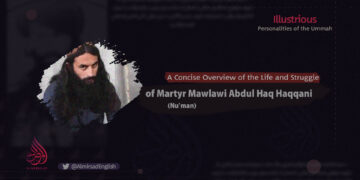
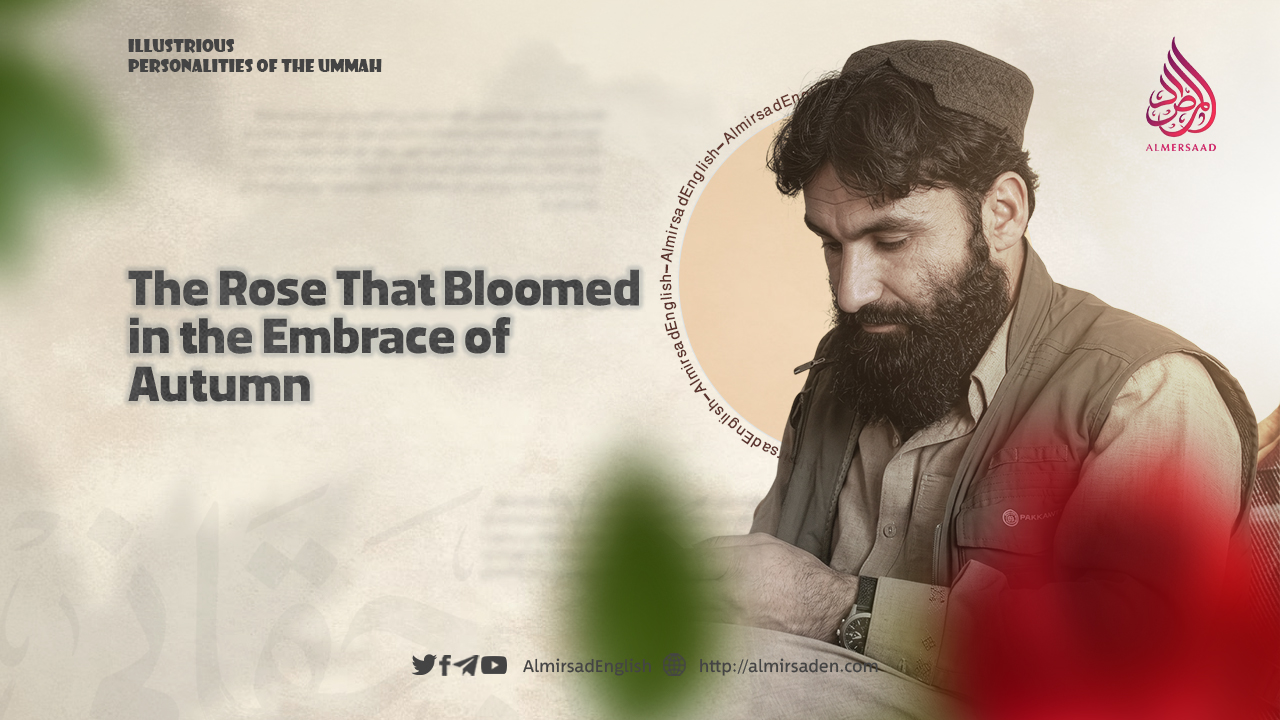
But among all of them, the martyr Hafiz Badruddin (may Allah accept him) stood apart in his excellence, dedication and effort. He was a leading young man of the istishhad ranks. Hafiz was born on the first day of Ramadan in 1406 and was raised under his father’s care in a spirit of jihad. He learned the morals, manners and beliefs of life, memorized the Quran at Mamba-ul-Uloom Madrasa and completed the early stages of religious education. He had great scholarly talent and ability, and for this reason he was especially dear to the late Jalaluddin Haqqani (RH). He would often tell him, “My scholarly inheritance will be left to you, and you will fill my place.”
But Hafiz’s passion and desire lay elsewhere. For some time, he fulfilled the duty of jihad in the ranks of the Islamic Emirate of Afghanistan (IEA) as an ordinary mujahid. Because of his intelligence and sharp understanding, however, the leadership appointed him as the head of the istishhadi battalion. He carried this great responsibility with great courage, sincerity and honesty until his final breath. Alongside this responsibility, he was also appointed military deputy in Khost for a period of time.
Hafiz Sahib had gathered golden flowers in the garden of istishhad. He organized these ranks with a very high level of skill. He planned many powerful, calculated and complex operations. In Kabul, Khost, Wardak and other provinces, he made the enemies of Islam food for the Ababil and left them swinging in the cradle of astonishment. Under Hafiz Sahib’s leadership, 75 heroic attacks were carried out. Among them were the attacks on the Inter-Continental Hotel, the American base in Khost and the Sayadabad base. Because of these jihadi and istishhadi operations, he became one of the individuals most wanted by the American forces. But they were unable to capture or kill him.
Eventually, on the 31st of Asad, 1391 SH, this young mujahid and leader of the istishhadi ranks was struck by an American drone and attained the high rank of martyrdom. The martyr’s body was shattered into pieces, with only his chest remaining intact. The mujahidin recognized him by that very chest. This was the blessing of the martyr Saeed and a miracle of the Holy Quran.
In revenge for the martyrdom of Hafiz, a planned istishhadi operation against the CIA office, which had been designed before his martyrdom, was carried out, and this great conspiracy was thwarted through the courage and sacrifice of the martyrdom seekers and mujahidin. The ranks continued on their path, and the dreams of the martyr were kept alive.