






Part 8
Dr. Humam Sultani
The Truth About the Killings of Salafi Scholars in Afghanistan and the Religious Propaganda Against the IEA
One bitter tragedy of Afghanistan’s history is that wars on this land have been fought with ideas, creeds and religious disagreements as well as with guns and gunpowder. At times a power struggle was given a religious coloring, at times jurisprudential disagreements were made the basis of enmity, and at times a few individual incidents were turned into accusations against a whole system and used to open new fronts of opposition.
After the Islamic Emirate of Afghanistan (IEA) returned to power in August 2021, a similar propaganda chain began. The martyrdom of some Salafi scholars in Afghanistan was turned into a pretext for the claim that the IEA, being Hanafi in fiqh and Maturidi in creed, supposedly can’t tolerate Salafi scholars and other madhhabs. The Daesh takfiri circles used this accusation for their own intellectual and doctrinal aims, while some religious and political circles in Pakistan also made it a subject of criticism against the IEA.
Yet amid all this propaganda and clamor, a basic fact was overlooked. The killing of a scholar is one fact, identifying his killer is a separate question, and calling the killing a government’s organized religious policy is an entirely different claim again. Mixing these three matters and drawing conclusions from them amounts to reading events as one likes in order to prove a position already held, and that is no scholarly research.
The Foundational Status of Hanafi Fiqh, or Religious Enmity?
In Afghanistan, Hanafi fiqh has held a distinct religious, judicial and legal standing for centuries. The overwhelming majority of this country’s Muslims are historically tied to this juristic madhhab. For this reason, the IEA’s giving Hanafi fiqh a foundational standing in its judicial and legal system is neither new nor unusual; it continues Afghanistan’s earlier juristic and judicial tradition.
In various countries of the world, a particular juristic or legal madhhab is chosen as the base to establish judicial order and legal unity. Treating this administrative need as proof of enmity against other juristic schools is a plain scholarly fallacy. Islamic history bears witness that disagreements existed between the four juristic imams and their followers on many branch issues, yet a juristic disagreement alone was never made grounds to kill a Muslim or to violate his person and property.
Allah (SWT) says in the Holy Quran:
﴿وَمَن يَقْتُلْ مُؤْمِنًا مُّتَعَمِّدًا فَجَزَاؤُهُ جَهَنَّمُ خَالِدًا فِيهَا وَغَضِبَ اللَّهُ عَلَيْهِ وَلَعَنَهُ وَأَعَدَّ لَهُ عَذَابًا عَظِيمًا﴾ (An-Nisa 93)
“And whoever kills a believer intentionally – his recompense is Hell, wherein he will abide eternally, and Allah has become angry with him and has cursed him and has prepared for him a great punishment.”
The Messenger of Allah (PBUH) also said:
“كُلُّ الْمُسْلِمِ عَلَى الْمُسْلِمِ حَرَامٌ، دَمُهُ وَمَالُهُ وَعِرْضُهُ” (Sahih Muslim, Hadith 2564)
“The blood, honour and property of a Muslim is inviolable for another Muslim.”
With these clear Sharia rulings in place, a Muslim’s blood doesn’t become permissible merely because he belongs to another juristic madhhab. For this reason, treating Hanafi fiqh’s foundational standing in Afghanistan’s judicial system as proof of organized enmity against Salafi scholars is a baseless argument.
The Killings of Salafi Scholars: What Do the Incidents Show?
After the IEA returned to power, incidents of the killing of some Salafi scholars occurred in Afghanistan. These incidents can’t be denied, but the political and religious narratives built around them can’t be accepted without examination either. In early September 2021, the well-known Salafi scholar Sheikh Obaidullah Mutawakil was killed. In the same month, Mawlawi Muhammad Nabi Muhammadi was killed too, and on October 25, 2021, Mufti Saeedullah Sahil was martyred in Jalalabad by unknown gunmen.
On July 13, 2022, in Kabul, Sheikh Sardar Wali Saqib, the well-known head of Jamiat Ulama Ahl-e-Hadith, was martyred. One notable aspect of this incident is that Sheikh Sardar Wali Saqib was among the Salafi scholars who had expressed loyalty to the IEA’s leadership. His close associates held Daesh responsible for this killing. On August 5, 2022, in Chaparhar district of Nangarhar province, Mawlawi Muhammad Qayyum was martyred at the time of the morning prayer, and reports spread of Daesh involvement in this killing.
But one fact here carries great weight: the Daeshi Khawarij have also targeted those Salafi religious figures who opposed their takfiri ideas. The scholars who support the IEA have likewise not been safe from their bloody attacks.
Turning Accusations into Fact: A Dangerous Game
The most worrying side of this discussion is that sometimes, as soon as an incident happens, a verdict on responsibility for it is announced as well. No investigation is awaited, no evidence is weighed, and no contradictory reports are compared. A single accusation is put forward and then repeated again and again, until, little by little, it’s presented as an accepted fact. Islamic Sharia strictly forbids this kind of conduct.
Allah (SWT) says:
﴿يَا أَيُّهَا الَّذِينَ آمَنُوا إِن جَاءَكُمْ فَاسِقٌ بِنَبَإٍ فَتَبَيَّنُوا أَن تُصِيبُوا قَوْمًا بِجَهَالَةٍ فَتُصْبِحُوا عَلَىٰ مَا فَعَلْتُمْ نَادِمِينَ﴾ (Al-Hujurat 6)
“O you who have believed, if there comes to you a disobedient one with information, investigate, lest you harm a people out of ignorance and become, over what you have done, regretful.”
Imam Ibn Kathir (rh) writes in his tafsir of this verse:
“يَأْمُرُ تَعَالَى بِالتَّثَبُّتِ فِي خَبَرِ الْفَاسِقِ لِيُحْتَاطَ لَهُ” (Tafsir Ibn Kathir, Surah Al-Hujurat 6)
“Allah (SWT) commands investigation and caution regarding the news of a disobedient.”
The Messenger of Allah (PBUH) also said:
“لَوْ يُعْطَى النَّاسُ بِدَعْوَاهُمْ لَادَّعَى نَاسٌ دِمَاءَ رِجَالٍ وَأَمْوَالَهُمْ” (Sahih Muslim, Hadith 1711)
“If people were given whatever they claimed (in disputes), some people would claim the lives and wealth of others.”
This is the foundational principle that has to be kept in mind in the killings of Salafi scholars in Afghanistan too. Turning the news of one killing straight into a political accusation, then presenting that same accusation as a religious crime of a whole government, and finally using it to stoke religious hatred all conflict with the Holy Quran’s command to investigate and with the principles of Islamic justice.
The Daesh Takfiri Thought and the Misuse of Religious Disagreements
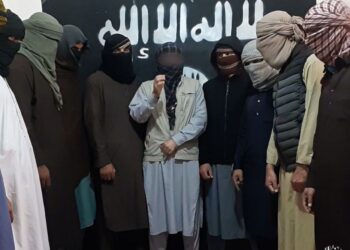
In its intellectual and propaganda efforts against the IEA, the Daeshi Khawarij have also exploited juristic and doctrinal disagreements. This group has made the Taliban’s Hanafi and Maturidi connection a target of criticism, raised questions about the legitimacy of their religious and political system, and taken the path of takfir against its opponents. Here the real problem goes beyond a scholarly disagreement: that disagreement gets turned into rulings on disbelief and faith, and then into a license for armed confrontation.
Imam Abu Ja’far al-Tahawi (rh) (321 AH) says in his famous book “Al-Aqida al-Tahawiyya”:
“وَلَا نُكَفِّرُ أَحَدًا مِنْ أَهْلِ الْقِبْلَةِ بِذَنْبٍ، مَا لَمْ يَسْتَحِلَّهُ” (Al-Aqida al-Tahawiyya, creed no. 78, p. 21)
“We don’t excommunicate anyone who prays toward Mecca because of their sins as long as he doesn’t consider them lawful.”
The reliable scholars of Ahl al-Sunnah have made the fulfillment of conditions and the absence of impediments necessary for declaring a specific individual a disbeliever. Passing judgment on a Muslim’s faith on the basis of a juristic disagreement, political opposition or some doubtful statement alone is no Sharia research. It is the Khawarij’s intellectual path.
The harmful results of Daesh’s takfiri narrative show most clearly here: against its religious and political opponents, this group hasn’t been content with intellectual opposition. In many cases it has made them targets of armed attacks too.
The Difference Between Daesh and the Salafi School
It also needs clarifying here, as a foundational fact, that Daesh is a distinct armed takfiri group, while the Salafi school is a religious and scholarly current. Treating the two as the same is a scholarly mistake and can also increase religious turmoil in the country. Many Salafi scholars in Afghanistan have clearly rejected Daesh’s takfiri ideas and views and condemned this group’s extremist course, and they have also expressed cooperation and unity with the IEA and given it a pledge of allegiance in accordance with Sharia. This fact itself refutes the general impression that Salafi scholars are necessarily supporters of Daesh or opponents of IEA.
Counting Daesh as Salafism’s representative is wrong, and calling the killing of a Salafi scholar the result of the IEA’s state policy without any proof is wrong too. In both cases the truth is distorted and religious disagreements are used to deepen political enmity.