



Akbar Jamal
On the one hand, Islam is an enduring religion that never grows old, for the whole world. On the other, it is a plain fact that followers of different religions, and even those who accept Islam, hold differing opinions. But one great feature of Islam is that, besides being enduring, it is a religion of wide tolerance and patience. For this reason, Islam listens to every reasonable objection and answers it, so that the objector can learn the truth about Islam and, if he is so inclined, accept the religion.
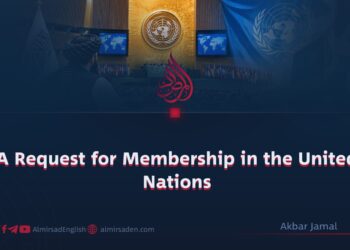
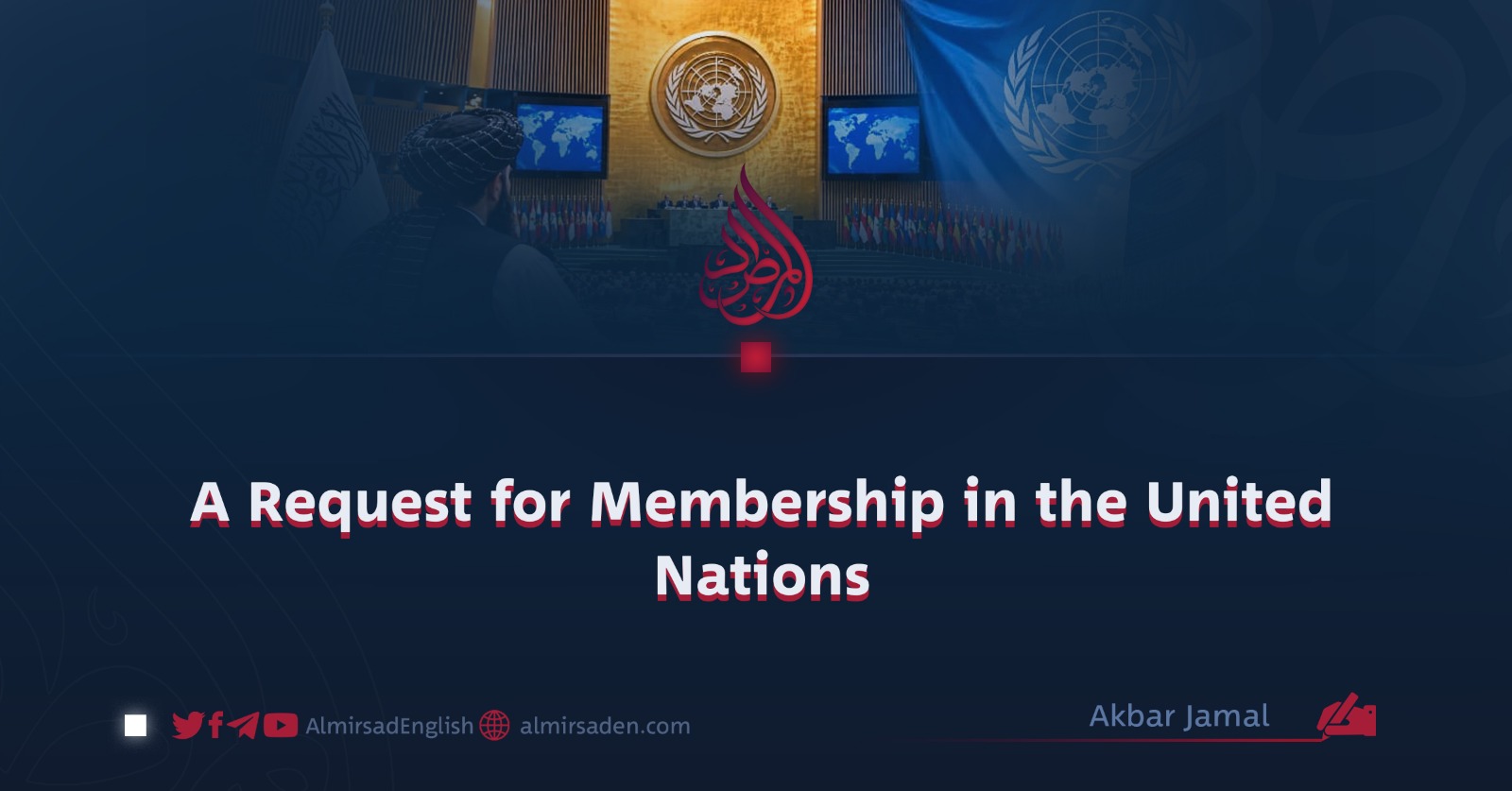
In this context, since the Islamic Emirate of Afghanistan (IEA) represents the Islamic system and is a government built on it, dealing with other religions, ideas and systems is unavoidable in its international relations. So some people want to know: “Since most UN laws conflict with Islam, why does the IEA ask the UN for official recognition and for membership in the organization?”
If we look at this question plainly, it is clear that the IEA’s request to this international organization for official recognition, and for its membership to be restored, touches one of the major intellectual and ideological questions of our age. To understand the answer to this question, a clear, decisive one free of needless reinterpretation, we need to study the independent chapter of Islamic Sharia that Islamic jurists called Fiqh al-Siyar and described as Islam’s law of international relations.
Islam is more than a few individual acts of worship; it is a complete system of life. Islam accepts that on this earth, alongside Muslims, followers of other religions also live, and an Islamic state must have dealings, treaties and diplomatic relations with them for its survival and stability and to invite people to the faith. A basic principle of Islamic Sharia is that establishing diplomatic relations with a non-Islamic state or international organization, making a treaty with it or asking it for official recognition in no way means that an Islamic government wholeheartedly accepts that state’s or organization’s disbelief or non-Islamic ideas. Such dealings are carried out under the Sharia principles of “jalb al-masalih” (securing benefits) and “dar’ al-mafasid” (averting harms).
The clearest practical example of this principle can be seen in the Seerah of the Prophet (PBUH) and in the Treaty of Hudaybiyah. After the Islamic state was founded in Medina, the Prophet (PBUH) sent official diplomatic letters to the great non-Islamic powers of his day, Caesar of Rome, Kisra of Persia and the king of Abyssinia, and made written treaties, such as the one at Hudaybiyah, with the polytheists of Makkah, even though the whole Quraysh system rested on shirk.
Imam Ibn Qayyim al-Jawziyyah (rh), in his famous book “Zad al-Ma’ad fi Hady Khayr al-‘Ibad” (vol. 3, pp. 260-265, Mu’assasat al-Risala edition, Beirut), explained the jurisprudential (fiqh) benefits of the Treaty of Hudaybiyah. He made clear that creating an atmosphere of peace and treaties with non-Islamic powers gives the Islamic state economic stability, defensive readiness and a chance to carry Islam’s message to the world.
Great imams throughout the history of Islamic fiqh have explained this principle of international relations clearly. Imam Muhammad ibn al-Hasan al-Shaybani (d. 189 AH), the great Hanafi imam and founder of Islamic international law, set it out in his well-known work Kitab al-Siyar al-Kabir (al-Sarakhsi’s commentary, vol. 5, chapter on al-muwada’a, p. 1689, Arab League edition, Cairo). He held that when it serves Muslims’ benefit and interest, peace treaties (muwada’a), diplomatic relations, and bilateral dealings with non-Islamic states are lawful under Sharia and beneficial to the ummah.
Likewise, Imam Abu al-Hasan al-Mawardi (rahimahullah, d. 450 AH), the well-known jurist and chief judge of the fifth Hijri century, set out the ruler’s core duties in his authoritative book on Islamic governance, Al-Ahkam al-Sultaniyyah (chapter 1, on the contract of the imamate, p. 29, Dar al-Hadith edition, Cairo). He wrote that making peace and treaties with the outside world to protect the Islamic state’s borders and the people’s well-being is among the imam’s Sharia responsibilities.
The deepest juristic aspect of this discussion was clarified by Sheikh al-Islam Imam Ibn Taymiyya (rh) (d. 728 AH). In his “Majmu’ al-Fatawa” (vol. 20, p. 48, and vol. 28, p. 284, King Fahd Complex edition, Madinah) and “Al-Siyasa al-Shar’iyya fi Islah al-Ra’i wa al-Ra’iyya” (p. 14, Dar ‘Alam al-Fawa’id edition), he set out this golden principle: Sharia is not always faced with only two absolute situations, pure good and pure evil. When good and evil are mixed, Sharia’s real demand is to gain the greater benefit and prevent the greater harm.
As evidence for this principle, Imam Ibn Taymiyya (rh) cites the Quranic story of Yusuf (AS). Yusuf (AS) accepted the post of treasury minister in the government of a non-Muslim king of Egypt. His aim was not to support the king’s non-Islamic system. He wanted to save people from a terrible famine and to spread the message of truth within that same system.
When we apply this juristic principle to the changed conditions of today’s world, the matter becomes entirely clear. There was a time in history when the Islamic caliphate was the world’s greatest international power, and in a sense Muslims themselves held the standing of the “United Nations” of that day. In that era, non-Islamic states needed treaties with Muslims and official recognition from them.
But in recent centuries, because of Muslims’ infighting and their political and scholarly decline, a vacuum opened in world leadership. Western and non-Islamic powers filled it, and today’s international system, currencies, banking, airspace and diplomatic law are largely run according to rules those powers laid down. Contemporary scholars and thinkers, among them Maulana Abu Ammar Zahid al-Rashidi (author of Asr-e Hazir Mein Ijtihad, [Ijtihad in the Present Age] and editor-in-chief of Gujranwala’s monthly Al-Shariah) and Mufti Muhammad Taqi Usmani, draw attention to this plain fact: today’s world has become a global village, and no country can stay entirely cut off from the international community and go on alone.
In the scholars’ view, some articles of the UN Charter on humanitarian aid, trade and peace do not conflict with Islamic guidance. For the articles that do conflict with Islam, Islamic states can formally register their Sharia reservations and keep cooperating with the international community on other matters. In light of this whole Sharia, juristic and historical background, when we examine the IEA’s request to regain its seat and official recognition at the UN, it is clear that the real motive is not accepting some non-Islamic law. It is putting into practice the principle of “dar’ al-mafasid and jalb al-masalih” that Imam Ibn Taymiyya (rh) set out.
The IEA, as a responsible government, knows that if it stays out of this international arena, Afghanistan will face ruinous damage: severe diplomatic isolation, economic sanctions, the freezing of national assets and exclusion from the international banking system. The heavy burden of that damage will fall directly on millions of ordinary Afghans.
There is also this: since today’s international system is under the influence of non-Islamic powers, a seat at the UN is, in truth, a strategy for gaining access to a shared global arena. From that position the IEA can answer the propaganda spread against it, present its real position to the world and protect its system’s independence and the people’s economic and human rights, while fully observing the limits of Islamic Sharia.