
















Ehsan
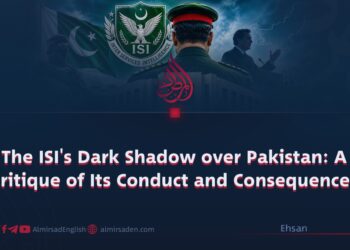
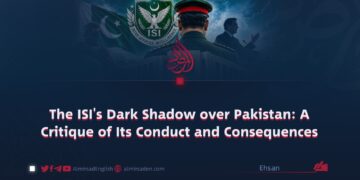
Since its founding in 1948, Pakistan’s Inter-Services Intelligence (ISI) has grown, step by step, from a small intelligence body into a far-reaching power that now cuts across the lines between security, politics and the economy. What was first designed as a tool for protecting national interests has, over the decades, become a major player in the country’s power structure, one that at times sees itself as above the law and beyond accountability.
Criticizing the agency’s conduct is not hostility to Pakistan’s security, and it doesn’t deny the need for an intelligence body. It is a call to rethink the limits of the powers and responsibilities of an institution whose name is bound up with many of the country’s historical crises. One of the darkest chapters in this record is the question of the disappeared. Numerous reports from human rights organizations and victims’ families accuse the ISI of a role in enforced disappearances.
When a family goes years without knowing what happened to a loved one and no institution answers for it, public trust in the entire security apparatus collapses. The disappeared are more than administrative files; they are open wounds in a society that lives with its helplessness in silence.
The second line of criticism is the opacity of its finances. Claims have been made about non-transparent funding, smuggling and illegal economic activity, painting a picture of a military and intelligence body with hidden economic interests. When an institution that is supposed to guard economic security is itself accused of illegal activity, the line between oversight and abuse of power blurs. This financial opacity breeds wider corruption in the administration and distrust among investors and citizens.
The third issue is meddling in politics, an accusation that has come up again and again in Pakistan’s history, charging the ISI with weakening, controlling and managing political parties. When an institution whose job is to gather intelligence and protect national security becomes a decisive player in party politics, it hollows out the law from within. Controversial positions and dealings involving political figures such as Bilawal Bhutto suggest that the ISI’s shadow reaches the highest levels of political competition. In that atmosphere, the people’s vote loses its force and civil institutions become tools in the hands of hidden powers.
The fourth line of criticism concerns the agency’s own security record. The question is a serious one: if the ISI has such wide intelligence capability and broad powers, why does Pakistan still struggle with waves of terrorism, domestic insecurity and bloody attacks? The criticism holds that its focus on political power has pulled the agency away from its main duty, foreseeing and preventing threats. Producing false, baseless and distorted reports, and analyzing intelligence wrongly, doesn’t only lead to bad decisions; it also puts citizens’ lives at risk.
The fifth and bitterest aspect is the killing of scholars and the treatment of religious and political figures. Accusations have been made of involvement in the targeted killing of scholars and of blocking independent investigations. If even part of them is true, they show a deep departure from the agency’s security responsibility. Killing a religious scholar or a politician brings no security; it deepens sectarian and political rifts. On top of this come concerns about the staff’s professional commitment, discipline, loyalty and accountability, and a rise in resignations, which paint the picture of an institution struggling with a crisis of legitimacy from within.
Finally, the question of leadership, and the concentration of power in the hands of army chief General Asim Munir, adds to the complexity. The criticism rests on the view that by focusing on political and state power instead of security, the agency has strayed from its professional path. When military and intelligence leaders seek to cement their own power instead of answering to the nation, the whole society pays the price.
This drift has consequences abroad too, and they can’t be ignored. When an intelligence agency retreats into opacity and denial instead of transparency, social capital, the strongest support of any security system, wears away. In such an atmosphere, public cooperation, long seen as the real eyes and ears of any security system, gives way to distrust and silence. Pakistan’s international image also suffers: a country whose intelligence agency is accused of political interference and human rights violations finds it hard to win the trust of global partners and attract foreign investment. In this way the ISI’s dark shadow has spread beyond domestic politics and security to Pakistan’s economy and standing in the world, and escaping it takes, above all, a serious commitment to answering for its conduct and a return to the rule of law.
The ISI’s dark shadow over Pakistan is more than a political accusation. Its effects show in citizens’ daily lives, in the silence of the families of the disappeared, in the assassination of scholars, in distrust and in the corruption that has taken root in the administration. The situation can be mended not through denial and the suppression of critics but through transparency, accountability, a precise definition of the limits of the agency’s powers, and a return to its main duty, protecting national security.