












Jamal Nadim
On Sunday, October 11, Pakistan’s President Asif Ali Zardari announced the end of the elected government in Khyber Pakhtunkhwa (KP) and the imposition of governor’s rule. Only moments later, the province’s governor, Faisal Karim Kundi, addressed the public and presented arguments to justify the decision, or rather, to defend it. He said the rise in terrorist incidents, the deteriorating law and order situation and the provincial government’s incompetence had led to the imposition of governor’s rule.
He also made it clear that from now on, the province’s policy would come from Islamabad, not Kabul and Jalalabad, and that the whole country would be governed under a single policy. But political and policy experts didn’t focus on the accusations Kundi was making or how far they departed from the facts. Instead, they turned the question back on him: policy, after all, is set by the federal government for the whole country, and the real decision-making authority rests at the federal level, whoever governs the province. So how can one province have a separate policy while the rest of the country follows a different course?
After all, in a country where all provinces operate under a single federal system, on what basis is one province’s policy attributed to Kabul and Kandahar? When legal and political experts took a closer look at the matter, more questions began to emerge. Pakistan’s Constitution provides for both governor’s rule and the imposition of a state of emergency, but certain conditions must be met before either measure can be used. Those conditions, however, appear to be entirely absent in the present circumstances.
Maulana Fazlur Rehman, one of Pakistan’s leading political figures who mediated amid this unrest and frustration, declared the move unconstitutional and contrary to established principles at an emergency press conference. He also directly accused the government and the ruling circles. He openly accused the ruling elite of betrayal and of going back on their promises, saying plainly that the government says one thing and does another.
Meanwhile, another startling revelation emerged: that in this matter the government hadn’t actually been the one making the decision, and the orders were issued directly from those circles that always claim to have nothing to do with politics and never tire of insisting that they have no connection with political affairs. So, on the one hand, there were claims of non-interference in political affairs, while on the other, suspicions were growing stronger day by day that the reins of political power were in the hands of these very forces behind the scenes.
In his remarks, Maulana Fazlur Rehman rejected every argument the government had been offering to justify its decision. He said that if the problem is terrorism and the deteriorating law and order situation, then Balochistan has an even stronger case for emergency rule. If it’s about the government’s incompetence, Balochistan deserves governor’s rule in every respect too.
But Maulana Fazlur Rehman’s position made it plain that the reasons offered by the government are only outward pretexts, while the aims behind the scenes are different. In his view, these justifications offered in the name of terrorism, insecurity and administrative incompetence are in truth offered to cool public anger, to bring the growing public fury under control and to hide the real aims.
These remarks made the matter even more sensitive and serious and brought up many new questions about the government’s position. The situation became even more complicated and worrying because Maulana was well aware of the background, motives and hidden realities of this whole affair. He had played the role of mediator between the two sides, heard both sides’ positions in detail during the talks, and put forward a practical, workable solution to settle the differences. Despite all this, Maulana’s holding only the government to blame and rejecting all its arguments completely was no ordinary matter. It strongly suggested that the real causes of the present crisis weren’t the ones being presented to the people in official statements.
Legal experts have raised one more point on this occasion: for governor’s rule, the Constitution has been cited as the basis, but for this emergency that has been imposed, a resolution of the provincial assembly is required under the Constitution, and the question still remains unresolved. Not a trace of it can be seen in this whole matter.
You suspend educational activities, shut the doors of schools and other educational institutions, cut off telephone and internet services, strip the people of their basic rights and even set about taking away their right to determine their own future, but for all these measures, despite arbitrary interpretations of the Constitution, you can’t offer any reasonable legal grounds or justification.
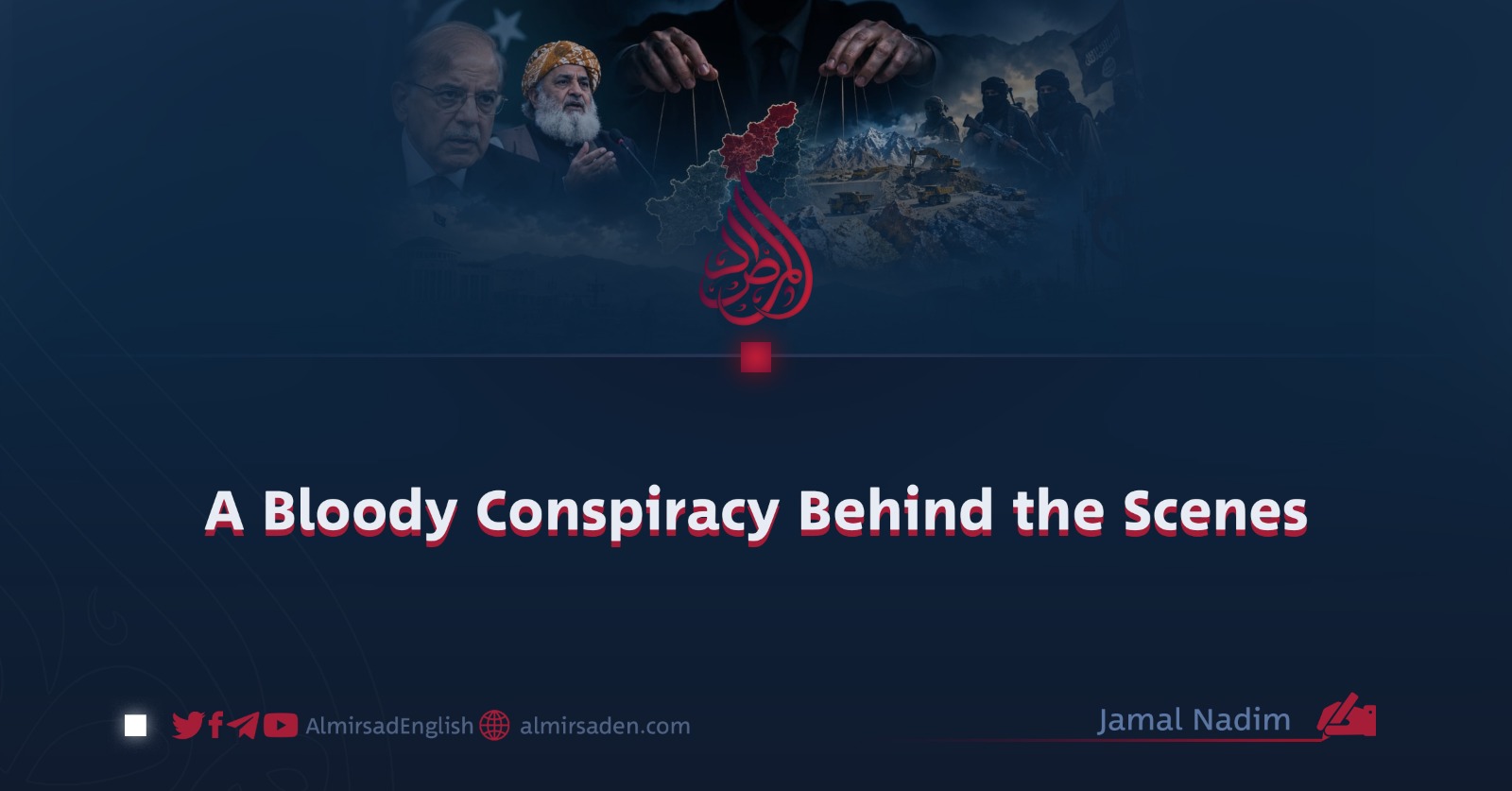
The question is, when there is no clear constitutional and legal basis for such harsh and serious measures, when state powers are used ruthlessly to trample the people’s rights but those exercising these powers avoid providing a legal justification for them, then why shouldn’t doubts rise about the hidden aims and intentions behind these measures? Doesn’t this situation reinforce the concern even more that, under the cover of the Constitution, security, public order and national security, a bloody conspiracy may be growing, whose real aims are still being kept hidden from the people’s eyes?
In times gone by it was said that even walls reveal secrets. But now the times have changed. Now even facial expressions and people’s actions themselves loudly declare which way the caravan is heading and where the destination lies. An emergency in twelve districts alone, and governor’s rule everywhere else, have also become something of a puzzle. Federal control of the twelve districts, and the formal announcement of a committee for it, open the door to further doubt and concern.
Today a number of experts in politics and law expressed the fear, and quite rightly, that the districts where the emergency has been imposed are mineral centers. The mineral resources of each district are worth hundreds of billions of rupees.
Now, through this emergency and the federal control, the establishment wants, on the one hand, to seize these minerals. A major political figure of the province has already said it in exactly these words: “What the government and the state are calling terrorism is nothing of the kind. And even if there is something, the state doesn’t want to end it, because on this very pretext the state gets billions, hundreds of billions of rupees. And then, on the same pretext, the state wants to loot the province’s precious reserves to feed its own indulgence.”
On the other hand, some well-informed circles have raised an even more troubling possibility: that behind the emergency and under the cover of governor’s rule, plans may be being made to turn these twelve districts into centers for the training and activities of international terrorist groups. Remember, the state’s past sheltering and patronage of international terrorists have already come to light.
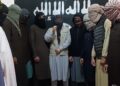
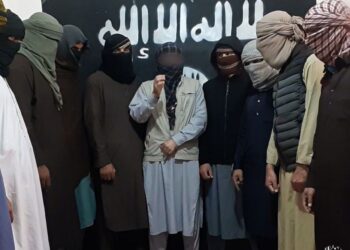
According to the latest information, state elements of Pakistan had a hand in the incursion into Afghanistan’s Nuristan and Kunar provinces too, and some audio and video recordings have been published as proof of this claim. Likewise, claims that some state circles backed and had ties with Daesh’s armed elements and groups with similar views are widely discussed among the public.
Along with this, a fear is also being expressed that there’s an intention, under the cover of the emergency, to turn these twelve districts into narcotics hubs, and signs of it can already be seen.
So the matter is no longer limited to the walls revealing secrets. The present situation and the steps taken have raised questions that can’t easily be ignored any more. Never mind the leaders and well-informed people of society, even among ordinary people the belief is growing stronger day by day that behind these outward measures lie hidden aims whose likely consequences could prove devastating for the peace and stability of the region.