



















By Asif Tarin
Regional politics is sometimes read not in official announcements but in the sequence of events. An explosion, then accusations, then airstrikes, then claims about armed men infiltrating from the other side’s territory. Looked at one by one, these seem like ordinary security incidents, but when they’re tied together by timing, by target, and by the political and propaganda atmosphere that follows them, a picture emerges of a broader regional security and political equation.
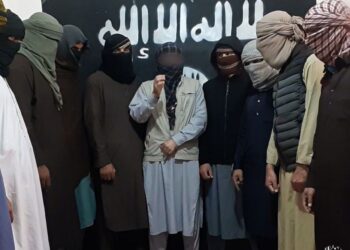
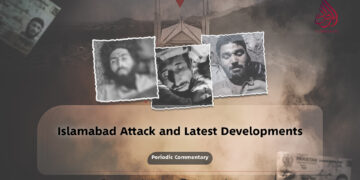
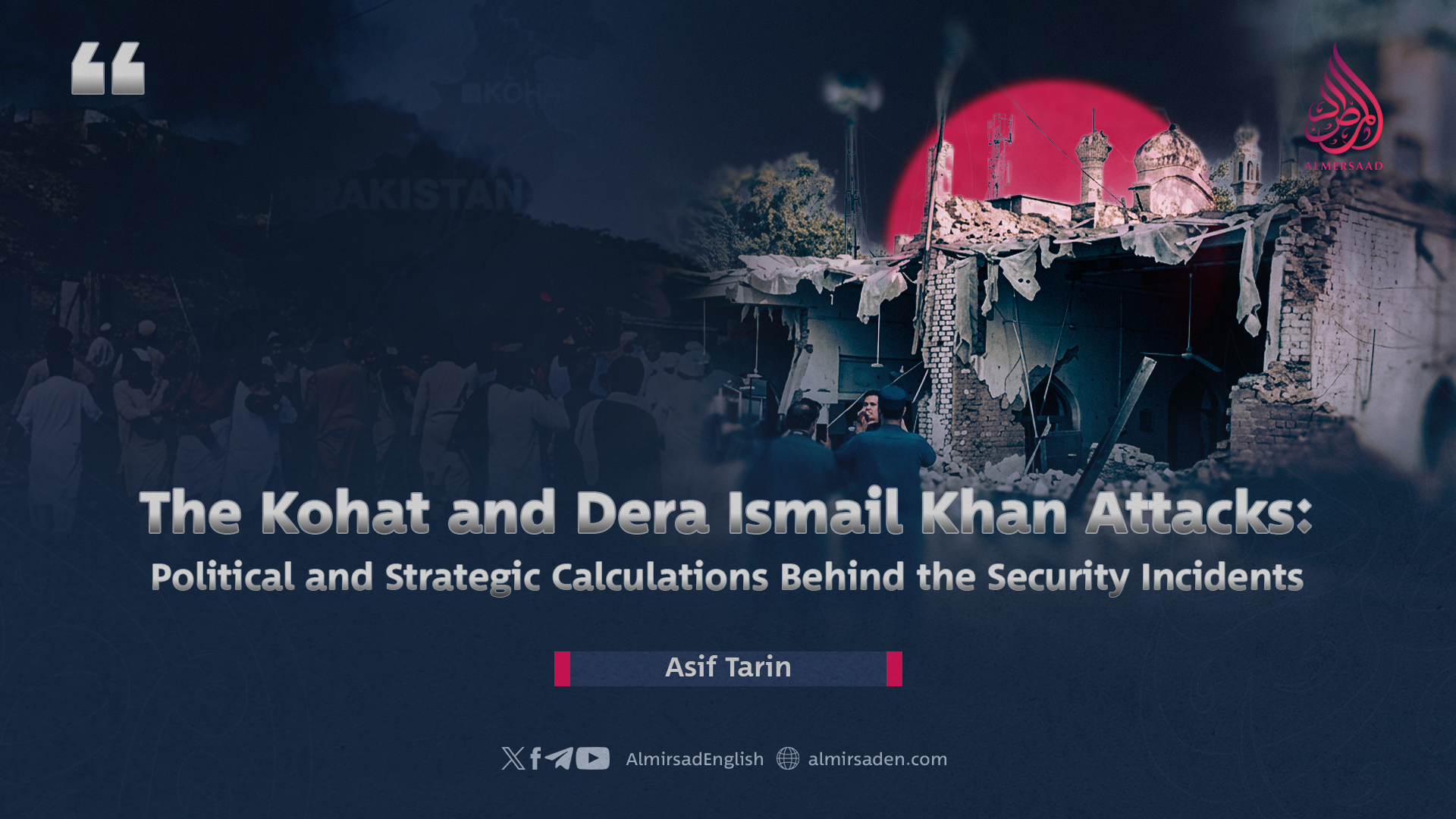
On September 18, 2026, a bloody attack hit security installations in Kohat, killing at least 23 people. Three days later, on September 21, Pakistani fighter jets carried out airstrikes on Kunar and Paktika in Afghanistan. Pakistan claimed it had targeted militants, but the Afghan side spoke of civilian casualties, and the United Nations also confirmed civilians had been killed in Kunar. On September 26, Dera Ismail Khan witnessed another bloody attack, in which 12 people were killed and many others wounded.
The important question here isn’t only who carried out these attacks. We also have to look at who drew political and strategic benefit from them once they happened, why Pakistan’s internal security incidents are so quickly turned toward Afghanistan, and whether this security atmosphere is being used as a tool of pressure for particular political aims. Of course, these questions aren’t in themselves proof of who designed the attacks, but they do open serious ground for examining how the incidents get used politically.
For a long time Pakistan has tied a portion of its internal security problems to Afghanistan. Islamabad accuses Kabul of sheltering anti-Pakistan militants, but the Islamic Emirate of Afghanistan (IEA) has rejected these claims. After the Kohat attack too, Pakistani officials focused mostly on Afghanistan, and a few days later they carried out airstrikes on Afghan soil. That’s why one important question is whether every new major attack in Pakistan can be used as a tool for political pressure on Afghanistan, for military action, and for building an international political front.
This matters even more at a time when Pakistan is facing internal political pressure, economic problems, and a security crisis with Afghanistan. Under these circumstances, raising an “external security threat” can shift the focus of domestic political debate and push security to the top of the agenda. Given the wide role of the army and intelligence structure in Pakistan’s modern history, when major security attacks happen under the watch of a broad security system and are afterward pointed toward Afghanistan, it’s natural for questions to be raised about that structure’s role, its interests, and its possible political use of them. But proving these questions requires independent investigation and evidence.
On the other hand, taking into account the joint defense agreement between Pakistan, Saudi Arabia, and Turkey on August 7, 2026, and the arrangements for strategic political and defense cooperation to put it into practice on August 31, any major event in Pakistan’s security situation can’t be judged separately from the discussion of this country’s new regional security role. With defense cooperation, joint military capacities, technology, and security arrangements expanding, Pakistan’s internal security crisis could take on political importance for making the case for its foreign defense partnerships and regional security needs.
At the same time, Afghanistan’s efforts to diversify its economic ties are creating a new shift in the region’s strategic equation. Expanding Afghanistan’s relations with Saudi Arabia, Central Asia, China, Iran, and other countries in mining, energy, transit, and foreign investment could open the way for Afghanistan to break out of dependence on a single economic route. The proposals put forward by Saudi Arabia’s Delta company for Afghanistan’s oil and gas sector, the exploration projects at Herat’s Kushk and Tirpul, and the assessment of a possible gas pipeline from Herat to Spin Boldak are worth noting in this same context.
Expanding Afghanistan’s economic ties and drawing in new international partners could, in theory, limit the economic and transit influence Pakistan has held over Afghanistan for years. That’s why negative propaganda about Afghanistan’s security situation, the picture of spreading insecurity, and efforts to worry foreign investors, if they’re being carried out deliberately, could take the shape of a tool of pressure against the expansion of Afghanistan’s economic ties. But proving this claim requires specific evidence to be presented.
Another important matter in this September series of events is the nature of the mutual accusations between Afghanistan and Pakistan. The Afghanistan Ministry of Defense (MoD) has claimed that a number of armed men crossed from Pakistani territory toward Nuristan’s Kamdesh, and it named among them some security personnel of the former government, recruited, trained, and funded by Pakistani intelligence. Pakistan, in turn, claims militants are active from Afghan soil. These contradictory accounts from both sides show that the questions of responsibility, source, and purpose behind these security incidents still need serious, independent investigation.
The IEA’s stance in this whole equation also deserves attention. After Pakistan’s repeated accusations, the pressure over the Durand Line, and the September 21 airstrikes, Afghan officials made clear their position on defending their sovereignty and airspace, summoned Pakistan’s diplomatic representative, and registered a protest, but they also tried to keep the situation from sliding toward a wider war. This stance should be seen within the frame of preventing the crisis from widening further, not as a basis for drawing any conclusion in advance about future actions.
Taken as a whole, the sequence of September’s events, from Kohat to Kunar and from Dera Ismail Khan to Nuristan, raises the serious question of whether security crises in the region stay only security incidents, or are also used for political pressure, military action, a propaganda atmosphere, and regional strategic aims. Pakistan’s continued security pressure on Afghanistan, and Afghanistan’s protection of its own sovereignty, economic ties, and regional cooperation, will be important factors in future interactions.
That’s why, in the case of any major security incident in the future, three fundamental matters should be examined independently before responsibility is announced: who the attackers were, what the main purpose of the attack was, and which side gained political, security, or strategic benefit after the incident. Without careful examination of these questions, an immediate political interpretation of any incident could deepen the region’s crisis and distrust further.