















Ajmal Jalal
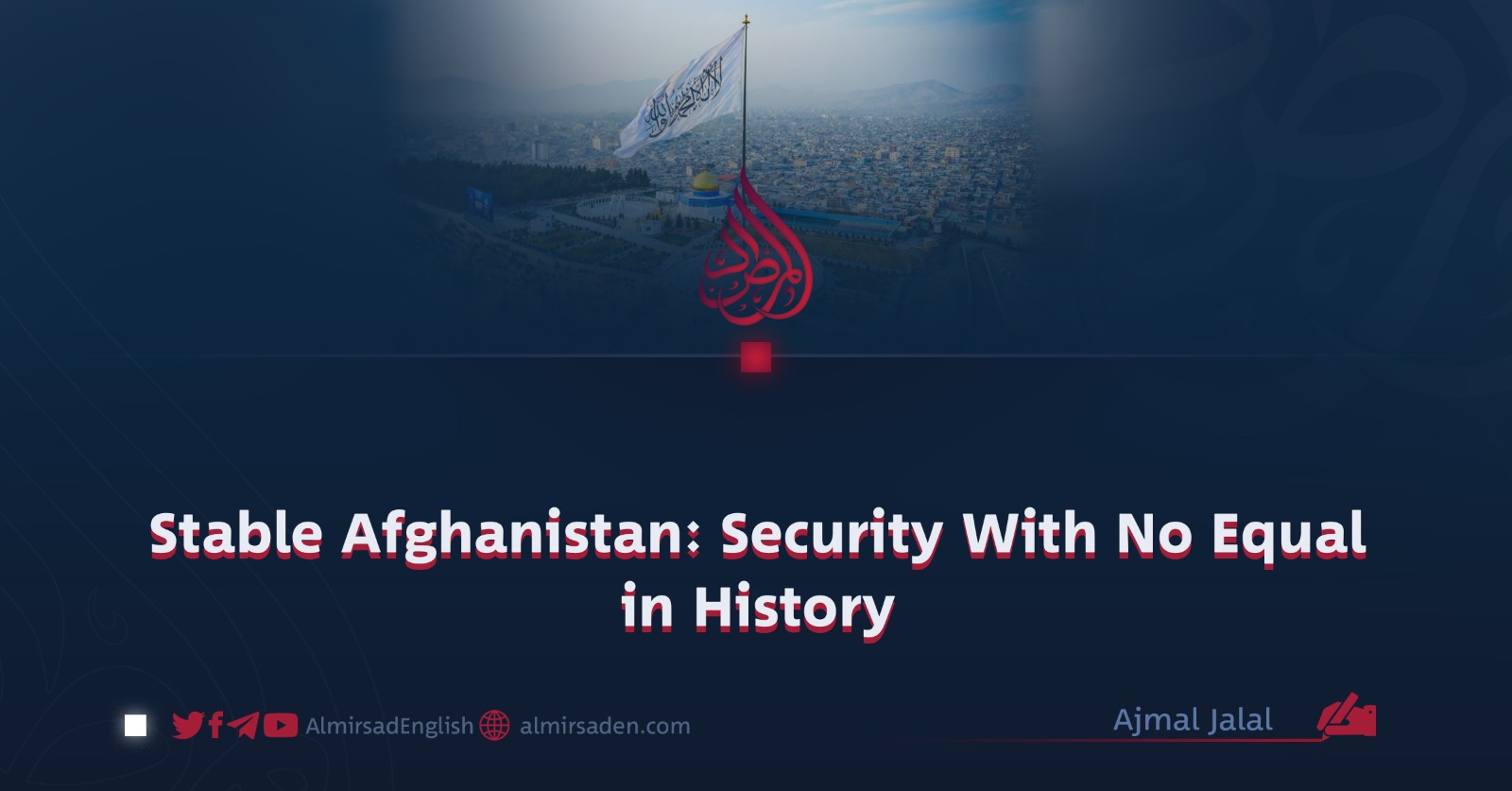
Afghanistan, this land that fought century after century against the harsh storms of war, occupation, and insecurity, has now reached a stage in its history that can be called a landmark of unprecedented change. Maybe for the first time in this nation’s historical memory, not only have the sounds of cannons and rifles gone silent, but ordinary, peaceful life has started moving normally in every corner of this vast country. This security and stability isn’t some shallow, temporary achievement, it’s the result of a deep, foundational change in the country’s political, social, and cultural structures, one brought about under the Islamic system’s own shadow, and it’s shown the world a new picture of Afghanistan.
Whenever stability in Afghanistan comes up, a person’s mind automatically ties itself to this land’s troubled past. The generation born in recent decades probably remembers very few days that passed without news of an explosion, a war, or a killing. But today people face a completely different reality. Roads are full of ordinary people going about their business, markets stay open late into the night doing brisk trade, children heading to school have nothing on their minds but games and lessons, no other worry at all, and families walk through parks and public roads at night, in the dark, with an easy heart, free from any kind of threat.
This picture calls to mind the Afghanistan we read about in history books, but in living memory, people never actually experienced an Afghanistan like this. The most important secret behind this lasting stability is the restoration of the rule of law and order across the whole country. The Islamic system, by building organized and coordinated structures, has managed to turn chaos into order and division into unity and coordination. Under this system, all security forces operate under one single command and one shared strategy, and there are no more signs of overlapping duties, arbitrary actions, or unlawful interference.
This unity of command has brought the country’s defensive capability and its ability to prevent threats to an unprecedented level. Any potential threat is identified quickly and neutralized. Domestic and foreign enemies have reached the point where they can no longer exploit power vacuums or weaknesses in order to harm the country’s security.
Today’s security is, at the same time, deeply connected to people’s own participation and cooperation. In recent years the Islamic system has managed to rebuild the trust that had broken down between the state and the nation. People are no longer just passive spectators, they stand alongside the security forces as active participants in maintaining security. Sharing information in a timely manner, cooperating with security institutions, and staying away from actions that damage public order are all clear signs of a solid, mutual relationship between the nation and the system. This cooperation has built up such a large stock of social capital that any foreign threat or domestic plot gets neutralized, through the people’s shared resolve and will, before it can even spread far enough to turn into a crisis.
Another clear sign of this stability is its effect on the economy and people’s livelihoods. For years, insecurity stood as a major obstacle to investment and progress. But today, with threats down significantly, roads have turned into safe trade routes, and investors are moving toward infrastructure and production projects with far more enthusiasm than before. The result of this shift is a relative flourishing of markets, falling unemployment, and growing hope, across different layers of society, for a better and more comfortable life. Security has turned into a driving force for the economy, and this connection between calm and progress shows that today’s stability isn’t just an abstract concept, it has a real, felt effect on people’s daily lives.
Without exaggeration, it has to be acknowledged that Afghanistan’s unprecedented security today is, more than any outside factor, the result of the Islamic system’s firm resolve and the people’s full support. No foreign power gifted Afghanistan this order and calm, it was this very nation that, through its own faith, unity, and its leadership’s wisdom and judgment, managed to take its own fate into its own hands. This is exactly what sets today’s security apart from Afghanistan’s past conditions, and marks it as a homegrown model, built on its own efforts, for establishing stability and security in a crisis-battered country.
A stable Afghanistan today isn’t just a slogan, it’s a plain fact. This security, unmatched in history, hasn’t just turned the page on painful memories for good, it has also opened a new horizon for building a brighter future. This great achievement is a valuable inheritance that must be protected through wisdom, national unity, and shared understanding, and passed down as a trust to generations still to come.