









Jamal
Afghanistan’s history has always come paired with steep highs and lows. But no period in that history can be found where security and stability spread as wide a shadow over this country as they do today.
What’s happening in Afghanistan now isn’t some ordinary shift, it’s a fundamental transformation in the country’s political life and social order. Today’s security and stability have opened a new page in Afghanistan’s history, a history full of its own highs and lows, a page where the place once held by endless worry has been given over to a bright future, where wide hopes for progress now stand visible before our eyes.
To really understand this shift, we need to look back at Afghanistan’s recent past, a period when every day came bundled with news of an explosion, a kidnapping, or an armed clash. Back then, security seemed like a strange, unreachable word. Markets would empty out by midday, and by evening, streets would empty into fear.
But today every part of that picture has changed. Today’s security isn’t just a promise, it’s something you can feel, in every corner of the country. The roads once known as highways of death have become safe, busy roads full of coming and going, and trade caravans now travel east to west and north to south with an easy heart. This change isn’t some miracle, it’s the result of continuous effort that, under the shadow of a new order, has breathed new life into this country’s body.
Today in Afghanistan, security has taken on a deeper meaning. Security isn’t just the absence of war and violence, it also means the effective rule of law, public order, and a sense of trust and calm across society’s different layers.
For the first time in decades, families can walk through parks in the heart of the night with an easy heart. Children go to school without fear of being kidnapped. These everyday scenes might be ordinary elsewhere in the world, but for Afghanistan they’re the good news of a new chapter beginning.
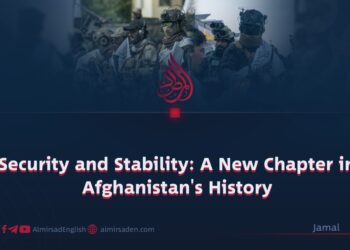
The security we’re witnessing today is the result of unified command, coordination among security forces, and broad cooperation between the people and the Islamic system. The Islamic system’s greatest achievement in this area has been creating a coordinated, effective structure to secure the country. Unlike the past, when numerous security agencies, sometimes working at cross-purposes, each operated separately, today all military and security forces operate under one centralized command, working from a single plan and a clear goal, guarding the borders and maintaining public order.
This strategic coordination has brought the country’s defensive capacity to the point where any security threat is identified and neutralized before it can turn into a crisis. From the borders down to the depths of the cities, order and security have become one unified principle, and no group or force can crack open this fortified wall.
Today’s security is the result of unmatched cooperation between the people and the Islamic system. This cooperation shows, on one hand, the people’s deep trust in the security institutions, and on the other, the political maturity of a society that, after years of chaos, has come to properly understand the value of calm and order.
The people are the security forces’ best allies, and through providing timely information, avoiding baseless rumor, and taking part in order-building programs, they play an unchanging role in keeping this stability going. This two-way relationship has turned security from something imposed into a shared culture, one whose roots now run through society’s beliefs and values.
The effects of this stability haven’t stayed limited to military security, they’ve spread into other areas of life too. The country’s economy has caught its breath again; roads have turned into busy arteries of trade, markets have found their old buzz again, and investors are moving, with growing eagerness, toward construction and production projects. In this kind of environment, poverty and unemployment have gone down too, and hope for a bright future has taken root in the hearts of this land’s young people and its youth.
In this way security has become a driving force behind sustained progress, and political stability has forged a firm link with economic development.
Today’s Afghanistan is at the center of the world’s attention, but this time not because of war and insecurity, but because of the stability and security it has built. This great transformation isn’t a gift from any foreign power, it’s the result of a nation’s effort and firm resolve, and of a system’s good management.
The Islamic system, by drawing on the country’s own principles and values, has managed to build lasting, unified security, and to show that Afghanistan is no longer a land of endless crisis but an example of order and stability for the region and the world.
This new chapter of history is written by the nation’s determination and the Islamic system’s wise management. Today’s security and stability are a great asset, one that must be guarded with vision and unity, so that this land’s connection to a horizon full of progress grows firmer with each passing day.