



























By Sajid
National honor is a quiet but powerful spirit that rises from deep within a nation at the hardest moments in its history. It is not merely an emotional slogan. It is a force that holds society together through severe storms, brings its different parts closer and gives it the strength to survive.
In Afghanistan’s long and difficult history, few events have put this idea to the test as clearly as the 28th of Asad, 1298 SH, revealing what national honor truly means.
To understand the role of national honor in the events of the 28th of Asad, we have to go back many years. Over nearly a century, from the First Anglo-Afghan War to the Third, Afghans had come to believe deeply that the survival of their culture and religious identity was tied to preserving their independence. That belief grew out of mud-built homes and village mosques, gradually becoming a shared way of thinking across the country.
Fathers told their sons about the days when their grandfathers had stood against British artillery with swords they had made with their own hands. They taught them that honor was worth more than life itself. Passing these values from one generation to the next created the mental and emotional ground for a collective sense of national honor to emerge in 1298.
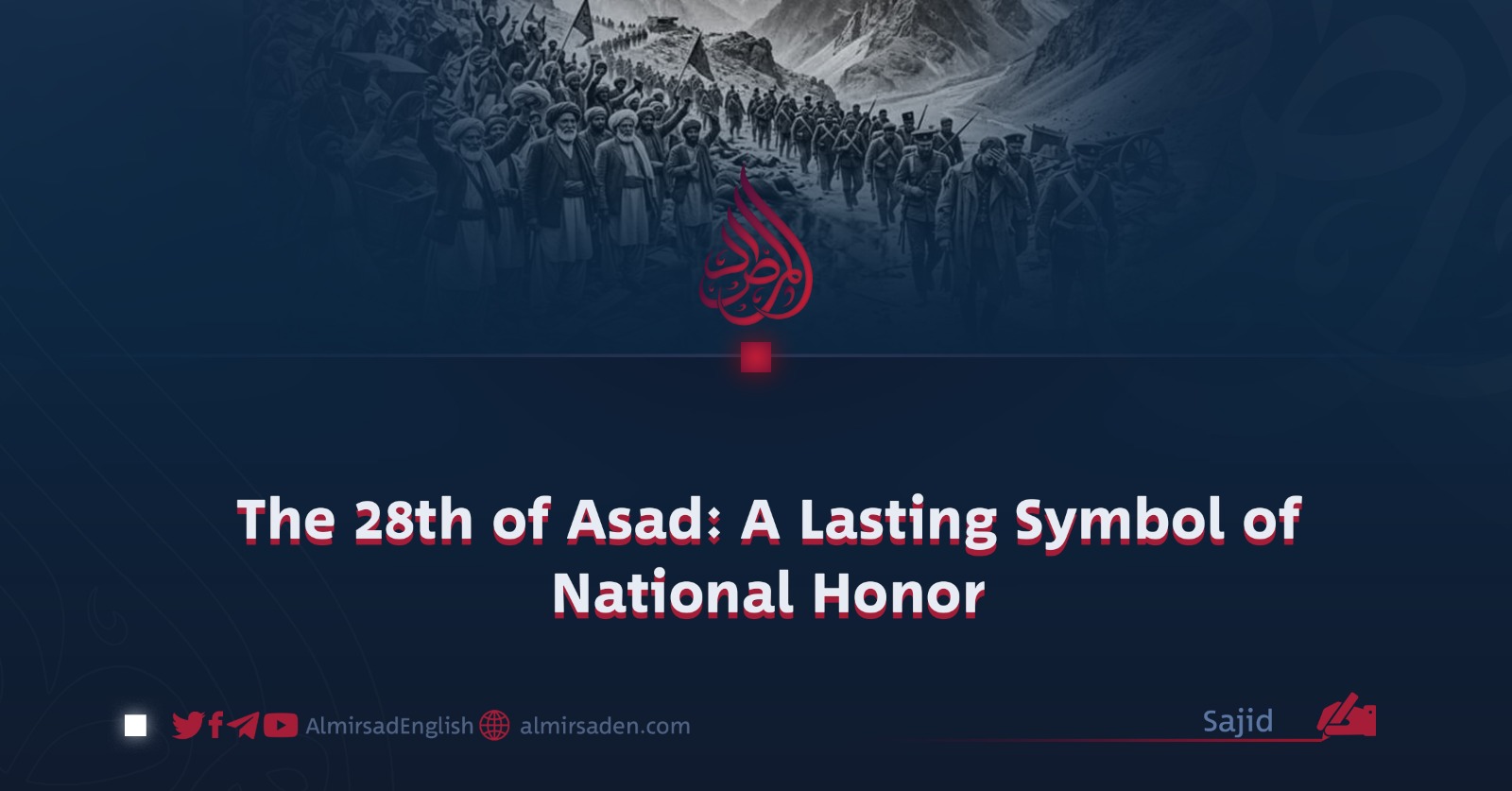
When the Afghan people raised the banner of jihad against the British Empire in May 1919, that national honor turned into a powerful popular force. The farmer who left his fields and went to the battlefield; the merchant who handed over his wealth to the government to help provide ammunition; and the woman who, during the hardest days of the siege, carried food from her home to the front lines of jihad and resistance, were all clear examples of that spirit.
Different sections of society stood shoulder to shoulder, expecting nothing in return and fully aware of the dangers they were facing. National honor crossed tribal and linguistic boundaries and created a united front against a powerful enemy. Perhaps this unity was its most important result at the time. Without it, a military victory, no matter how carefully planned or skillfully carried out, would have seemed impossible.
National honor and the victory of the 28th of Asad were closely tied to each other. On one side, that spirit was the driving force behind the resistance. On the other, victory in the Third Anglo-Afghan War raised this sense of national honor to a level of self-confidence that had never been seen before. The declaration of independence on the 28th of Asad was not simply a legal event. It was also a great moral victory for all Afghans. It proved that through national honor and unity, they could determine their own destiny and stand against the domination of the great powers.
But national honor does not belong only to the battlefield. After the victory of the 28th of Asad, the idea entered a new stage. The newly independent state faced major challenges. British economic sanctions stood on one side, while internal unrest created another source of pressure. Under such circumstances, national honor came to mean enduring hardship to protect what had already been achieved.
The Afghan people showed that this spirit does not appear only during military conflict. It can also be relied upon during the darkest days of economic pressure.
Their patience and endurance in the face of hunger and deprivation opened another chapter in the story of national honor, one no less valuable than courage and bravery in war.
There is also a deeper meaning to the national honor shown on the 28th of Asad. The colonizers did not merely seek to take Afghanistan’s resources. They also tried to reshape the values of its people. In those circumstances, national honor became a defensive shield, protecting the nation’s shared identity from cultural and political intrusion.
That shield still carries an important lesson for today’s generation. Honor is not a fixed idea. It must be understood and defined again in every age according to the threats and challenges of that time. The 28th of Asad taught us that national honor reaches its full meaning through solidarity and the willingness to put aside personal interests. When a nation defines its interests around a higher and shared purpose, its strength multiplies.
Today, with Afghanistan facing new challenges, remembering this lesson matters more than ever. Just as national honor brought colonialism to the point of defeat on the 28th of Asad, it can also lead the country today toward development, reconstruction, progress and self-reliance. But that will happen only when this spirit is freed from the chains of empty slogans and turned into a practical determination to build a better future.
The 28th of Asad is not simply a day of pride. It is a clear guide for all time.