



















By Abdul Razaq Muzammil
One of the bitter lessons of modern political history is that some states and intelligence services have used the strategy of “divide and rule” to safeguard their strategic interests. The purpose of this policy is to weaken the natural cohesion of society, create distrust between different communities, and break the strength of their shared national and political aspirations.
The use of irregular armed groups and local forces has long been one of the most controversial issues in the political and security landscape of the region. The situation in Balochistan and the Pashtun-populated areas has likewise remained under both regional and international scrutiny. At different times, the use of local armed groups, unofficial militias, former arbakis, and the deliberate stirring of ethnic tensions has been regarded as a tool for deepening division and mistrust between different peoples.
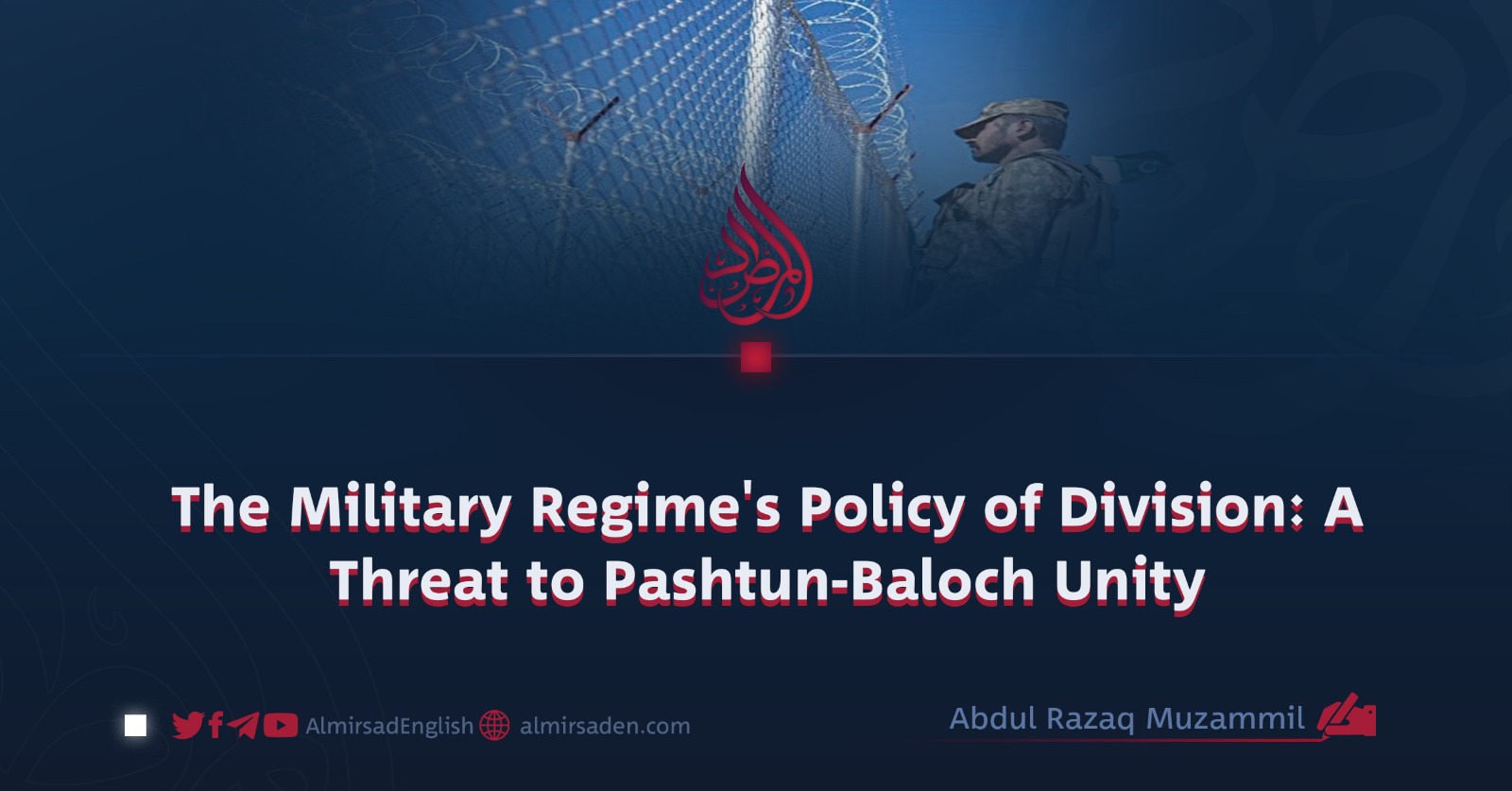
Areas on both sides of the Durand Line have witnessed new security threats in recent months. Reports indicate that Pakistan’s military regime is training a number of former arbakis and military personnel from Afghanistan’s former republic at various camps in Balochistan so they can be used as a proxy force against the Pashtun and Baloch peoples.
These unruly and lawless gunmen, who learned little in their own homeland except oppression and abuse, have been equipped with certain military skills but stripped of every human and moral principle. They are now serving as proxies of the military regime in Balochistan, helping preserve the ruling system by taking part in military operations, carrying out kidnappings, targeted killings, and the repression of innocent civilians. The greatest victims of these hired fighters are the ordinary people of Balochistan, especially the Pashtun and Baloch nations.
The Baloch and Pashtun peoples share a common history, common values, and a common destiny. Strengthening understanding, cooperation, and brotherhood between them is not only essential for the future of these two nations, but also an essential condition for peace, prosperity, and stability throughout the region. Training former arbakis and deploying them against both Baloch and Pashtuns is a deliberate, calculated, and dangerous policy of Pakistan’s military regime. Its aim is to destroy the centuries-old bonds of brotherhood between these two peoples and drag them into conflict with one another.
At the same time, the Pakistani military regime allows these former arbakis to operate in Balochistan’s unstable environment under the protection of its intelligence agencies and military establishment. Its intelligence network exploits both their failed military past and their present circumstances, using them as unofficial and unlawful militias. Through these hired gunmen, the regime deliberately seeks to create hostility and conflict between the Pashtun and Baloch peoples.
The Baloch separatist movements remain a serious challenge for Pakistan. The military regime wants to suppress them through proxy forces while pushing the Baloch to direct their energy against the Pashtuns instead of against Pakistan.
The same strategy is being used against the Pashtuns. Since Pashtuns living on both sides of the Durand Line, and the demands of the Pashtun nation itself, have long been viewed as a challenge by Pakistan, the military regime wants to draw them into conflict with the Baloch so they are diverted from their own fundamental demands. At the same time, by fueling clashes between the Pashtuns and the Baloch, the regime seeks to shift international attention away from its internal problems and present itself as an indispensable force for regional stability.
The Pashtun and Baloch peoples must unite to defeat this threat created by the military regime and stand together against this conspiracy. They must understand that the arbakis being used against them are not their real enemies; they are merely instruments in the hands of the military regime. They should learn from the experience of their forefathers and the wisdom of their elders, recognize who the real enemy is, and know how that enemy can be confronted.
The younger generation of the Pashtun and Baloch peoples, who will shape the future, must become fully aware of this plot and preserve the wisdom they have inherited. Through their pens and their voices, they should encourage their people to stand against these hired gunmen. In today’s world, the media and social networks are among the strongest tools for raising awareness and awakening public consciousness. They should use their newspapers, media outlets, and online platforms to expose this conspiracy. They should publish documented reports on the activities of these former arbakis, the locations of their training camps, and the individuals and institutions that support them.