



















By Khalid Ahrar
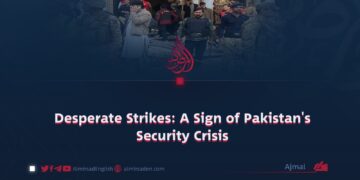
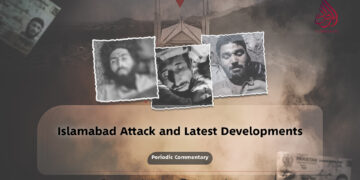
On June 28, 2026, Pakistan’s military regime once again violated Afghan airspace and carried out airstrikes in areas near the Durand Line. According to Pakistani officials, these were “targeted operations” that killed twenty-nine “terrorists.” Afghan authorities, however, say the strikes killed and wounded dozens of innocent civilians, especially women and children. The incident stands as yet another clear example of the Pakistani military’s failed policies and its continued interference in the affairs of a neighboring country. Pakistan’s military and its official spokesman, the ISPR, have made a habit of blaming Afghanistan and unnamed foreign hands for their own failures. After the attack on the headquarters of the Pakistan Rangers in Karachi, in which several Rangers personnel were killed, responsibility was claimed by Jamaat-ul-Ahrar (JuA).
That attack took place inside Pakistan, and responsibility was claimed by a Pakistani militant organization. The reality is that the group operates inside Pakistan and launches its activities from Pakistani territory. It rejects the authority of the Pakistani military and presents itself as a movement that rose in response to military repression, injustice, and the deliberate destabilization of the tribal areas.
Yet Pakistan’s military and the ISPR continue repeating the same story that the TTP is hiding in Afghanistan and that Afghanistan provides it with a safe haven. That is a flat-out lie. The TTP is Pakistan’s own internal problem. The movement was born in Pakistan, grew within Pakistan’s own environment, and expanded because of the failed strategies pursued for years by Pakistan’s military and intelligence agencies.
Now that the movement has intensified its campaign inside Pakistan, the military shifts responsibility onto Afghanistan in an effort to hide its own failures. Instead of addressing its internal security weaknesses, it tries to place the entire blame on Afghanistan while putting the stability of communities along the Durand Line at risk.
Afghanistan has consistently prevented its territory from being used against other countries and continues to fight terrorism. Pakistan, on the other hand, repeatedly invokes the excuse of counterterrorism to justify military intervention inside Afghanistan, destabilize areas along the Durand Line, and further damage relations between the two countries. Such attacks not only increase civilian casualties but also pose a serious threat to peace and stability across the region.
Pakistan should first look within its own borders. It should examine the presence of the TTP and other armed groups inside the country, along with the networks that sustain them. It should also reconsider the policies that helped create and strengthen these organizations over the past decades. Instead of pointing fingers at Afghanistan, it should confront its own security and intelligence failures. These so-called retaliatory operations by the Pakistani military are, in reality, grave war crimes committed against innocent Afghan civilians.
The international community should strongly condemn this violence by Pakistan’s military and make it clear to Islamabad that its internal problems cannot be solved by exporting them to a neighboring country. The TTP is Pakistan’s domestic problem and must be dealt with inside Pakistan, not through the indiscriminate bombing of Afghan territory. The fact that Pakistan’s military leadership cannot secure its own country and instead inflicts suffering on its neighbor is a plain demonstration of its failure. Lasting peace and cooperation between the two countries will remain impossible until Pakistan acknowledges its mistakes and builds relations with Afghanistan on the basis of equality and mutual respect.
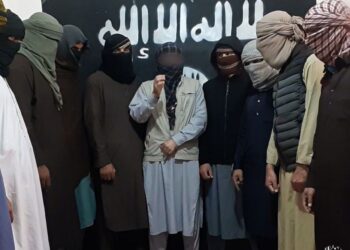
There is another side to this story. Pakistan continues to shelter members of the former Afghan administration’s Arbaki militias in Balochistan, where they have been provided with intelligence identity cards, weapons, and logistical support. At the same time, it has kept training camps and support networks for ISIS operating in the former tribal areas of Khyber Pakhtunkhwa and continues to supply them.
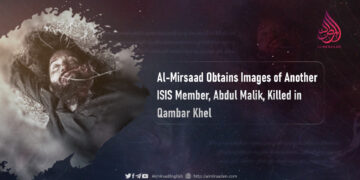
Some time ago, Al-Mirsaad published the confession of an ISIS member named Mohammad Iqbal, who described how he served as a link between ISIS and the Pakistani military in the tribal areas. In his confession, he stated that Pakistan’s military is trying to use ISIS as a tool to destabilize the region and pursue its own objectives.