


Part 2 (Final)
Arsala Hassan
How do ISIS and Pakistan make use of psychological and ideological warfare?
We’ve already gone into some depth on the different sides of ideological and psychological war, so now we want to shed some light on another part of the subject. In the earlier piece we discussed how the disbelieving nations try to reach their goals and carry forward their psychological warfare by turning so-called Islamic countries into tools for achieving their own aims, and by using people of weak faith and weak thinking inside these countries for their own benefit.
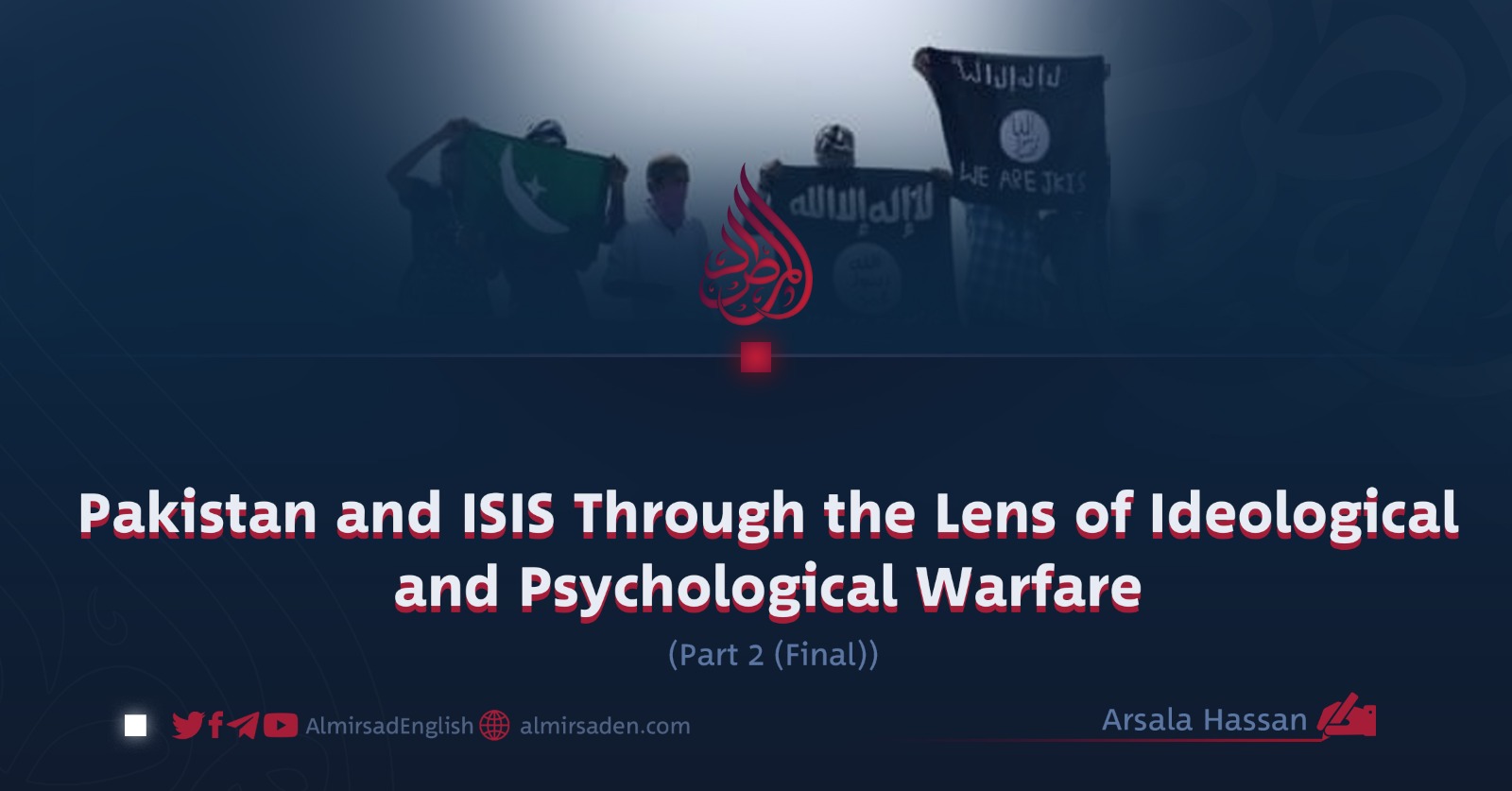
In these same countries, certain world powers make use of various regional players, media outlets, and intelligence networks, and in particular ISIS and Pakistan’s military regime, to reach their political and strategic goals, widening the field of ideological and psychological warfare.
In this regard, groups like ISIS are the outcome, or the project, of foreign powers’ strategies. America and a number of other disbelieving countries make use of certain regional channels and networks, including Pakistan’s military regime, to advance their regional goals. This weakens the Islamic ummah, spreads division among Muslims, and keeps insecurity going.
Pakistan tries to use psychological and ideological warfare to reach its own wicked goals, which are serving disbelief and securing its own survival. It is the one behind the creation of various terrorist groups meant to spread insecurity in the region, and ISIS is one of those terrorist groups.
Together, Pakistan’s military regime and ISIS carry out projects of terrorist activity in the region, and afterward, through propaganda, present themselves as neutral, or even as victims of these very acts.
Martyring senior religious scholars and respected shaikhs.
Defaming, imprisoning, and martyring tribal elders and leaders.
Fanning tribal and regional prejudices under the name of ethnicity and locality.
Stirring people up under clean-sounding slogans, staging protests and strikes.
These are all things that Pakistan’s military regime and ISIS carry out together, running joint psychological, ideological, and media propaganda programs. They arrange fake videos and fake press statements to make it look as though these acts weren’t theirs, and pin the blame on other sides.
They force scholars, respected shaikhs, tribal figures, young activists, and others into taking a hard line first, against other countries, political parties, and especially against the Islamic Emirate of Afghanistan (IEA), giving harsh statements against the conditions on the ground. Then afterward, this same ISIS and Pakistan’s military regime work to eliminate those very people.
When ISIS and Pakistan’s military regime carry out such terrorist acts, they then release fake, so-called statements, to appear clean and to gain deniability, all in service of their psychological and propaganda goals. For this they keep thousands of fake social media accounts, so they can spread wide, false propaganda about it.
Alongside these fake social accounts, they also keep thousands of television channels, radio stations, and print outlets active, and in advance, they prepare wide propaganda material meant to hide their savage, terrorist acts and to pin such acts on others, and through this they confuse people’s minds, so that the real issues stay hidden from the public.
Another path that ISIS and Pakistan’s military regime have taken is training up fake people under the names of mullahs, scholars, teachers, and tribal leaders, and using these very names to reach their wicked goal, which is ideological and doctrinal conquest. In short, psychological and ideological warfare is one of the hidden, effective wars that the disbelieving world, and in particular the Pakistani regime, ISIS, and America, wage to conquer the minds of the Muslim ummah and reach their wicked goals.
Even though no physical weapons are used in this war, its consequences run very deep and last a long time. That is why recognizing and standing against this kind of war, through knowledge, insight, accurate information, and media awareness, is something every society needs.