
























Akbar Jamal
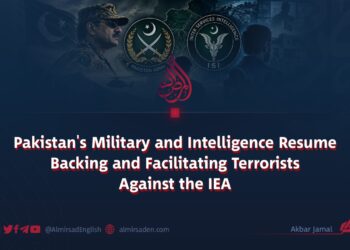
Pakistan’s own history is witness to this: whenever decisions get made behind closed doors, driven by a narrow military mindset held by a small, insular group of men with nothing more than a tenth-grade education, instead of being driven by the public’s actual demands and real facts on the ground, states don’t move toward progress. They weaken the very roots of their own existence with their own hands. The latest report from America’s New York Times, which apparently exposed secret meetings between Pakistani military and intelligence officials and groups opposed to Afghanistan’s Islamic system, comes as no surprise at all.
This news, this exposure, is really just a continuation of Pakistan’s old, failed military strategy, one that has brought this country nothing but irreversible losses instead of gains. At a time when Pakistan is mired in a severe economic crisis, its military and intelligence services’ attempt to launch a new proxy war inside a neighboring country isn’t just strategic foolishness; it amounts to putting Pakistan’s own state survival at risk.
Pakistan’s people need to seriously ask themselves what came of those military strategies that, in their name, siphoned off 70 to 80 percent of the wealth earned through their own blood and sweat into the defense budget. In Jammu and Kashmir, dozens of armed groups were built over decades and proxy games were played out, but the result was that Pakistan ended up isolated on the diplomatic stage, its economy wrecked, and finally, under the leadership of General Ashfaq Kayani, the military command was forced to admit its own failure and retreat from its old Kashmir strategy. The outcome is plain for everyone to see: Indian-administered Kashmir remained firmly under New Delhi’s control, while Islamabad could only watch. Rather than learning any lesson from this historic defeat in Kashmir, its generals and spymasters want to repeat that very same military adventure.
When direct airstrikes and drone attacks on Afghan soil, carried out from October 2025 through the middle of 2026, also failed to deliver the military its sinister, self-manufactured goals, it sank to the lowest point of defeat and despair. At this stage, it has started bringing hired assassins and rebel groups from Afghanistan’s former republican regime under its own wing to use against the Islamic Emirate of Afghanistan (IEA). Beyond the IEA’s own position, a recent exposé from Iran’s Tasnim News Agency is also enough to open Pakistan’s own people’s eyes. According to these reports, Pakistan’s military has given shelter, in Balochistan, to fleeing soldiers and commanders from Afghanistan’s former republican government.
These hired soldiers aren’t just being used to spread insecurity inside Afghanistan; they’re also being deployed inside Balochistan itself, in counterinsurgency operations against Baloch separatist groups.
Turning to another country’s fleeing soldiers to crush your own discontented population and solve your own domestic problems isn’t the sign of a powerful military; it’s the clear mark of an extremely weak, intellectually paralyzed military system. This isn’t just a militarily foolish decision; it’s also a frightening conspiracy sowing the seeds of lasting hatred and enmity between the coming generations of Pakistan and Afghanistan.
Khyber Pakhtunkhwa is paying the heavy price of this proxy game. There, because of the expanding influence of the Tehreek-e Taliban Pakistan (TTP) and the rise of a shadow government running parallel to the state, the military establishment has lost control over the province, and in a state of panic, it’s apparently imposed governor’s rule there, for what it’s calling a temporary period. Pakistan’s generals may be under the mistaken impression that this covert game will stay covert forever, but the shrewdness and vigilance of the IEA have laid bare the truth behind it.
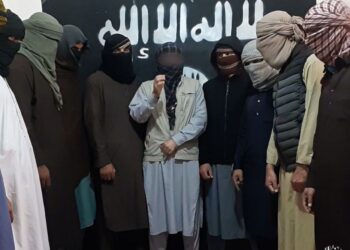
In late September 2026, an armed group crossed from the other side of the Durand Line into Kamdesh district in Afghanistan’s Nuristan province. This group included ISIS members and soldiers from Afghanistan’s former military. Afghan forces surrounded, killed and captured its members, dealing a heavy blow to Pakistan’s intelligence strategy.
The Afghan force that, over two decades, defeated the world’s superpowers can’t be frightened by such half-baked, ineffective proxy groups. Kabul’s government has stated repeatedly that, even though armed activity inside Pakistan is that country’s own internal problem, one Pakistan’s military has always blamed on Afghanistan, the IEA still insists, in the spirit of good neighborliness, on peace, understanding and dialogue to resolve these issues. That said, if war is forced on it by Pakistan, the IEA knows very well how to defend its own system.
For this reason, Pakistan’s people need to raise this question now: how much longer will this country keep paying for a handful of military generals and intelligence officials’ geopolitical adventurism, with its own survival, economy and territorial integrity as the price?
The history of the fall of Dhaka stands right in front of us, where crushing the people’s will and resorting to force split a country into two. Today, with Khyber Pakhtunkhwa and Balochistan at such a sensitive, critical stage, this same game of proxies is pushing Pakistan toward yet another, even more frightening geographic catastrophe.
The time has come for Pakistan’s military and intelligence agencies to abandon their strategic games and proxy tools, admit their own failure, and bring the country’s security policy fully under the authority and oversight of its civilian, political leadership. They should choose the path of mutual respect, equality and diplomacy with their neighbors. Otherwise, the pit being dug for others today will one day swallow the entire Pakistani state itself.