










Haroon Tipu
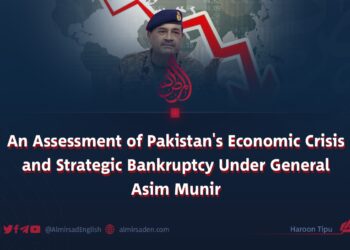
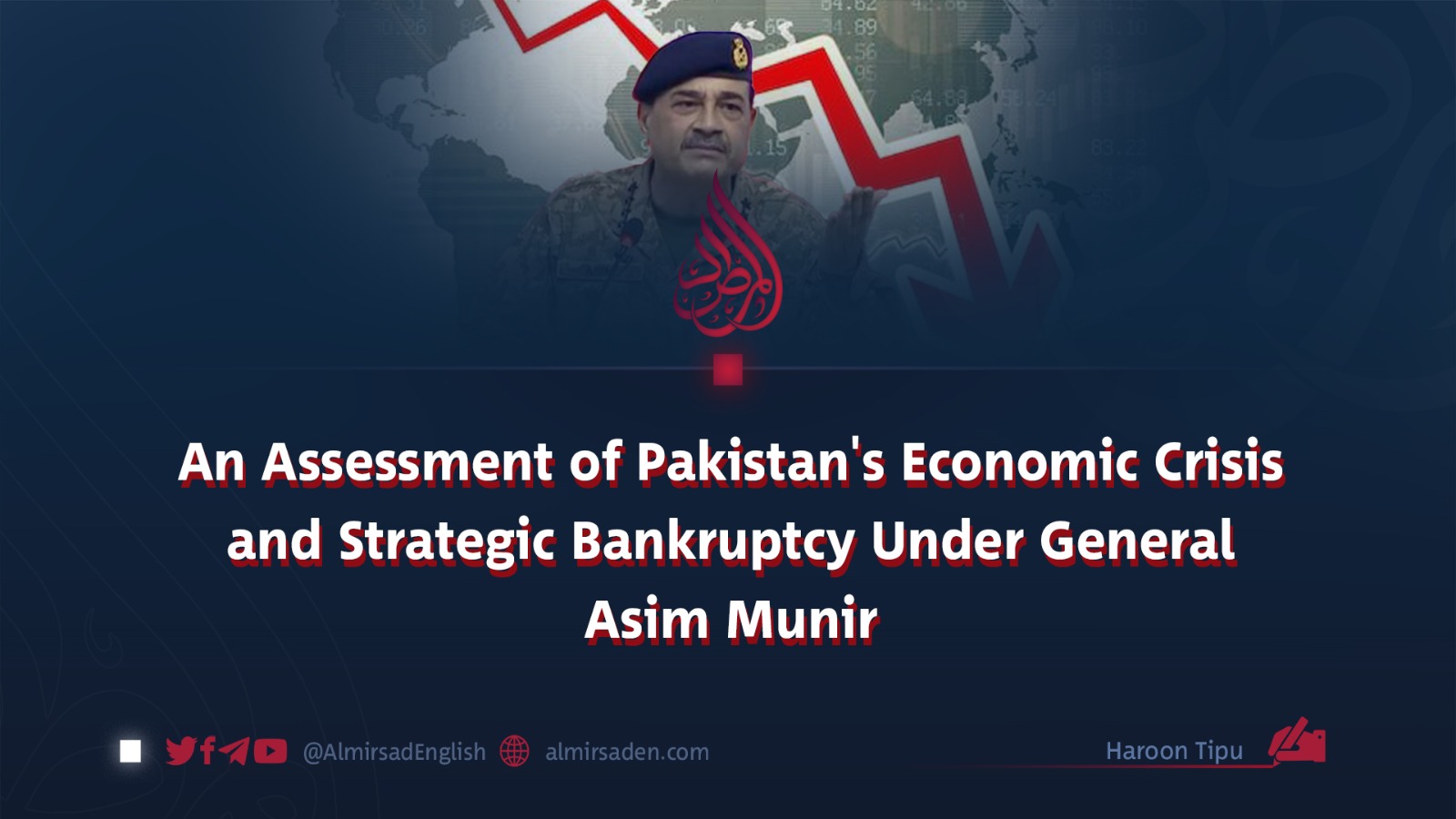
Pakistan today stands at one of the most delicate turning points in its political and economic existence, with the state structure facing severe internal contradictions and a deep financial crisis at the same time. In July 2023, the head of the military regime, General Asim Munir, addressed a large delegation of influential businessmen and investors in Karachi. Speaking in a thoroughly corporate tone, he claimed:
“The country’s economy will race down the runway of recovery and take off within a year.” He also urged the public not to lose hope, saying that “despair is kufr.”
Three years later, however, the reality on the ground in October 2026 presents a horrifying picture, the exact opposite of his claims. Documents from international institutions and facts on the ground are laying bare the deep contradiction between the military regime’s strategic decisions and their economic results. The economy’s plane not only failed to take “a flight as high as the distinctive mountains of Skardu” after racing down the runway, but now appears to be falling to the ground and breaking into pieces.
According to recent economic reports issued by the World Bank and the United Nations Development Programme (UNDP), Pakistan has now become the largest center of poverty in the wider strategic region comprising the Middle East, North Africa, Afghanistan and Pakistan (MENAAP). The World Bank report states plainly that Pakistan alone accounts for 48 percent of all the people in the region who earn less than three dollars a day. Meanwhile, the national poverty rate has climbed from 22 percent to 29 percent, meaning that more than 70 million Pakistanis are living in misery below the poverty line.
Similarly, according to the United Nations Multidimensional Poverty Index (MPI), 38.3 percent of the country’s population is deprived of health, education and a basic standard of living. A regional comparison makes Pakistan’s decline even clearer. At a time when neighboring countries have lifted millions of people out of poverty through their long-term economic policies, their poverty rates stand at 16.4 percent in India and 14.9 percent in Bangladesh. This stark difference raises serious questions about the rationality and effectiveness of the Pakistani military regime’s policies.
One clear cause of this economic decline is the strategic contradiction that emerged in September 2023 in the form of the so-called Illegal Foreigners Repatriation Plan, drawn up by the caretaker government and the military regime. Under the military regime’s narrative, Afghan refugees were blamed for rising unemployment and the shortage of resources, and hundreds of thousands of refugees were forcibly deported. But the results turned out to be the exact opposite of what the regime’s so-called policy was supposed to achieve.
According to economic experts, these Afghans were the backbone of Pakistan’s informal economy, particularly in transport, wholesale markets, construction and agriculture, where they served as low-cost laborers and active businesspeople. Their sudden departure severely disrupted the country’s supply chains and pushed Pakistan’s economy deeper into crisis.
On top of that, the military regime’s so-called foreign policy of accusing the Islamic Emirate of Afghanistan of supporting organizations such as Tehreek-e-Taliban Pakistan (TTP) led to repeated military clashes and airstrikes along the Durand Line. These actions shut the doors of trade between Pakistan and the Central Asian states and made the economic situation in Khyber Pakhtunkhwa and Balochistan even worse.
At home, insecurity and the energy crisis, particularly the reckless rise in electricity and gas prices, have pushed Faisalabad’s textile industry, the country’s largest industrial center, to the brink of collapse. Thousands of factories have shut down, leaving hundreds of thousands of daily-wage workers unemployed. As a result of this industrial decline, major local investors and multinational companies have pulled out their capital and turned toward safer countries such as the UAE and Saudi Arabia.
This large-scale flight of capital has drained Pakistan’s foreign exchange reserves to such an extent that, by October 2026, the country is hanging from the snare of the deep shadow of formal bankruptcy.
To deal with this financial crisis, the military regime and the political leadership are still relying on their traditional, so-called strategic policies of short-term aid. Under this approach, they’ve asked the US government in Washington for a $10 billion “Exchange Stabilization Support Fund.” This is a continuation of the old traditional rentier approach of securing financial packages in exchange for military services, as Pakistan did by siding with America against the IEA after 9/11.
Similarly, to manage the country’s import bill, Pakistan has asked the Saudi government in Riyadh for a deferred-payment oil facility worth about $6.7 billion over a period of 15 years. However, the fact that the Gulf countries have yet to give final approval shows that “friendly countries, too, are now starting to shy away from providing Pakistan with unconditional financial assistance.”
International political observers and economic analysts agree that the real cause of Pakistan’s economic, political and foreign policy crises is the military regime’s control over national decision-making, the economy and the system of governance, or rather, its excessive control over all of them. Instead of judging decisions by sound economic principles, the regime views them through a mindset built on making money from war.
Despite the departure of Afghan refugees, the growing storm of poverty in Pakistan proves that the roots of the country’s problems don’t lie with refugees. They’re embedded in flawed economic planning, industrial decline, political instability and the appointment of the military regime’s retired officer-class operatives to positions across the country’s institutions. Until real Islamic supremacy, political stability and fundamental structural reforms are put in place, and the military regime is sent back to the barracks, dependence on foreign loans and temporary financial packages won’t free Pakistan from this permanent cycle of bankruptcy.