














By Ghiyasuddin Ghori
Afghanistan is the only land that has earned the proud title of the “graveyard of empires,” a name recorded in the pages of its golden history. It is a nation that, throughout history, despite hardships, prisons, torture and hundreds of other forms of oppression, has never accepted humiliation or slavery. One of the defining traits of Afghans is their deep hatred of slavery and servitude. They have never been willing to give up their independence or their faith. Afghanistan has always remained a refuge for brave men, courageous women and Mujahideen.
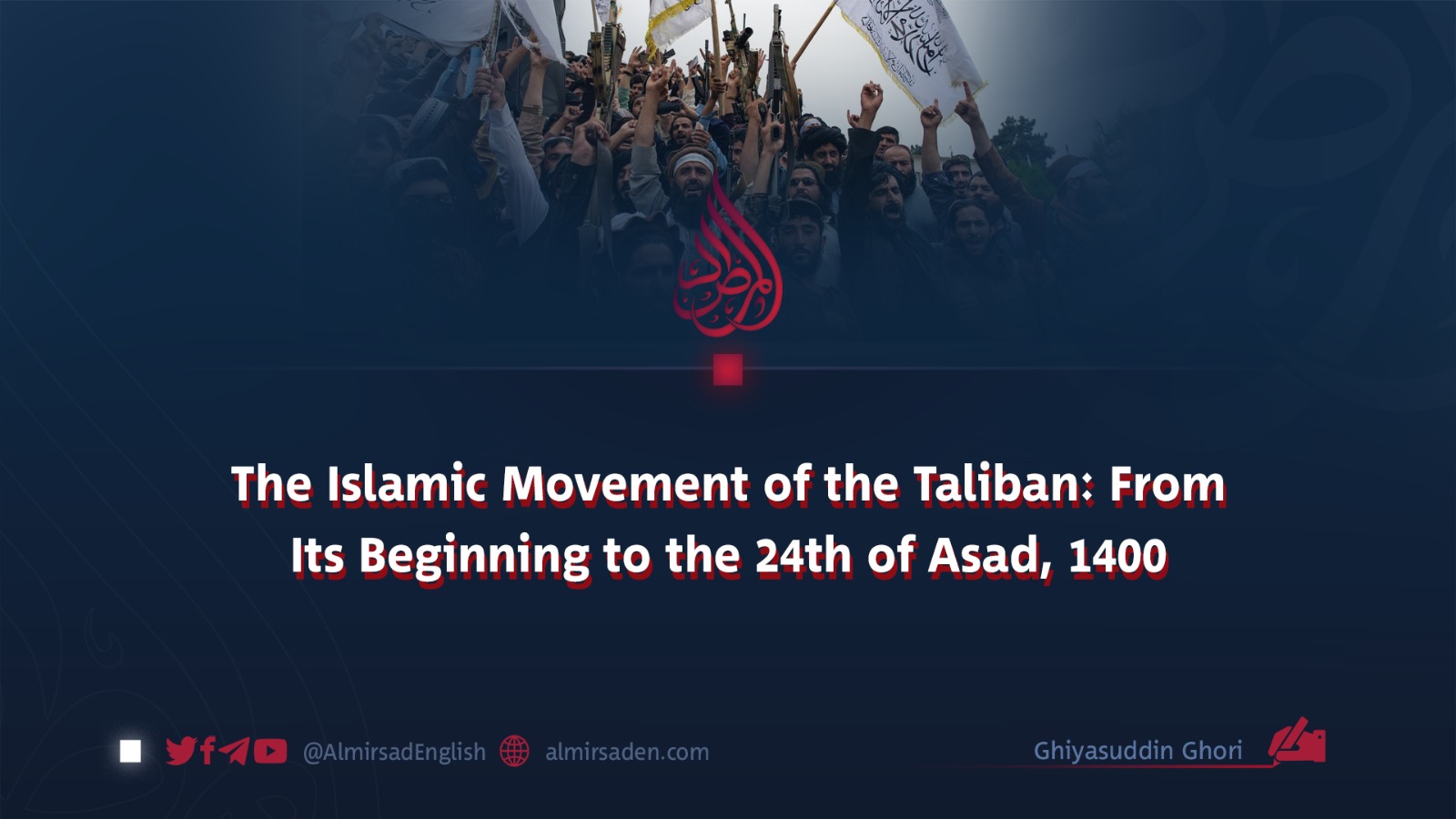
The history of this land is tied to jihad, resistance against occupation, civil wars and major political changes. Amid all these ups and downs, the emergence of the Islamic Movement of the Taliban and the developments that followed up to the 24th of Asad, 1400, are among the important chapters of Afghanistan’s contemporary history. It is a chapter that began amid insecurity and civil war and, after two decades of war and struggle, reached the point where the Islamic Emirate of Afghanistan (IEA) returned to power.
After years of jihad and sacrifices by the Afghan people, the Soviet occupation was finally defeated. The Afghan nation expected the fruit of that jihad to come in the form of independence, security, unity and the establishment of an Islamic system. Establishing an Islamic system was a great aspiration for Afghans, an aspiration for which thousands had sacrificed their lives during the years of jihad.
After the fall of the communist government, Afghanistan entered a difficult and turbulent period. Political disagreements among different groups and parties intensified, competition for power grew, and the country became engulfed in civil war. Kabul and many other parts of the country witnessed bloody clashes, destruction and instability. In many areas, people faced insecurity, warlordism, local rule, the abuses of armed groups, corruption, oppression, and ethnic and political rivalries.
The dream of unity and stability that people had hoped to see after years of jihad began to fade amid political and military struggles. In these circumstances, by the grace and favor of Allah Almighty, an Islamic movement emerged in southern Afghanistan from religious madrasas and the ranks of the Mujahideen to save the oppressed Afghan nation.
The movement declared itself committed to ending the civil wars, establishing security, fighting corruption and establishing an Islamic system. In reality, the emergence of such a movement to put an end to the oppression and corruption of the groups spreading evil and fitna had become a serious necessity.
The movement expanded rapidly, bringing one area after another under its control, until Kabul too fell into the hands of the IEA Mujahideen.
With the establishment of the IEA, most of the country came under a single administration and leadership. One of the major achievements of that period was the end of civil war and widespread insecurity. The country’s roads and communication routes became secure, the power of local commanders who oppressed and abused their own people was limited, and order and security were established across large parts of the country.
The IEA sought to put an end to ethnic and political divisions and bring the Afghan nation together under one system. The Afghan nation owes a debt of gratitude for this and will never forget it. Fighting corruption, ensuring security and implementing the rulings of Islamic Sharia were among the fundamental aims of the system.
At the same time, the IEA faced internal opposition and external pressure, while Afghanistan remained at the center of regional and international developments.
The events of September 11, 2001, became an excuse for the disbelieving powers of the world to destroy the Islamic system and the freedom of the Afghan nation, opening a new chapter in Afghanistan’s history. After those events, America and its allies launched their military operations in Afghanistan.
Within a short period, the government of the IEA fell. Following the guidance and instructions of Mullah Muhammad Omar Mujahid, may Allah have mercy on him, the IEA Mujahideen withdrew from the scene for a period and stepped away from the centers of power.
Many people may have thought that this was the end of the Taliban movement. But it was not the end. It was the beginning of a new phase of struggle.
With the arrival of foreign occupying forces and the establishment of a corrupt and decaying democratic system, Afghanistan entered a new phase. The foreign invaders maintained a large military presence, while their puppet government continued to operate with their political, financial and military support.
The IEA Mujahideen began fighting the occupiers and their hireling forces in defense of their homeland and Islamic sanctities. As a result, Afghanistan experienced one of the longest wars in its contemporary history, lasting twenty years.
Military operations, airstrikes, bombardments, the oppression and brutality of foreign forces and their supporters, arrests and armed clashes inflicted heavy human and financial losses on the people of Afghanistan. During this period, the IEA Mujahideen gradually reorganized and strengthened their ranks, expanding their military activities into different parts of the country.
The long years of war left thousands martyred or wounded and left countless families mourning their loved ones. Throughout these years, the Mujahideen resisted the foreign occupation and its Afghan hireling forces, forces that had made slavery and servitude their way of life.
Despite the overwhelming military and technological superiority of the foreign forces, the jihad and struggle continued. The withdrawal of foreign forces eventually became one of Afghanistan’s major political issues.
After years of war, a process of negotiations finally began to end the presence of the U.S.-led foreign occupying forces. The Doha Agreement created the conditions for the withdrawal of foreign forces, and as they withdrew, Afghanistan’s political and military equations changed rapidly.
In 1400, the advances of the IEA Mujahideen accelerated. Province after province was conquered, while the governmental structure of the republic and democracy collapsed at an unprecedented speed.
Finally, on the 24th of Asad, 1400, Kabul fell into the hands of the sons of this land and the Mujahideen, and the puppet government supported by the Jews and Christians also collapsed.
The story of Afghanistan from the victory over the Soviet Union to the 24th of Asad, 1400, is the story of several generations who lived through wars, occupation, internal divisions and political changes. Throughout all these years, the country’s independence and political sovereignty, together with the demand for the establishment of an Islamic system, remained among the major demands and subjects of debate in Afghan society.
The emergence and uprising of the IEA Mujahideen was a movement that rose out of civil war and insecurity. It ruled over most of Afghanistan for a period, was removed from power following the U.S. invasion, fought foreign forces and the government they supported for twenty years, and finally returned to Kabul once again on the 24th of Asad, 1400.
Alhamdulillah, today the people of Afghanistan have an Islamic, free and independent system, the very aspiration that has remained among the Afghan nation’s enduring and long-standing hopes.
But those enemies who are still thinking of destroying Islam and the Islamic system should learn a lesson from the invaders and occupiers who came to this sacred land and were ultimately exposed, humiliated and defeated. This free and independent nation will never accept coming under the control of the disbelievers or their projects.