


Asif Tareen
According to the established principles of international relations, states defend their national interests through polite diplomatic language, careful words and quiet contacts carried on behind the scenes. But when relations between two neighboring countries heat up with gunpowder and harsh rhetoric instead of talks, even diplomatic forums turn into battlefields where the sides are at each other’s throats.
The eighth edition of the Moscow Format, held in the Russian capital on October 5, 2026, has already gone down in the region’s history as just such an important turning point. The tension Pakistan had kept simmering beneath the surface in its relations with Afghanistan for years turned, for the first time, into a fierce, open diplomatic clash on the global stage. The conference ended without an agreed joint statement, and this was no sudden development. It was the logical result of the long, bitter, gunpowder-stained background for which the Pakistani army had already laid the groundwork several days before the Moscow Format began.
To understand this whole chain of events, we have to look at the situation about two weeks before the Moscow conference, when regional powers moved to break the ice between the Islamic Emirate of Afghanistan (IEA) and Pakistan and restore relations.
First, Türkiye’s intelligence chief visited Kabul and held detailed and important talks with senior IEA officials to bring the sides to the same table. Right after that, high-level diplomatic delegations from Qatar and Saudi Arabia also headed to Kabul and talked with the Afghan leadership about easing the tension.
After these meetings, the Turkish intelligence chief went straight from Kabul to Islamabad, so that the behind-the-scenes concerns of both capitals could be allayed and the problems resolved through closed-door diplomatic talks. As a result of these efforts, the atmosphere was improving and a new hope for talks was rising on both sides.
Amid this positive progress, militants targeted a police station in the Pakistani city of Kohat, and a mosque and, reportedly, ordinary citizens were also hit. So the IEA issued a formal statement expressing condolences and strongly condemning the incident.
On the diplomatic level, this step by the IEA was clear proof that the Kabul government grieves over Pakistan’s domestic losses as a brother would and, despite Pakistan’s flippant habit of dumping the blame for its own problems on Afghanistan, holds that these matters should be solved through dialogue.
But the Pakistani army and establishment completely ignored this clear diplomatic signal and statement of condemnation from the IEA. Instead of taking the diplomatic road to solve its domestic problems, Pakistan chose to use military force. So on the night between September 23 and 24, the Pakistani army bombed provinces such as Khost, Paktika, Kunar and Kandahar and martyred four innocent Afghan Muslims.
Later, leaning on the crutch of the lie that “eight drone attacks were carried out from the Afghan side and were intercepted in the air,” the Pakistani army again bombed the Afghan provinces of Kunar and Helmand, suddenly and heavily, on October 1, 2026, just four days before the Moscow Format, martyring nine innocent Afghan Muslims. This was dubbed the so-called Operation Ghazab lil-Haq.
But the Afghan government and all independent media strongly denied Pakistan’s claim that any drone attack had been carried out from the Afghan side. Apart from clashes on the imaginary line, no evidence or proof of any such drone attack emerged. Meanwhile, as usual, Pakistani military spokesmen repeated the same old script and claimed that hideouts of militants had been targeted on the basis of intelligence information. But international organizations and independent sources soon exposed to the world the truth behind the Pakistani army’s claims.
UN human rights bodies and UNAMA confirmed in their verified reports that the Pakistani army had bombed the homes of ordinary citizens. No military site or militant hideout was hit. Reports from the European Union and local witnesses in the area also confirmed that Pakistani jets had martyred at least nine innocent Afghan Muslims, including women and children, in the bombing.
This loss of life sent a wave of intense anger and grief through Kabul, and so Pakistan, with its own hands, destroyed the golden chance for talks that had come about through the efforts of friendly countries like Türkiye, Qatar and Saudi Arabia.
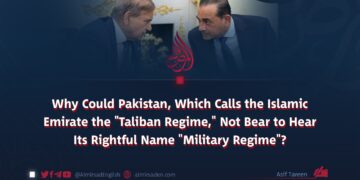
It was in this same extremely strained, gunpowder-stained atmosphere that the representatives of both countries took part in the Moscow conference. When Afghan Foreign Minister Amir Khan Muttaqi took the stage armed with the reports published by international institutions on civilian casualties, his manner, in view of the freshly spilled blood of his citizens, was fittingly aggressive and harsh. For the first time on a global forum, showing Pakistan’s rule and system in its true colors, he called it by the name “military regime”.
At the Moscow Format, however, Pakistan’s main aim was to win the backing of Russia, China, Iran and the Central Asian countries, to have Afghanistan formally declared a “center of terrorism” in the conference’s joint statement, and to have the Russian bloc also increase international diplomatic and economic pressure on Kabul. But great powers like Russia and China flatly refused to go along with this one-sided and unbalanced approach of Pakistan.
At the same time, Afghanistan’s formal use of the term “military dictatorship” for Pakistan at the global level was such an unexpected blow, at least to Pakistan, that the day after the Moscow Format the Pakistani journalist Tahir Khan spread a particular narrative through his vlog.
Citing his so-called sources, he claimed that “Pakistan’s special representative Muhammad Sadiq Khan had basically gone to Moscow with a soft, flexible and positive speech prepared, so as to signal Pakistan’s willingness to talk to Afghanistan, but after hearing Afghan Foreign Minister Amir Khan Muttaqi’s harsh words like ‘military dictatorship,’ Muhammad Sadiq Khan changed his previously written statement on the spot and took a hard position against Afghanistan.”
But journalist Tahir Khan has not offered a single solid or documentary piece of evidence in support of this whole claim or the information from his alleged sources. For this reason, neutral and independent analysts call his unverified claim an organized “strategic leak” and part of diplomatic propaganda.
The reason is that the main aim of putting out, through journalist Tahir Khan, the so-called narrative that the soft and flexible speech had been changed seems to have been to turn the world’s attention away from Pakistan’s own military and diplomatic failures and, by dumping the whole blame for the Moscow Format’s joint statement not being issued on Afghanistan, to make Afghanistan look guilty: “We were ready for talks, but you lost this chance by using harsh words.”
Here even the ordinary reader is convinced that, in the light of journalist Tahir Khan’s alleged narrative, it is illogical and meaningless even to ask: would an Afghanistan whose Muslim citizens had been bombed and martyred just four days before the conference come to a global forum and speak in language as sweet as honey and as gentle as milk…?!
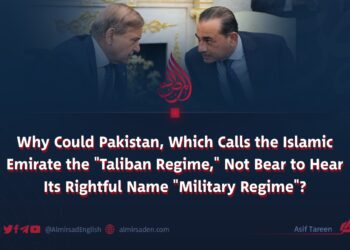
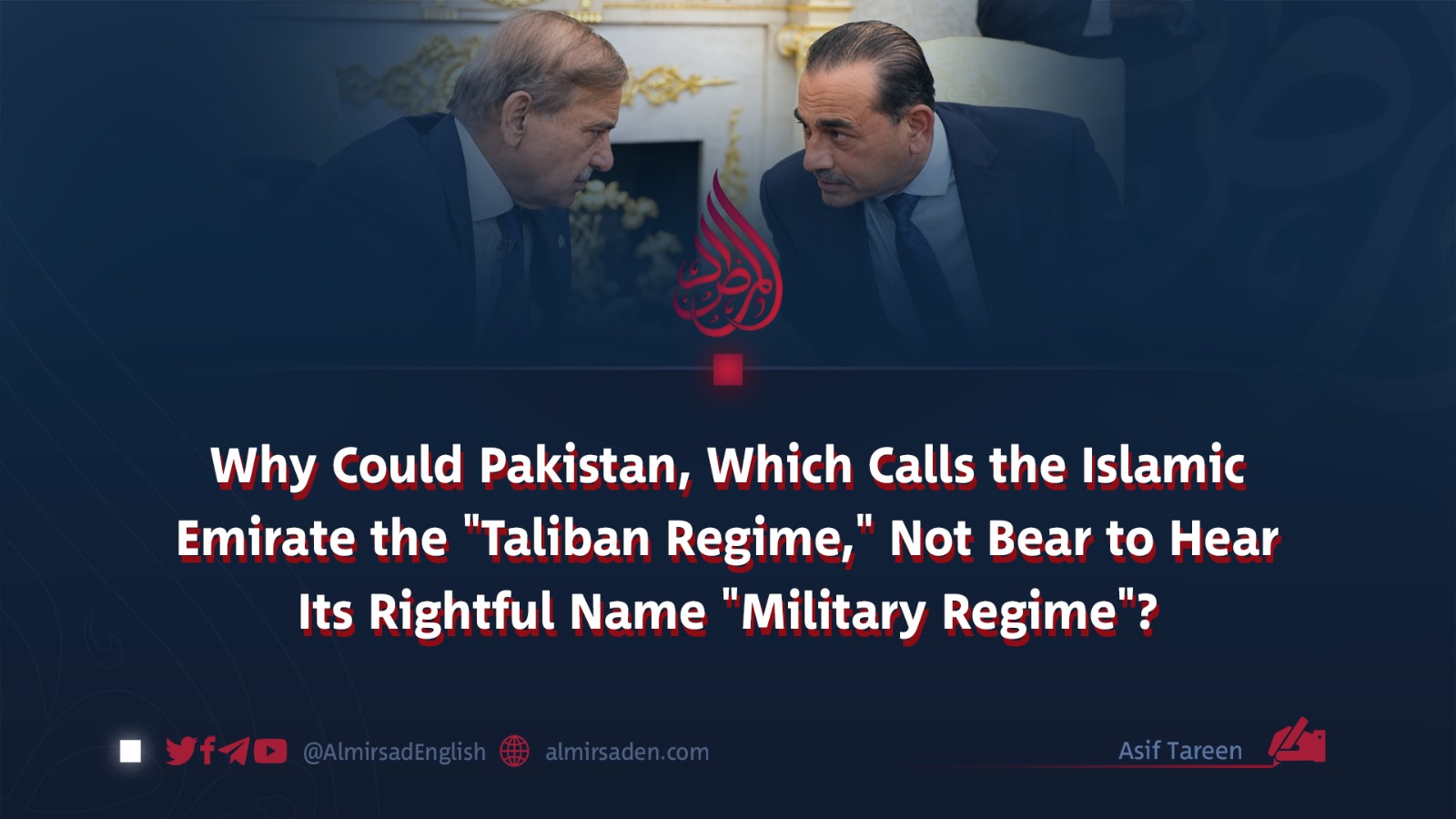
On the other hand, the most interesting and thought-provoking aspect of the anger of Pakistan’s military and diplomatic circles over the term “military regime” is its glaring diplomatic contradiction. Pakistan itself, for two to two and a half years, and even before the first major bombing of Afghanistan on October 9, 2025, had been formally and continuously calling the Islamic Emirate of Afghanistan the “Taliban regime” through its foreign ministry and military spokesmen. Pakistan took this attitude even though formal diplomatic ties exist between the two countries, the Pakistani embassy is functioning in Kabul and an Afghan ambassador is posted in Islamabad.
Under the military dictatorship, the Pakistani system kept using mocking and contemptuous words for the Afghan government. But when, after two to two and a half years of long patience and tolerance, the Afghan foreign minister for the first time called Pakistan the “military regime” in reply, the Pakistani establishment was seized by intense fury and agitation, and its brain began to tremble.
This two-faced position of Pakistan lays bare Islamabad’s diplomatic hypocrisy: whoever himself gives other countries’ systems negative names lacks the nerve to stand hearing the same kind of name used for himself, and flies off the handle.