






By Rafiq
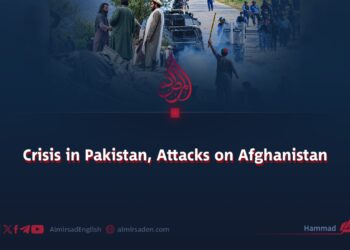
According to universally accepted principles, no country should shelter or train elements that threaten the security of its neighbors. Yet the Pakistani military regime has followed a very different path.
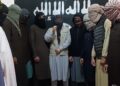
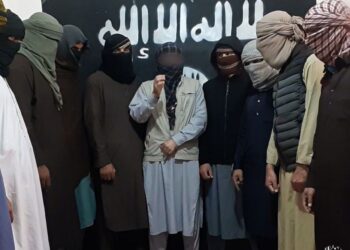
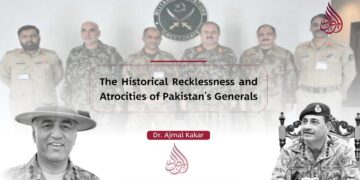
From the very beginning, Pakistan emerged under the shadow of armed militias that were mobilized against Muslims in India. Later, the military regime tightened its grip over the newly created state, and to this day it continues to dominate Pakistan through military rule. For years now, the circles that control Pakistan’s military regime have been accused of supporting, training, and equipping the terrorist organization known as Daesh. Militants trained inside Pakistan have carried out brutal attacks and massacres across several countries in the region. There is documented evidence, as well as confessions, that point to these crimes.
Today, the military’s policy of training former Afghan Arbakai and then using them in the name of maintaining law and order against two major peoples, the Pashtuns and the Baloch, is creating division where none should exist. Wherever these Arbakai are deployed among the Baloch, they are made to fight those resisting the military regime. Those stationed in Pashtun tribal areas are pushed into conflict with the TTP. This is one of the military’s greatest acts of folly and one of the gravest injustices committed against its own people. A nation that shares the same faith, culture, and history is being driven into fighting itself in the name of loyalty and opposition. That is the real purpose of the Arbakai system: to divert the struggle against the regime into internal disputes, forcing the oppressed people to turn on one another instead of confronting those responsible for their suffering.
Is this not the height of cruelty against Pakistan’s own people? The ruling regime pits entire communities against each other simply to preserve itself for a few more days, to protect its economy, and to keep alive its image built on mischief and conflict. In what law or moral code is a government allowed to secure its own survival by trapping its people in conspiracies of its own making while calmly watching their blood being spilled?
What is even more alarming is that the military and the circles surrounding it have become so emboldened in their malice that they are now trying to use former Afghan Arbakai against Afghanistan’s present Islamic system. They are attempting to send groups of fitna and corruption into Afghanistan to create instability there. But Afghanistan has no reason to fear the wickedness or schemes of Pakistan’s military regime. Afghanistan today has an independent, strong, and determined system capable of dealing with any crisis imposed from abroad.
Pakistan expected the forced expulsion of Afghan refugees to overwhelm the IEA, yet the situation was managed so effectively that even the International Organization for Migration (IOM) expressed surprise at how smoothly it was handled.
Pakistan is deliberately destabilizing the Baloch and Pashtuns, peoples who are tied to Afghanistan through faith, history, and culture. At the same time, it is spreading insecurity not only into Afghanistan but across the region. Many politicians and scholars inside Pakistan have already recognized the reality of this regime. The fire you throw toward your neighbor first burns the people living under your own rule. Others may suffer from it, but your own fate will be worse. The ethnic groups you are dragging into conflict through creating Arbakai groups and groups of fitna and corruption will first cost you economically, and then the blow of counter-terrorism operations inside your own territory from outside will hit you first.
The open training of Arbakai, Daesh, and other groups of fitna and corruption has become a regional threat. The IEA has already hit some of these centers in Chitral and destroyed camps operating there. What clearer proof is needed? Openly establishing centers of fitna and corruption carries dangerous consequences for the entire region. The military does not bear those costs. The ordinary people of Pakistan do. Pakistan’s standing among neighboring countries declines, the value of its currency weakens, and the people’s economy continues to suffer.
It is time for Pakistan’s politicians and religious scholars to recognize the scale of these public losses and the failure of the military regime’s policies. Only then can they prevent even greater consequences for their people in the future at the hands of neighboring countries. No one wishes to see Pakistan’s oppressed Muslim population become known around the world as a symbol of violence, corruption, insecurity, and extremism. But if the military insists on following its present course, it is leading the country toward precisely that outcome, along with further decline and ruin.