























Hamid
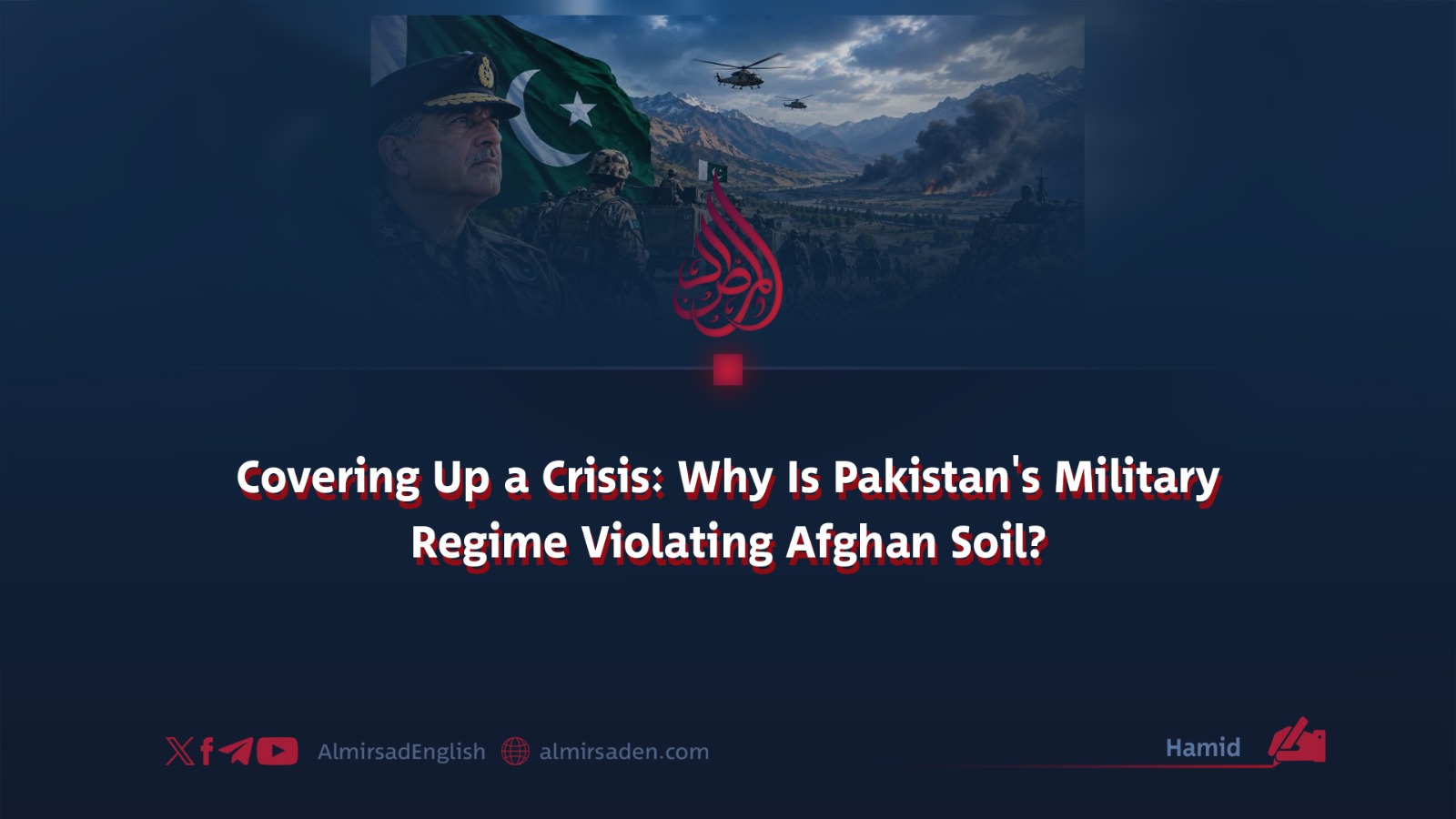
At a time when Afghanistan’s oppressed people, after several decades of war and instability, are living today in peace and security thanks to the blessing of the Islamic system, and are moving under that system’s leadership toward progress and global change, Pakistan’s military regime has once again carried out brutal, unlawful aggression against Afghan soil and defenseless people.
These attacks, carried out in the name of “fighting terrorism” on false, tired excuses, aren’t just an open violation of Afghanistan’s national sovereignty and territorial integrity, their roots also lie in Pakistan’s own deep, unsolvable internal crises.
This country’s military regime, having failed to manage its own internal affairs or keep its widespread unrest under control, is trying to hide its failures by twisting public opinion and inventing a foreign enemy.
A look at the facts shows plainly that Pakistan today is locked in a grapple with a whole string of crippling crises. The country’s economy is standing on the edge of collapse, insecurity and fighting are spreading fast in different provinces, and the political legitimacy of the military institutions among their own people has fallen lower than at any other time.
Reports coming out of Pakistan show that even senior regional officials aren’t safe from the threat of insecurity. For example, in recent months a provincial minister was kidnapped in Peshawar, and another official opened fire on his own security forces. These signs show that Pakistan’s security and political structure is facing a deep crisis, chaos, and disorder within itself. To hide these bitter, ugly realities, instead of fixing its own internal problems, the military regime lights the fire of aggression against a neighboring country, to turn its own protesting and unhappy people’s attention somewhere else.
This old, worn-out, used-up tactic of manufacturing a foreign enemy is the same road weak, failed, incompetent military regimes have taken throughout history. By bombing residential areas and targeting Afghan civilians, Pakistan’s current regime is trying to convince its own people that their economic and security problems come from instability in Afghanistan, not from the military regime’s own bad management and structural corruption. But these excuses can’t hide this regime’s real face.
Today Afghanistan, under the IEA’s leadership, is carrying out a genuine fight against the takfiri and evil groups who want to create an imposed insecurity on this land. The IEA’s leaders have said again and again that they won’t allow Afghan soil to be used against any country’s security, Pakistan in particular. That’s why Pakistan’s claims aren’t just baseless, they’re also a scenario planned in advance to apply pressure and draw a curtain over its own internal crises.
The recent attacks, carried out by warplanes and drones in violation of international law and the principles of human rights, are a clear example of a war crime and an open violation of the rights of Afghanistan’s innocent people. These attacks do nothing at all to fix Pakistan’s internal crisis or to strengthen peace and stability in the region, on the contrary, they raise the level of distrust and crisis even further and lay the ground for still more instability. Pakistan’s military regime needs to understand that this reckless, imposed approach will, in the end, not only fail to guarantee its own country’s security, it will push it toward even greater isolation in the region and the world.
It has to be said in clear, decisive words that the brutal aggression of Pakistan’s military regime against Afghan soil won’t go unanswered. The Afghan people, as they’ve proven throughout history, are a brave and courageous people, and they’ll never allow their national sovereignty and territorial integrity to be violated.
The IEA’s leaders too have insisted again and again that they won’t give up their right to legitimate defense and to protecting their borders and their people. Pakistan’s regime should stop dumping blame and committing aggression and start thinking about solving its own internal crises, because history bears witness that the flames of aggression, in the end, reach the lap of the aggressor himself.