













By Ahmad Shafaq
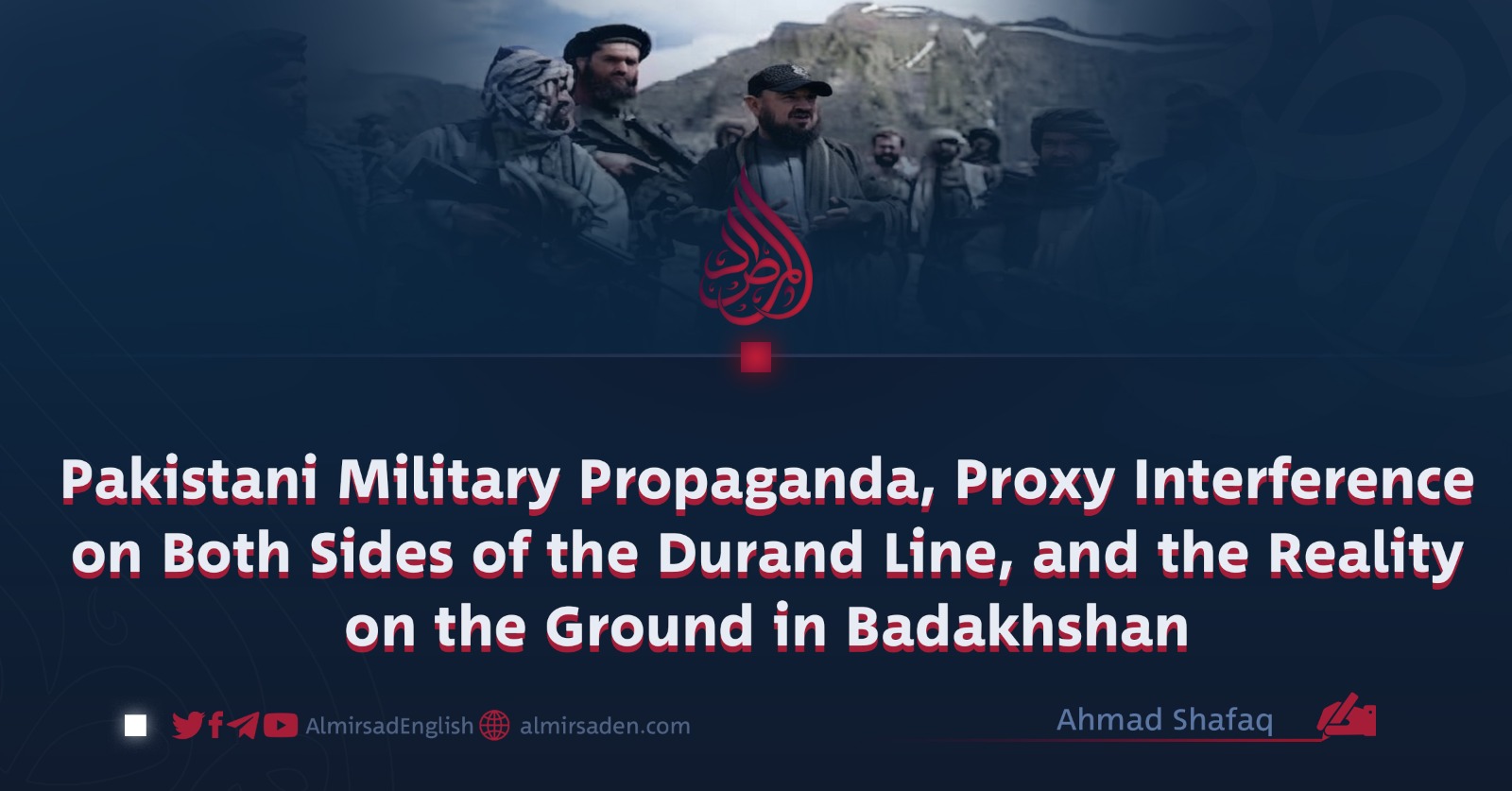
Amid the bitter winds of December, the long and rugged mountain range of Badakhshan, stretching along Afghanistan’s border, appears mysterious at first glance. Yet it has also become one of the main arenas of regional and international rivalry.
Anyone following the headlines carried over the past few months by international media outlets covering Afghanistan, especially Pakistani media and Afghan exile media, could easily come away with the impression that the Islamic Emirate of Afghanistan (IEA) has lost its grip on Badakhshan and that its opponents have achieved major victories there. But once those dramatic headlines, vague claims, and recycled videos are stripped away, and the situation on the ground is examined, a very different picture emerges.
On the night of Thursday, July 23, 2026, a significant border incident took place in the Topkhana area of Zebak district in Badakhshan province and the Shah Salim border area of Pakistan’s Chitral district.
According to Afghan security sources, a group of armed men crossed from Shah Salim in Chitral into the Zebak area. They were reportedly sent by Pakistani intelligence agencies to infiltrate Badakhshan. They were met by the 15th Border Brigade of the Afghan Mujahideen, which responded forcefully. Five of the infiltrators were killed and several others wounded before the survivors fled back into Pakistan’s Chitral district.
Some media outlets opposed to the IEA quickly began circulating reports claiming that the commander of the 15th Border Brigade, Mullah Abdul Jamil Rahmani, had either been martyred or seriously wounded during the clash. Local sources in the area, along with officials from the brigade itself, rejected those reports and confirmed that Commander Rahmani was alive, unharmed, and continuing his duties. The incident not only demonstrated the IEA’s firm control over the border and its security arrangements, it also shattered the propaganda campaign that exile media have been trying to build for quite some time.
To understand what really happened, it is necessary to look at how those exile media operate.
These outlets have no organized network of field reporters inside Afghanistan. Their reporting from remote areas relies largely on unverified voice messages, WhatsApp communications, self-issued statements from so-called resistance groups, and rumors or misleading information circulating online. Fact-checking organizations have repeatedly shown that some of these same outlets have presented years-old videos or even local land disputes as supposed “major victories against the Taliban” or evidence of “internal divisions.”
There is nothing surprising about that. Once a media outlet abandons any concern for the truth or for its moral responsibility and turns political opposition into its guiding principle, it inevitably begins mixing fact with fiction. The aim is no longer to inform the public, but to portray its political opponent as weak, divided, and unstable.
The same applies to Ahmad Massoud and his so-called National Resistance Front. The military and political reality facing that movement speaks for itself.
One simple question naturally follows. If a movement, backed in August 2021 by the direct military presence of the United States and NATO, advanced weaponry, and billions of dollars in funding, failed to stop the advance of the IEA, how can the same leadership, now living abroad, fundamentally change the situation on the battlefield?
It is worth remembering that many of these so-called leaders left Afghanistan even before the American withdrawal was complete. Their departure was, in itself, an admission that their strength rested not on the support of the Afghan people, but on foreign military backing. Afghan history has repeatedly shown that this nation values its independence above all else, and that political movements dependent on foreign powers have never enjoyed lasting public support.
Recent reports have also claimed that some exile opposition leaders continue to hold political and security meetings in various foreign capitals. They have largely lost the ability to act independently and are increasingly being used as proxy instruments through intelligence contacts and coordination extending from European capitals to Islamabad. Once a political movement becomes associated with foreign intelligence services and proxy cooperation, its credibility and national standing suffer accordingly. That is one reason why their calls find little response among the people of Badakhshan or Panjshir.
Pakistan’s reliance on proxy warfare only intensified after every other military option for pressuring the IEA failed to produce results. Between October 9, 2025, and June 2026, Islamabad, acting under Rawalpindi’s direction, carried out a series of airstrikes that it claimed were aimed at militant hideouts. But in July 2026, credible reports published by Amnesty International and the United Nations Assistance Mission in Afghanistan (UNAMA) told a different story.
Those investigations showed that when Pakistani forces struck the Omid Drug Rehabilitation Center in Kabul, there were no armed fighters there. Everyone killed in the attack was a civilian, patients receiving treatment and medical staff working at the facility.
Those findings exposed the reality of Pakistan’s military pressure campaign. They also showed that when military pressure loses its effectiveness and aerial attacks fail to achieve their objectives, the old game begins again: sending proxy elements from places such as Chitral into Badakhshan. The truth is that after four decades of bloodshed, ordinary Afghans have little appetite for another round of internal conflict. Their priority is the security, stability, and border protection that the IEA has established.
Whether one looks at the events in Badakhshan or the propaganda war playing out across the media, the reality on the ground remains the same. Exile groups that depend on foreign support may create temporary security disturbances, but, by the grace and help of Allah Almighty, they cannot undermine the stability of the IEA or weaken the resolve of the Afghan people.
The future of this region will not be secured through inflammatory propaganda or the use of proxy groups. It lies in recognizing the facts as they are and building effective border management based on mutual understanding.