





By Khalid Ahrar
In today’s world, psychological and propaganda warfare have become just as important as armed conflict. These battles are fought not on the battlefield, but in people’s minds, emotions, and determination. In many cases, their impact is greater than that of military operations. Psychological warfare is a form of conflict in which no weapons are fired, yet its effects often run deeper than those of conventional war. It targets the human mind, emotions, fears, hopes, and willpower. It consists of carefully planned efforts aimed at influencing enemy soldiers, commanders, ordinary civilians, and even one’s own supporters to strengthen their morale. Its purpose is to force the enemy to surrender, retreat, or change course without having to fight a costly battle.
Psychological warfare takes several forms.
White psychological warfare relies on truthful information but presents it in a carefully calculated way.
Black psychological warfare is built entirely on lies and fabricated stories about the enemy.
Gray psychological warfare mixes truth with falsehood, presenting half-truths about ongoing events.
Its methods are numerous. Loud noise, bright lights, and music are used to deprive people of sleep. False reports and fabricated videos are spread. Prisoners are treated in ways designed to make them useful for propaganda. Social media campaigns are organized to spread fear and confusion, alongside many other techniques.
Nothing is more vulnerable than the human mind. Once morale is broken, even the strongest army begins to collapse. A soldier who believes, “We have already lost,” has in reality been defeated before the battle even starts. Today, psychological warfare is considered an essential part of every country’s national defense. Many states maintain dedicated psychological operations units that work around the clock.
Propaganda warfare is another front.
It is a battle over the truth itself. Whose version of events will prevail? Who will convince the world that “we are right and they are wrong”?
This form of warfare shapes public opinion through information and carefully constructed narratives. It gathers support for one side while discrediting the other. Propaganda is one of the most important tools of psychological warfare.
Propaganda is a systematic and organized effort to shape public thinking through the media, art, education, and culture. Its purpose is to persuade people to accept a particular point of view. Like psychological warfare, it also exists in white, black, and gray forms. White propaganda highlights the achievements of one’s own side. Black propaganda relies entirely on lies, fabricated photographs, fake videos, forged audio recordings, and other false material. Gray propaganda combines genuine information with manufactured claims.
Modern propaganda tools have become extremely dangerous. Even groups with limited resources can now use them effectively against their opponents. Social media algorithms, AI-generated images, videos, and audio, popular online influencers, memes, cartoons, schools, and even history textbooks have all become instruments of propaganda.
Why is propaganda so powerful? Because human beings respond to stories. If someone tells a convincing story that says, “We are the victims,” or “We are the heroes,” many people will believe it and offer their support. Often it is not the truth itself that matters most, but the way the story is presented.
As these tools have become easier to obtain, their destructive potential has multiplied. They can spread hatred and distrust among communities. They can flood society with so many lies that people no longer recognize the truth. They can push young people toward extremist thinking. Their influence reaches the old, the young, and even children alike. Propaganda warfare begins before armed conflict starts and continues long after the fighting ends. The side that wins the propaganda battle often gains the advantage in many other areas as well.
Pakistan’s Psychological and Propaganda Warfare
Pakistan’s psychological and propaganda operations are mainly carried out through the Inter-Services Public Relations Directorate (ISPR) and the Inter-Services Intelligence agency (ISI). Together, these two institutions shape military and state narratives, particularly on India, Kashmir, and domestic affairs.
ISPR, established in 1949, serves as the Pakistani military’s official media arm. Through military statements, videos, press briefings, television, films, newspapers, and social media platforms such as Facebook, X, Instagram, and TikTok, it works to shape public opinion. Its objectives are to promote a positive image of the military, portray its opponents, usually India and more recently Afghanistan, as the aggressors, and reduce internal criticism. Coordinated campaigns using bots, fake accounts, and organized online networks are a regular part of this effort. Pakistani journalists, influencers, and members of the diaspora are also used to shape international opinion.
Relations between Afghanistan and Pakistan have remained complicated and tense for decades. Islamabad, particularly its military intelligence establishment, has long used propaganda and psychological operations to maintain influence over Afghanistan’s internal affairs. These efforts form part of its so-called “strategic depth” policy, which seeks to establish either a friendly or a dependent government in Kabul while countering Indian influence. Much of this campaign relies on false reports, manufactured narratives, religious and ethnic manipulation, and the spread of hostility.
Relations between Pakistan and the Islamic Emirate of Afghanistan (IEA) deteriorated sharply after 2021. At first, Islamabad had little difficulty with the new government, but later it began accusing Afghanistan of supporting the Tehrik-i-Taliban Pakistan (TTP). Afghanistan, meanwhile, maintained its long-standing position on the Durand Line.
Pakistan claims that TTP fighters operate from Afghan territory with the support of the Taliban. These accusations have become the basis of Islamabad’s unsuccessful attempt to strengthen its position through propaganda and psychological operations.
ISPR regularly accuses Afghanistan of supporting terrorism, failing to secure the Durand Line, and sheltering TTP mujahidin. After almost every attack inside Pakistan, it quickly issues statements claiming that the operation was planned from Afghan soil and that the IEA bears responsibility. These claims are intended to strengthen domestic morale while presenting Pakistan internationally as the victim.
Since 2021, Pakistan has also carried out repeated airstrikes inside Afghanistan, including attacks in Nangarhar, Paktika, Kunar, and Khost during 2025 and 2026. These operations are presented as strikes against the Pakistani Taliban and IS-K. Pakistani propaganda portrays them as acts of self-defense and counterterrorism. In reality, they represent little more than the military regime venting its frustration after Kabul refused to submit to its demands, frustration that has repeatedly taken the form of attacks on civilians. Pakistani media celebrate these operations as military victories, yet they amount to war crimes committed by the military regime. Beyond violating Afghanistan’s airspace, the regime also wages an extensive digital propaganda campaign. Bot networks, coordinated hashtags, and fabricated stories are used to portray the IEA as an incompetent administration that shelters terrorists.
After every TTP attack, campaigns quickly appear claiming that Afghanistan has become a center of terrorism and that the IEA has failed to honor its commitments. Islamabad has used every possible means to pressure Afghanistan, including the forced expulsion of millions of Afghan refugees under the pretext of national security, when the real motives lay elsewhere.
Pakistan also uses international forums, including the United Nations, to accuse the IEA of failing to combat terrorism. Yet since returning to power, the IEA has consistently maintained that it will not allow Afghan territory to be used against any other country and has taken practical steps to enforce that policy.
Pakistan’s campaign is fought on several fronts at once. It uses military force through cross-border attacks, psychological warfare through accusations and attempts to undermine morale, and propaganda through its media networks. Islamabad hopes to pressure the IEA into taking action against the TTP. Yet it is clear to everyone that the TTP was born inside Pakistan, trained there, and continues to operate there. It is Pakistan’s own stubborn policies that have pushed relations toward open confrontation.
How Daesh Uses Psychological and Propaganda Warfare
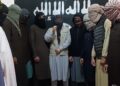
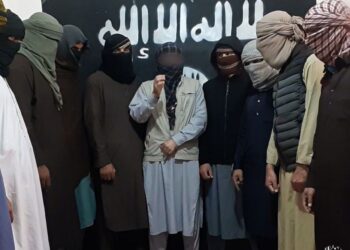
Daesh built one of the most effective and brutal propaganda machines in modern history. Much of its rapid expansion was made possible by psychological operations and propaganda. Through these methods it recruited thousands of young people, intimidated its enemies, and carefully shaped its image around the world. Its propaganda was never just information. It was a weapon in its own right. The organization produced polished, high-quality videos comparable to commercial films, including productions such as Flames of War. It published jihadist anthems, animations, memes, infographics, and material in numerous regional and international languages.
It portrayed its fighters as heroes and champions while branding its enemies as infidels and apostates. It spread videos of beheadings, executions, and burnings to create fear. It exploited the sacred idea of the caliphate to attract Muslims from around the world, promising justice, security, prosperity, and what it called the true battlefield of jihad.
Daesh understood psychological warfare remarkably well. It carefully staged attacks in cities such as Paris and Brussels to send one message: “We are everywhere. You are never safe.”
It also offered young people, especially those living in the West, a sense of identity and purpose by presenting them with the dream of becoming heroes. The message was: “You can become a hero too.” That appeal proved powerful, inspiring many recruits to carry out attacks across Europe.
As modern propaganda tools became more accessible, Daesh expanded its use of them. Social media became its primary platform. Through Facebook, Telegram, X, and dozens of other platforms, it operated hundreds of thousands of accounts. In many cases, a single individual managed several accounts at once to spread propaganda more effectively.
Its media network extended far beyond videos and audio broadcasts. It produced professionally designed magazines and books, while the Amaq News Agency issued rapid updates in several languages. It even made use of one of the oldest but still effective tools of propaganda by operating FM radio stations.
Daesh’s success rested on two main factors. One was its ability to attract skilled individuals from every corner of the world under the banner of the caliphate and the unity of the Muslim Ummah. Engineers, media specialists, military experts, and professionals from many other fields all found a place within the organization. Each was assigned work according to his expertise. Another was speed. Daesh released news and propaganda almost immediately after events occurred. It understood recruitment techniques better than most organizations and knew exactly how to influence its audience and use that influence to its own advantage.
Although Daesh’s territorial caliphate has collapsed and its physical presence has largely disappeared from the region, its online caliphate remains active.
In the end, Daesh regarded propaganda and psychological warfare as no less important than military strength. It understood that once minds are conquered, territory often follows. Many other jihadist groups have since adopted the same approach.
Psychological and propaganda warfare is a battle over the truth. The side that tells the stronger story and wins over people’s minds gains the advantage in many other fields as well. Success in these conflicts requires not only military strength, but intellectual strength too. Information has now become as dangerous a weapon as any gun.