























By Arsala Hassan
Recent security developments in the region have brought an old question back to the surface: how can a country deal effectively with threats to its security? In today’s environment, reacting after an incident is no longer enough. Identifying, assessing, and preventing potential threats has become a basic part of any serious security policy. Afghanistan is among those countries where security and stability carry exceptional importance after decades of war and conflict.
It is now understood that maintaining public security depends not only on military strength but on accurate intelligence, effective security measures, advanced technology, and a well-organized strategy. The capability of security institutions, their ability to identify threats, and their readiness to deal with potential dangers are considered key measures of any state’s strength.
The current situation across the region shows that security challenges remain at the center of government policy. The activities of various armed groups, border disputes, and regional rivalries continue to reshape the security landscape. Every country’s security institutions are therefore working to strengthen coordination, improve preparedness, and sharpen their understanding of existing threats.
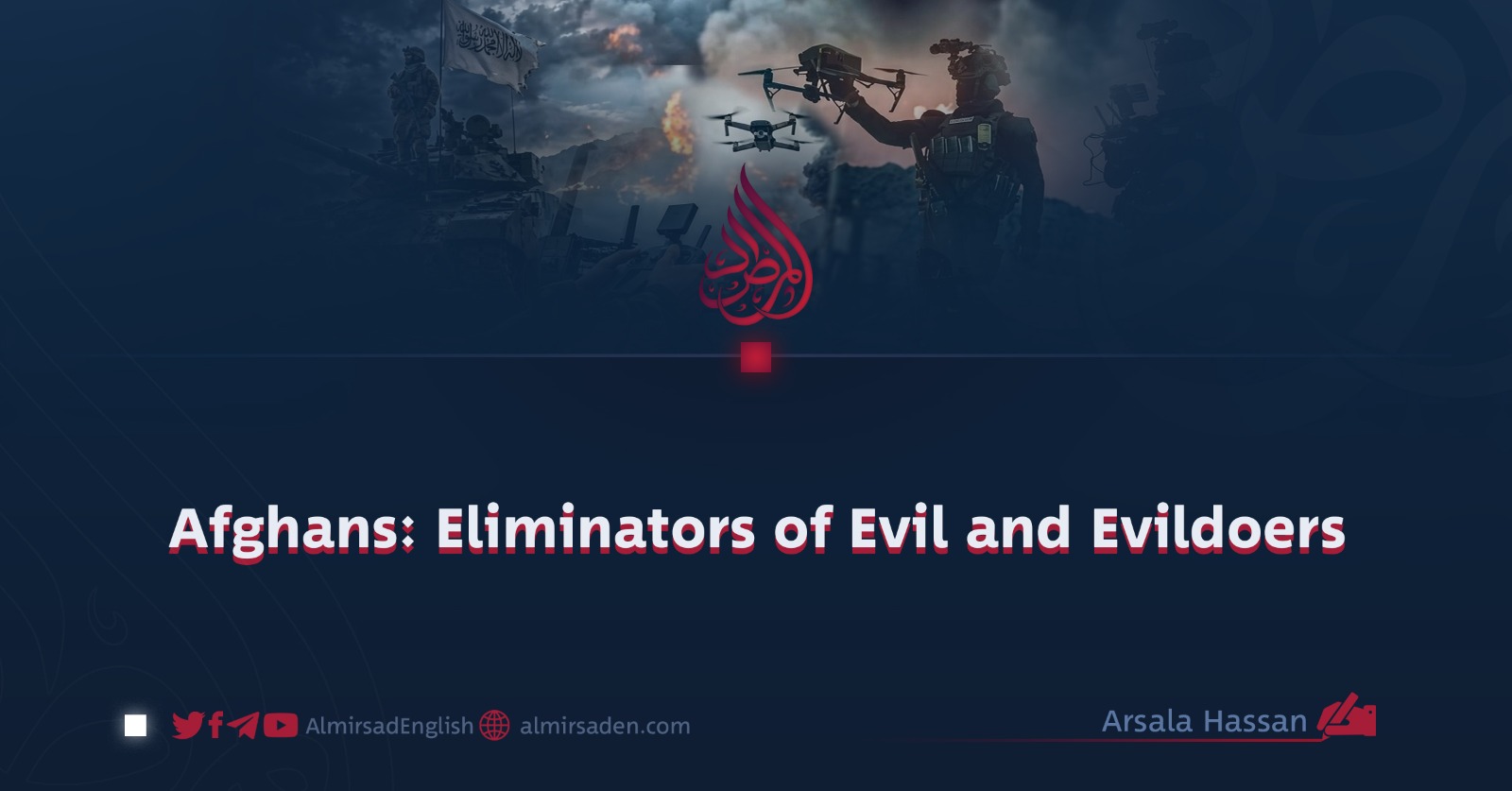
In a recent unprecedented strike, Afghanistan’s brave Air Force destroyed two important targets across the Durand Line, in Pakhtunkhwa and Balochistan, where hostile networks were training elements intended to destabilize Afghanistan. One site was a center for the enemies of the entire Muslim ummah. The other was a base where Pakistan had gathered fugitives and was training them to destabilize Afghanistan. Afghan officials have stated that from now on, every plot aimed at undermining Afghanistan’s security will be destroyed before it can take shape, whether it originates inside the country or beyond its borders.
One side of the coin is Daesh, the other is Pakistan’s rogue military. Together they have joined hands to spread instability across the region, the world, and Afghanistan in particular. That ugly face is now being exposed. The strategies they pursued for years have reached the point where they can no longer be concealed.
This strike shows that a significant change has taken place in Afghanistan’s military policy. The focus is no longer confined to defense. Greater attention is now being given to offensive action, identifying threats, neutralizing them, and eliminating them before they become operational.
The operation also demonstrated that Afghanistan’s Air Force has the capability and the will to strike back. Despite the enemy’s surveillance systems, they were able to reach their targets. The enemy failed to stop Afghan drones in time. That alone shows how much Afghanistan’s Air Force has developed. Beyond the military dimension, ordinary people have also come to believe that they now have a powerful and capable air force behind them.
With the help of Allah, Afghanistan’s Air Force has shown that it can back its words with action. The timing may come sooner or later, but they move steadily toward every objective they set.
It would be hard to find another military force in the world that reached this level of maturity in roughly five years, or that within such a short time found the confidence to challenge nuclear-armed states. Afghanistan’s Air Force showed the world in a very short time that under strong leadership it is capable of acting against any oppressor or tyrant when the moment arrives.
In the end, one thing is certain: Afghans are not lovers of conflict. They are a people who eliminate evil and those who spread it. With their firm resolve, their devoted nation, their sound leadership, and the help of Allah Almighty, they will continue to bear the title: “Afghans: Eliminators of Evil and Evildoers.”