


Asif Tareen
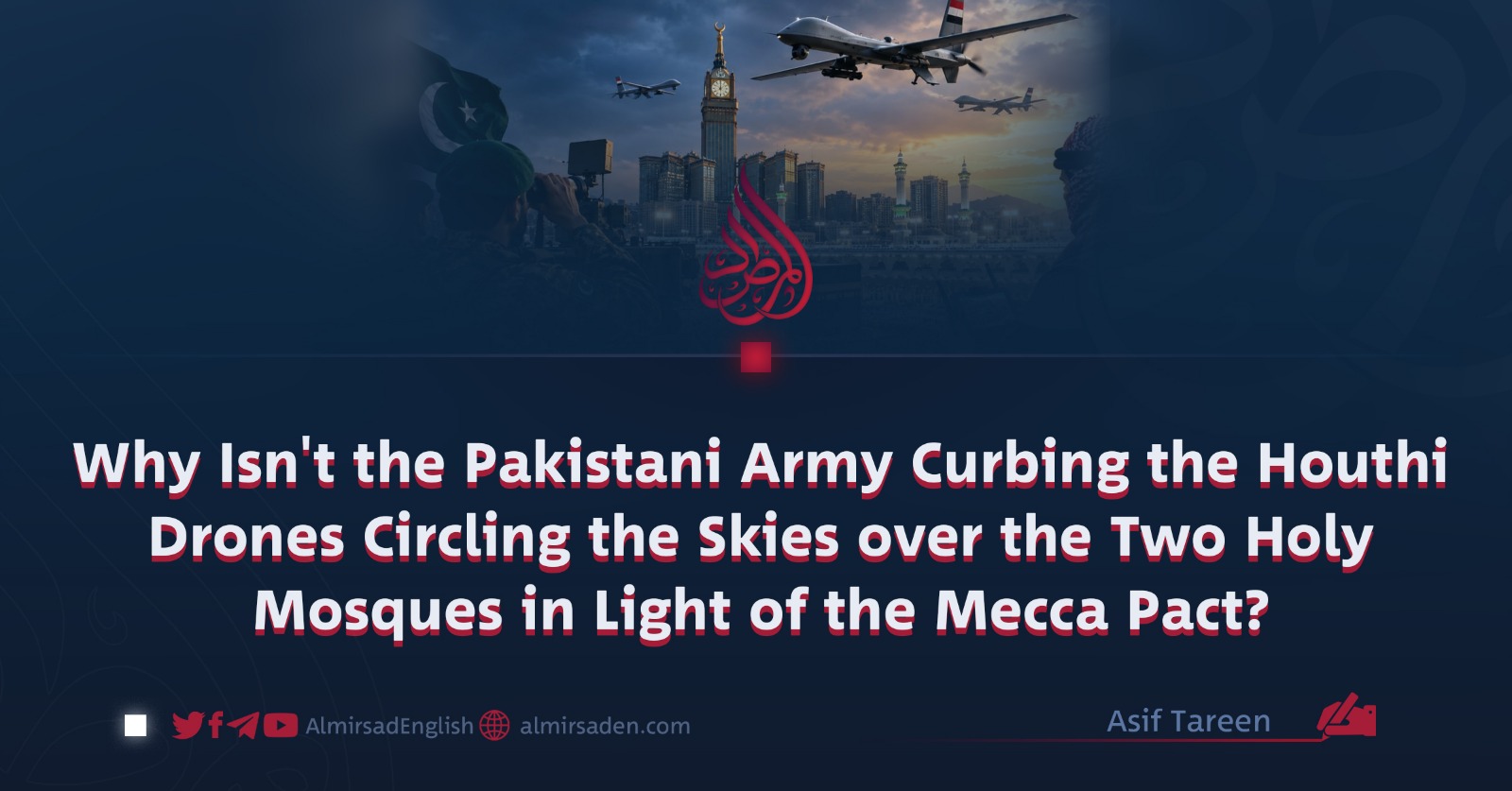
The Houthi drone strike on the Taiba Electricity Distribution Station in Medina on October 1, 2026, has added a new and dangerous dimension to the already heated, volatile security situation across the Middle East. Even though Yemen’s Houthis have denied responsibility for this attack, as usual, the reason might be that they understand well that owning up to crossing the final ‘red line’ of the Islamic ummah, the sanctity of the two holy mosques, could bring down a wave of fierce backlash across the Islamic world on them.
But according to Saudi intelligence, Iranian-made drone debris and forensic and technical evidence were found at the scene, pointing the finger of suspicion directly at the Houthis. This Houthi denial might, at first glance, look like just another routine security statement, but if you look deeper into the matter, it becomes clear that this attack was, in reality, a serious military test of the strategic depth of the Mecca Joint Defense Agreement, formed on August 7, 2026, and of the level of response its member states would actually give. It seems the Houthis wanted to test: if Medina’s security perimeter can be breached, how serious and how hard would the practical response of this new military alliance, the “Mecca Pact,” actually be?
But in the face of this crisis, the response of an important member like Pakistan has remained so typical that it has surprised the international community. Islamabad condemned the attack in harsh words, but on the ground, nothing clear, decisive, or military followed, nothing that, based on the evidence gathered from the Houthis’ conduct and the drone debris, would plant real “deterrent fear” in the heart of their backer, namely Iran.
Pakistan is an “outwardly Muslim(!) nuclear power.” This country’s “diplomatic silence” can’t just be chalked up to laziness or indifference, it’s a classic example of “transactional diplomacy,” the kind of diplomacy behind which lie tangled geopolitical troubles and economic constraints, the very constraints Shehbaz Sharif referred to when speaking at the UN Security Council session about the residents of London and New York.
He said: “Had we not confronted the world’s hardliners (mujahideen), they would have been roaming the streets of New York and London. That’s why all of you should provide Pakistan with economic assistance, because Pakistan is, in truth, fighting the West and America’s security war for them.”
That’s why the first dimension of Pakistan’s silence on the Mecca Pact ties back to Pakistan and Iran’s old, but sensitive, relationship. For Pakistan, building permanent deterrent military installations as part of the Middle East’s, particularly Saudi Arabia’s, defense arrangements, could be a step whose price it would have to pay along its own long border with Iran.
Recently, after Prime Minister Shehbaz Sharif’s harsh remarks against the Houthis at the UN General Assembly and army chief General Asim Munir’s trip to Riyadh, open criticism from Iran’s religious circles, which reminded Pakistan to “tell the difference between friend and enemy” and warned it to open its eyes, shows that Tehran is watching every move Islamabad makes closely.
The second dimension of this equation is that the presence of an influential Shia community in key positions within Pakistan’s state and military structures, and maintaining the country’s internal sectarian balance, appear to be among Islamabad’s own priorities. That’s why Pakistan might, behind the curtain, cooperate on sharing intelligence information and monitoring Saudi airspace, but it will keep itself away from direct military action against the Houthis, so that the face of this proxy war doesn’t turn toward Rawalpindi itself.
But the most important and decisive dimension of this strategic caution is purely economic. Pakistan right now is locked in an economic crisis so severe that, in this condition, it can’t afford a “free war” on another country’s behalf. In July 2026, Pakistan requested a preferential oil facility from Saudi Arabia worth 6.7 billion dollars, structured as a long-term loan over 15 years, with an interest rate of just one percent and no repayment required during the first five years.
Saudi Arabia, which wants to keep its own economy away from wars and give it stability under the umbrella of Vision 2030, has held back from signing off on this long-term economic loan for Pakistan. It appears, despite the Houthi intrusion, that Pakistan’s recent silence on the practical implementation of the Mecca Pact is itself a strategy to pressure Riyadh, meaning: if Saudi Arabia wants Pakistan’s conventional and nuclear power as a “security guarantee” for the two holy mosques or for its own security, then it should also provide Pakistan with long-term economic lifeline assistance.
On this diplomatic chessboard, the situation turned even more bitter when, in September 2026, Saudi Arabia’s major energy company, Delta International Energy, ignored all of Pakistan’s requests and the proposals of the Special Investment Facilitation Council (SIFC) and instead signed its first 200-million-dollar agreement with the Islamic Emirate of Afghanistan (IEA) for oil and gas exploration in Herat and other provinces.
For Pakistan, which is currently creating a severe security crisis with Kabul over the so-called, self-manufactured TTP issue, Saudi Arabia extending economic support to Kabul and halting investment in Pakistan was a major diplomatic blow. Before this, when it became clear to Saudi Arabia that Pakistan had fallen short in containing Iran, Riyadh, as a quiet message to Pakistan, brought a major, credible power like Turkey into the Mecca Pact, in order to look for an alternative to Pakistan. But Pakistan, even though its presence no longer seemed all that necessary, chose to stay part of the pact to spare itself the diplomatic damage of withdrawing, while apparently deliberately slowing down the pace of its own military contributions.
From this situation, it appears that protecting the two holy mosques under the Mecca Pact, however emotionally important it may be for the Muslim ummah, has turned, on the geopolitical stage, into a complicated game of “economic aid in exchange for security” for Pakistan.
If Saudi Arabia doesn’t reconsider Pakistan’s request for oil based on a 15-year loan and its commitments on domestic investment in Pakistan, Pakistan will settle for only a secondary, symbolic role behind Turkey in the Mecca Pact, and its response may stay limited to nothing more than condemnatory statements.
In the long run, this chill could push Pakistan away from the Middle East’s traditional bloc, and, because of China’s influence and the Shia lobby inside Pakistan, push it toward an alternative strategic alliance with Iran. Even though this shift might not completely or permanently change the balance of power in the region, it could become a cause of growing distance between Pakistan and the Sunni bloc of the Islamic world.