








Part 2
Ayyub
Establishing Lasting Security
Remember those dark days of insecurity that once cast their shadow over this country, the days when the sound of explosions and gunfire had become part of daily life across all of Afghanistan’s provinces, cities, and different regions, the days when mothers would send their children off to school with trembling hearts, not knowing whether they’d get to hold them again by evening.
In that dark period, Afghanistan’s people were crushed under the boots of foreign occupiers, and the puppet Republic system, instead of being a shield for people’s security, had itself become part of the problem of insecurity. Corruption had put down roots throughout the ranks of the police and army, every district was prey to local warlords, and people’s lives and property carried no weight at all in the calculations of the central authority of that time.
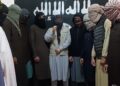
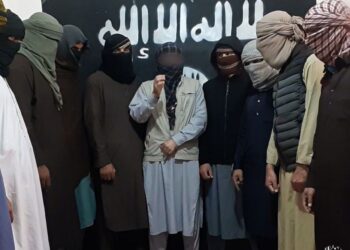
Amid all this chaos and fear, the plague of ISIS also raised its head, a takfiri group with no connection whatsoever to Islam or humanity. This group spilled the blood of innocent people through bombings in mosques, schools, universities, and markets, and turned some of the country’s provinces into arenas of fear and horror. The people of Afghanistan burned between two fires in those dark years, the fire of foreign occupation on one side, and the flames of takfiri savagery on the other. This was the legacy of twenty years of a foreign-dependent Republic.
But history turned its own page. With the Islamic Emirate’s return to power, Afghanistan tasted real security for the first time in half a century. By building unified command, organized leadership, and unmatched coordination among its armed forces, something with no equal in past eras, the IEA launched a tireless struggle against ISIS and other elements of fitna.
The result of this struggle is that ISIS, whose name was once tied to savagery, terror, and bloodshed, today has no large area under its control, no stronghold, and no ability to carry out operations. According to the system’s own officials and even reports from international institutions, this group has been practically eliminated from Afghan soil. This achievement shouldn’t be treated as ordinary, it’s a major achievement written in the sacrifice and blood of thousands of Afghan mujahideen.
Today, for the first time in decades, Afghanistan’s borders are fully under the control of national forces. People walk the roads and streets with an easy heart, free of fear of mines, ambushes, or sudden gunfire. Markets are full and thriving, free of anxiety and insecurity. Schools and mosques carry on their work without fear of bombings, and people sleep peacefully at night in a safe environment, free from gunfire and explosions.
This isn’t just a claim or an empty slogan, it’s a reality that every Afghan, everyone living on this soil, experiences in their daily lives. Anyone who compares yesterday’s Afghanistan with today’s will find the difference between the two as clear as daylight. Even so, certain biased and hostile media outlets, and the remnants of groups whose survival and interests were tied to chaos and insecurity, still try, by spreading lies, blowing small incidents out of proportion, and distorting facts, to present a picture of Afghanistan’s security situation that’s different from reality. The same media that once built headlines out of Afghan blood are now anxious over the absence of crisis.
They broadcast every small incident with exaggeration and noise, sometimes manufacturing incidents themselves, and sometimes trying, through made-to-order analyses, to deny Afghanistan’s lasting security. But all these efforts fade in the face of clear realities, because security isn’t a fact that can be erased by an enemy’s pen and tongue.
Security should be seen in the streets of cities and villages, in the noise and bustle of thriving markets, in the open doors of schools and mosques, and in the peaceful nights of people who lay their heads on their pillows free of gunfire and explosions. Security should be looked for there, not in the writings and headlines of biased media outlets that have sacrificed the truth for their own political ends.
The IEA has repeatedly said, in plain words, that our red line is the nation’s security. No disruptive group, whatever name or label it carries, will be allowed to misuse Afghan soil. This firm stance isn’t just a claim, it’s a policy that’s been proven in practice.
The security Afghanistan enjoys today is the result of a system’s strategy, sacrifice, and vigilance, one that has shown in practice that a country’s security can be secured without foreign help or backing. Today’s security isn’t just a sign of a system’s success, it’s living proof that after a long era of war and insecurity, Afghanistan can take its own steps toward stability and peace. The security this country has today is the strongest answer to everyone trying to hide the clear truth behind a curtain of accusation, propaganda, and doubt, the truth reflected every day in the calm faces, safe movement, and ordinary lives of this land’s people.