









By Saifuddin
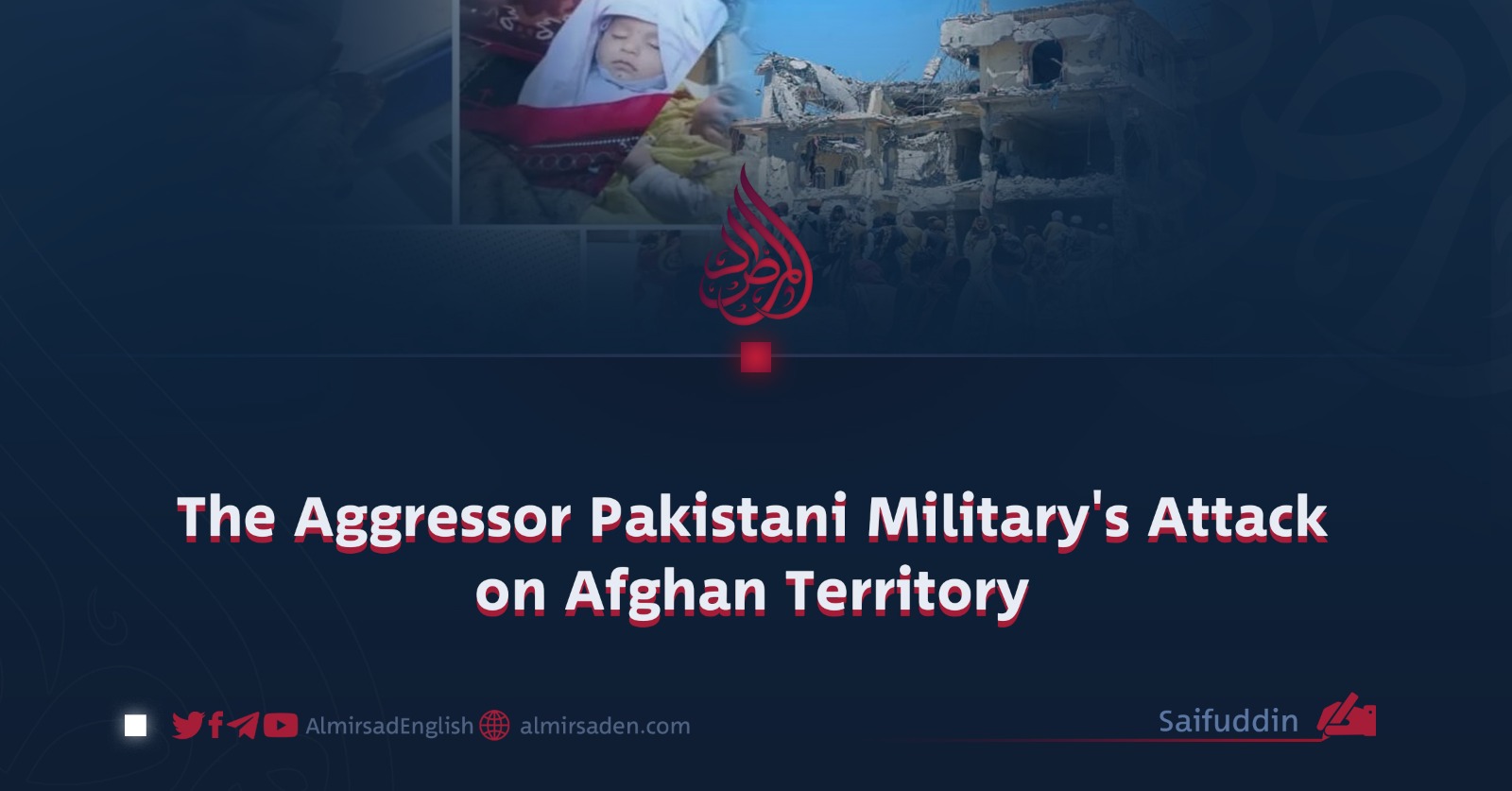
As part of its continuing campaign of aggression, Pakistan’s military once again carried out ruthless airstrikes on the provinces of Paktia, Paktika, and Kunar. Many innocent Afghan civilians, especially women, children, and the elderly, were killed or wounded as a result. These were defenseless people whose killing is explicitly forbidden in Islamic law, even during war. This crime is a clear violation of international law, Islamic principles, and the norms of good neighborly relations.
Pakistan’s military circles, which have long tied their own survival to conflict and instability in the region, have once again shown through these brutal attacks that their generals remain the greatest enemies of regional stability and the peace of the peoples on both sides of the Durand Line.
Unable to conceal their domestic political and economic failures, they have returned to the same old failed policy, hoping to achieve their objectives through the blood of innocent people. History, however, has shown that the arrogance of such military circles ultimately leads to their own downfall. While these generals continue pointing the finger at the Afghan government, armed groups such as the TTP and Baloch separatists are, in reality, Pakistan’s own internal problem. The TTP and similar groups were formed inside Pakistan, recruit and operate there, maintain their bases and equipment there, and are the product of that country’s own misguided and oppressive domestic policies.
Instead of dealing with this deep-rooted problem in a sensible and constructive way, Islamabad’s rulers try to shift the blame for their intelligence and security failures onto Afghanistan. That is a failed narrative that can never become reality. The truth is that under the rule of the Islamic Emirate of Afghanistan (IEA), Afghanistan has been completely cleared of armed groups. The restoration of nationwide security and the dismantling of every former militant stronghold are themselves proof that Afghan soil is no place for terrorism.
Over the past several years, the current Afghan government has, through immense sacrifice, established full security control across the country and defeated every group that threatened the peace of its people. Claims that armed groups continue to operate from Afghanistan are nothing more than excuses and baseless accusations used by aggressors to justify attacks on an independent country.
For this reason, the official policy of the IEA has always been clear and based on principle. The cornerstone of its foreign policy is that it does not interfere in the internal affairs of any country, nor does it allow anyone to use Afghan territory against the security of another state. As a responsible state, Afghanistan seeks relations with all its neighbors and with the rest of the world based on mutual respect and peaceful coexistence.
That policy of cooperation and non-interference, however, should never be mistaken for weakness. If anyone attempts aggression against Afghan territory, the IEA and the Afghan people’s defensive forces will not leave it unanswered. Defending our land and our people is both our religious duty and our legitimate right.
For that reason, these reckless bombings and the killing of innocent Afghans will bring a heavy and costly response for Pakistan’s military circles. Such acts of brutality achieve only one thing: they strengthen the Afghan people’s resolve, deepen their unity, and reinforce their determination to stand together against aggression.
History has repeatedly shown that whenever this proud nation has been attacked from outside, tribal disputes and internal differences have quickly faded, and the entire people have united to deliver a crushing response to the aggressor. The attack on the courageous people of Paktia, Paktika, and Kunar was, in truth, an attack on the whole Afghan nation. This crime will only strengthen the bond between the people and the government and harden the nation’s determination to defend the country’s territorial integrity. In the end, it will leave the aggressor’s military with nothing but shame and lasting regret, Insha’Allah.