


By: Sana Jamaldini
During a BBC broadcast focused on the crises in Pakistan, amid a chorus of candid public discourse, one participant offered an observation that was as profound as it was poignant. He remarked that in Pakistan, an obsession with global affairs seems to have gripped every other individual; everywhere you look, people are fervently debating international geopolitics, yet they remain startlingly oblivious or deeply indifferent to the plight of their own households and the struggles within their own lives.
He concluded his remarks there, leaving the deeper implications of his statement unexplored. In reality, the Pakistani state apparatus, which holds the reins of power, remains largely preoccupied with its own interests and privileges. Meanwhile, the common populace is systematically diverted toward distractions that veer them away from the core issues. Should the full extent of this institutional misconduct and mismanagement ever come to light, it would undoubtedly ignite a severe and widespread public backlash.
They invoke the name of Islam, yet their actions frequently stand in stark contradiction to Islamic principles and commandments. To distract the masses, they engineer narratives and fabricate issues designed to obscure the underlying truth. Consequently, the public is led to believe that significant milestones have been achieved, whereas the ground reality remains vastly different.
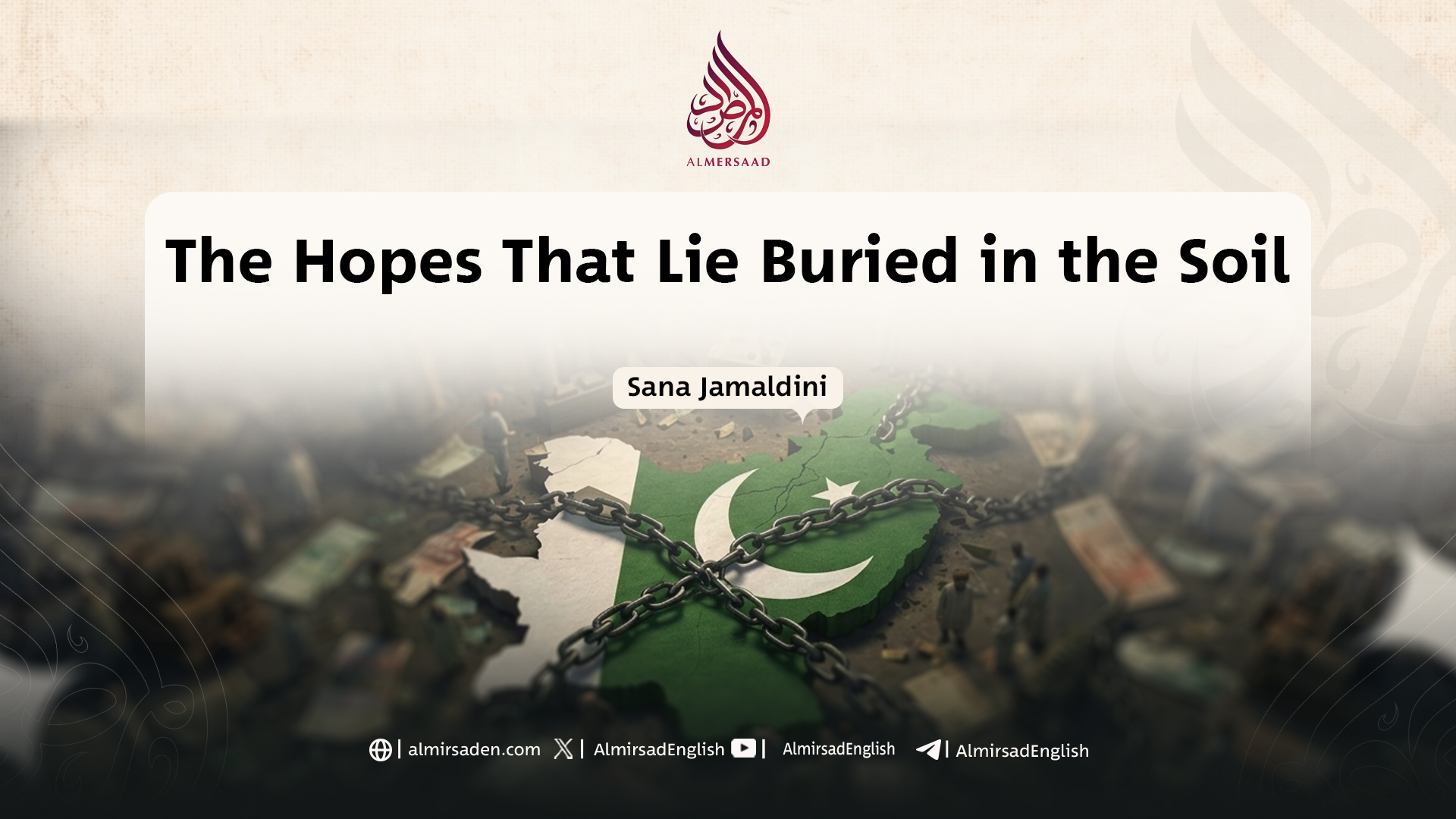
This theatrical deception has been ongoing since the inception of Pakistan, but in recent days, it seems the performance has been elevated to an even more elaborate stage. Meanwhile, soaring inflation has broken the backs of the impoverished; fuel prices have reached astronomical heights; and electricity has become so scarce that a frustrated populace has resorted to satire and memes to cope with what has become a national enigma. Furthermore, widespread gas shortages prevail, and the scarcity of essential food items is now palpably felt across the board.
The political landscape is not merely chaotic but has assumed a distinctly violent hue. The sanctity of the public mandate has been trampled, and electoral integrity is effectively nonexistent. Religion has been reduced to a political instrument, and laws are being enacted that not only defy Islamic principles but also stand as a dark blot on the face of Eastern culture.
Prominent political figures and grassroots leaders are either languishing in prisons or have been forcibly silenced, coerced into a state of submission. Commerce and trade have ground to a halt; all major trade routes connecting the East and West are plagued with disruptions. Consequently, local production is being squandered, and the tireless labor of the people is yielding no fruit.
Unemployment has surged to unprecedented levels, while the nation’s debt continues to escalate at a staggering rate. The educational infrastructure is in a state of continuous decay, and the healthcare sector, far from seeing any improvement, witnesses shameful lapses on a daily basis. Theft and looting occur in broad daylight, and tribal feuds have not only intensified but have also evolved into more complex and deadlier forms. Yet, despite this internal collapse, the state apparatus continues to tout its supposed global achievements with hollow arrogance.
On the international stage, a peculiar narrative is being crafted. Regarding the volatile dynamics of conflict and diplomacy between the United States and Iran, certain circles are maneuvering to claim credit for mediation and negotiations. They seek to project an image to the world as though they have performed a monumental service in averting a major global war.
The true nature of this narrative was exposed when the Pakistani Prime Minister posted a statement on the social media platform X. It soon became evident that the communique had been orchestrated elsewhere, as its syntax and tone suggested it had been drafted by external sources. Paradoxically, while trade remained stifled by sanctions, imported ideologies and political narratives were being vigorously disseminated.
Subsequently, when a ‘ceasefire’ and peace agreement were announced, they were presented to the public with immense fanfare. High-ranking government officials even claimed that other allies were part of this accord. However, shortly after these clarifications, the situation took a drastic turn as Israel launched heavy bombardments on parts of Lebanon, leaving the claims of a functional ceasefire facing serious scrutiny and doubt.
Simultaneously, against the backdrop of shifting global dynamics, reports emerged indicating that several strategic ports and transit routes had been placed under restrictive measures, forming a new perimeter of geopolitical pressure. All the efforts and discourse previously promoted with such fanfare under the guise of negotiations were suddenly plunged into disarray. The official American delegation returned without any tangible results, leaving behind no decisive achievement.
On the other hand, informal reports surfaced from the Iranian side suggesting that their delegation had encountered grave risks during the negotiations. In an attempt to mask this volatility, a new narrative was put forward, claiming that the subsequent phase would be highly successful. There were even assertions that the U.S. President would undertake a regional visit; however, these claims remain far removed from the realm of certainty or practical substantiation.
Regrettably, this propaganda was fueled with such intensity that many found their footing compromised by the narrative. The anticipation surrounding the arrival of U.S. President Donald Trump was amplified with such fervor that it was portrayed as a divine intervention, as if his presence alone would transfigure Pakistan’s destiny in an instant.
To disseminate and promote this rhetoric, various strata of society, including journalists, print and electronic media, religious scholars, spiritual leaders, and social media influencers were steered, directly or indirectly, toward a singular perspective. They embraced this theatrical atmosphere without critical reflection. A climate was engineered to suggest that Trump’s return would usher Pakistan into an unprecedented era of enlightenment and progress.
However, these aspirations were dealt a devastating blow when Trump announced that, due to security concerns, he would not even dispatch his Vice President to Pakistan. The underlying message of these ‘security reasons’ was unmistakably clear: the region is either terminally unstable or fundamentally untrustworthy. Consequently, the prestige and expectations that certain circles had tethered to this visit were globally undermined, further tarnishing the country’s international image.
Simultaneously, Iran announced its withdrawal from the second round of negotiations in Islamabad. This development shattered the fragile facade of foreign policy that had been so carefully projected, leaving the nation in a state of total diplomatic isolation, fitting the classic adage: ‘Lost to both worlds, attaining neither the Divine nor the beloved.
Whether the negotiations between Iran and the United States will yield any constructive outcomes, or if these talks will even sustained at all, remains to be seen. However, the most agonizing realization lies in the profound disillusionment of the masses. The public, who once revered religious scholars as the custodians of truth, journalists as the voice of integrity, the media as the advocate for the oppressed, and social activists as the champions of humanity, has witnessed their utter helplessness and systemic paralysis. Consequently, the flickering light of hope is gradually fading, replaced by a pervasive and deepening shadow of despair.
This despair is by no means unfounded. For years, these very figures assured the populace that Donald Trump was steering the Palestinian cause toward a disastrous end, asserting that he harbored a clandestine agenda to erode Islamic influence within the Arab world. They consistently held him responsible for the bloodshed of the oppressed people in Gaza.
However, as the tides of official policy shifted and new strategic narratives emerged, these same individuals underwent a staggering 180-degree reversal of their previous positions. They summarily abandoned their past rhetoric, diverting attention away from the fundamental struggles of the faith and the nation. Instead of courageously addressing the genuine grievances of the people or acting as a reformist voice against the misgovernance of the rulers, they began disseminating narratives that bear little resemblance to reality.
Most concerning, however, is that they cultivated a narrative specifically designed to distract the populace from the true epicenter of their suffering. These prevailing accounts are not only in stark contradiction to their own prior assertions but also stand in blatant opposition to the fundamental beliefs and aspirations of the people.