


By Ehsan
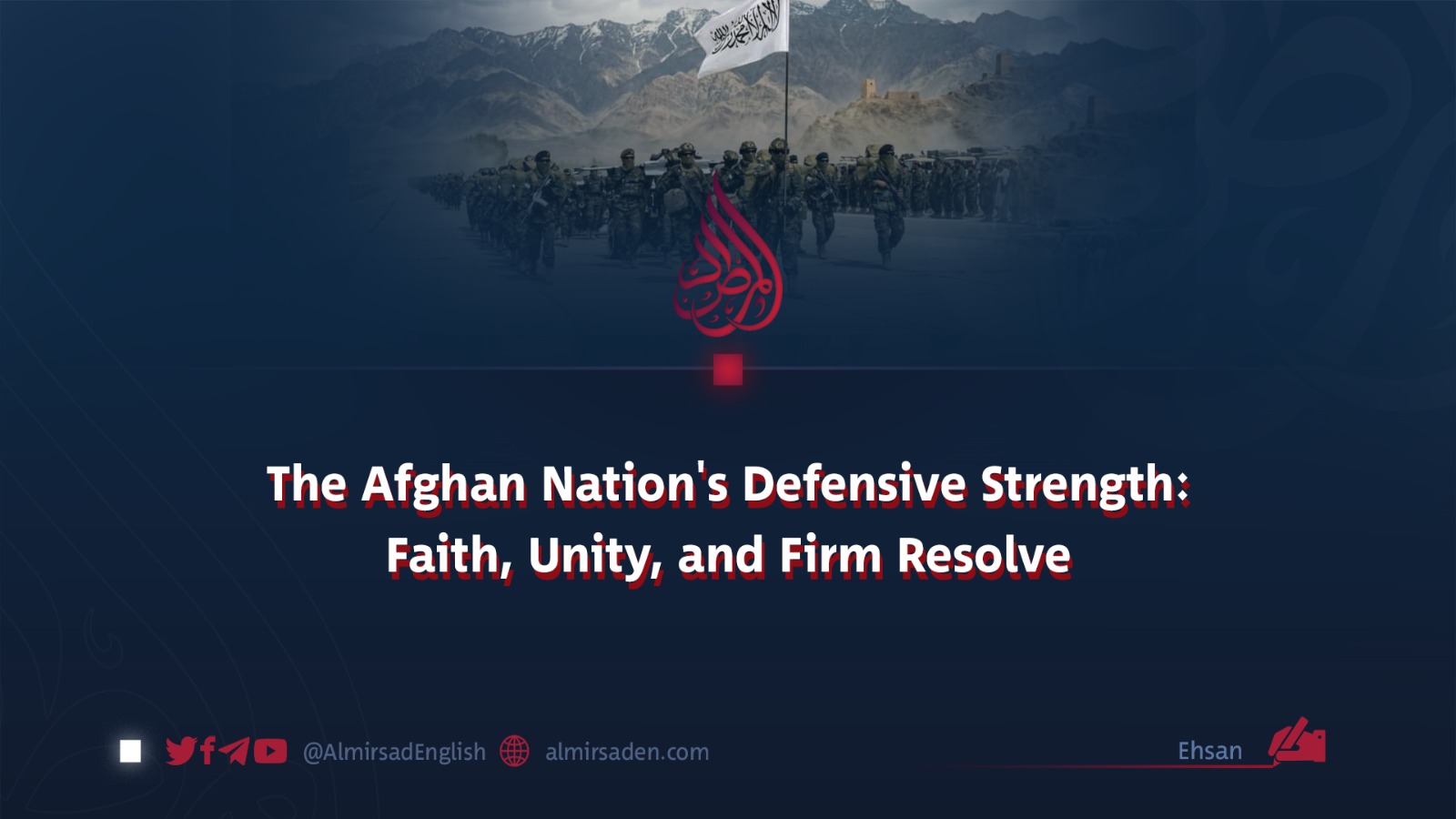
In an age when borders have become almost like glass walls and threats cross from one country into another with greater ease than ever before, a nation’s defensive strength cannot be measured by weapons and military equipment alone. It must also be judged by the faith, unity, and determination of the people standing behind those weapons. The Islamic Emirate of Afghanistan (IEA) has today reached a point where it is not only capable of defending its borders against any aggression but can identify threats at their source, even on the soil of another country, and eliminate them there. That is what has transformed Afghanistan from a country constantly exposed to danger into a force that can deter threats before they grow.
The recent air operations against Daesh Khawarij positions inside Pakistan were not merely a military action. They were a practical declaration that a new Afghanistan has emerged. Under a system founded on Sharia, the country has gained the strength and confidence to frustrate the plans of its enemies not only before they reach its borders but even before they leave their own strongholds.
The IEA understands well that lasting security is not achieved by waiting behind borders. It is secured by pursuing threats to their nests and eliminating them there. This shift reflects the country’s military and intelligence development and proves that Afghanistan is now shaping the regional equation instead of being its victim.
The strength the IEA possesses today rests on two fundamental pillars. The first is faith and adherence to the principles of Sharia, which have given this system both legitimacy and public acceptance. The second is the scientific, technical, and intelligence capabilities it has developed through independence and self-reliance. It is this combination of faith and strength that sets the IEA apart from Afghanistan’s previous governments and even from some other states in the region.
While many countries rely on foreign support to cover their internal weaknesses, Afghanistan has strengthened the foundations of its national security through its own committed and capable young people. A system governed by Sharia does not view military power merely as a means of defense. It also sees it as an effective tool for protecting human dignity, territorial integrity, and national independence.
The Holy Quran not only encourages Muslims to become strong but commands them to prepare themselves in every way. Allah Almighty says in Surah Al-Anfal:
«وَأَعِدُّوا لَهُمْ مَا اسْتَطَعْتُمْ مِنْ قُوَّةٍ وَمِنْ رِبَاطِ الْخَيْلِ تُرْهِبُونَ بِهِ عَدُوَّ اللَّهِ وَعَدُوَّكُمْ»
“And prepare against them whatever you are able of power and of steeds of war by which you may terrify the enemy of Allah and your enemy…”
This verse clearly calls on the believers to build strength and maintain the ability to deter aggression. It leaves no doubt that military preparedness is not only accepted in Islam but forms part of the religious and national responsibility of an Islamic government.
Following this divine guidance, the IEA has shown that its military strength is being used in the service of peace and security and for protecting the lives, property, and honor of Muslims.
Afghanistan today is no longer the weak country that depended on others and struggled to defend itself against even the smallest threat. The faithful and courageous young people of this land, armed with both faith and modern knowledge, have changed many of the region’s equations in favor of their country.
They have proved that even if a threat emerges inside the territory of a neighboring state, Afghanistan has the ability to destroy it before it reaches Afghan soil. This capability reflects not only military strength but also the IEA’s growing intelligence capacity and strategic awareness. It is this quality that has turned Afghanistan into a force in the region that can no longer be ignored.
This strength should never be mistaken for aggression. The IEA has repeatedly made clear that these capabilities exist to safeguard national sovereignty, territorial integrity, and the security of the people. Every country has the right to defend itself against threats, and Afghanistan is no exception. The important point is that the IEA exercises this right within the framework of Islamic and humanitarian principles, acting with precision, sound judgment, and clear objectives, and never allows its military power to become a tool of oppression or aggression.
In the end, the IEA has opened a new chapter in Afghanistan’s modern history through the strength of its military and security institutions. It is a chapter in which Afghanistan is no longer the victim of decisions made by others but plays an effective role in regional security and stability.
This strength is a great blessing that has come after decades of war and hardship. It has enabled the nation to achieve a level of self-reliance and deterrence that allows it to defend its country, its system, and its national interests against every conspiracy.
The IEA has proved that a system founded on Sharia can serve as a successful and effective model not only in the spiritual sphere but also in military and security affairs. It is a lesson for all those who believed Afghanistan would never stand on its own feet or regain its true independence.