























By Ayub Khalil
Afghanistan has passed through some of the hardest, most bitter chapters in its history. But the memory of Independence Day reminds us of one fact: the future of a country also depends on the will, knowledge, judgment and sense of responsibility of its people. Afghanistan is a country that has resisted every tyrant, every oppressor and every occupier in every way it could.
Genghis Khan swept across much of the world. In Afghanistan, his forces were shattered. The British came. The Soviets came. NATO came. Each was defeated, and after their defeats, their alliances broke apart, divisions emerged and they turned against one another.
We can see the results even today. Afghanistan, meanwhile, still stands, remembering its historic independence and celebrating its days of victory with pride and enthusiasm.
This is why it is said that when Allah (SWT) becomes angry with a people, He sends the Afghans against them. Historical sources mention a saying of Sharik ibn Abdullah, recorded by Yaqut al-Hamawi (d. 626 AH) in Mu’jam al-Buldan: “Khurasan is Allah’s quiver. When Allah becomes angry with a people, He shoots the people of Khurasan at them.”
The 28th of Asad in the Pages of History
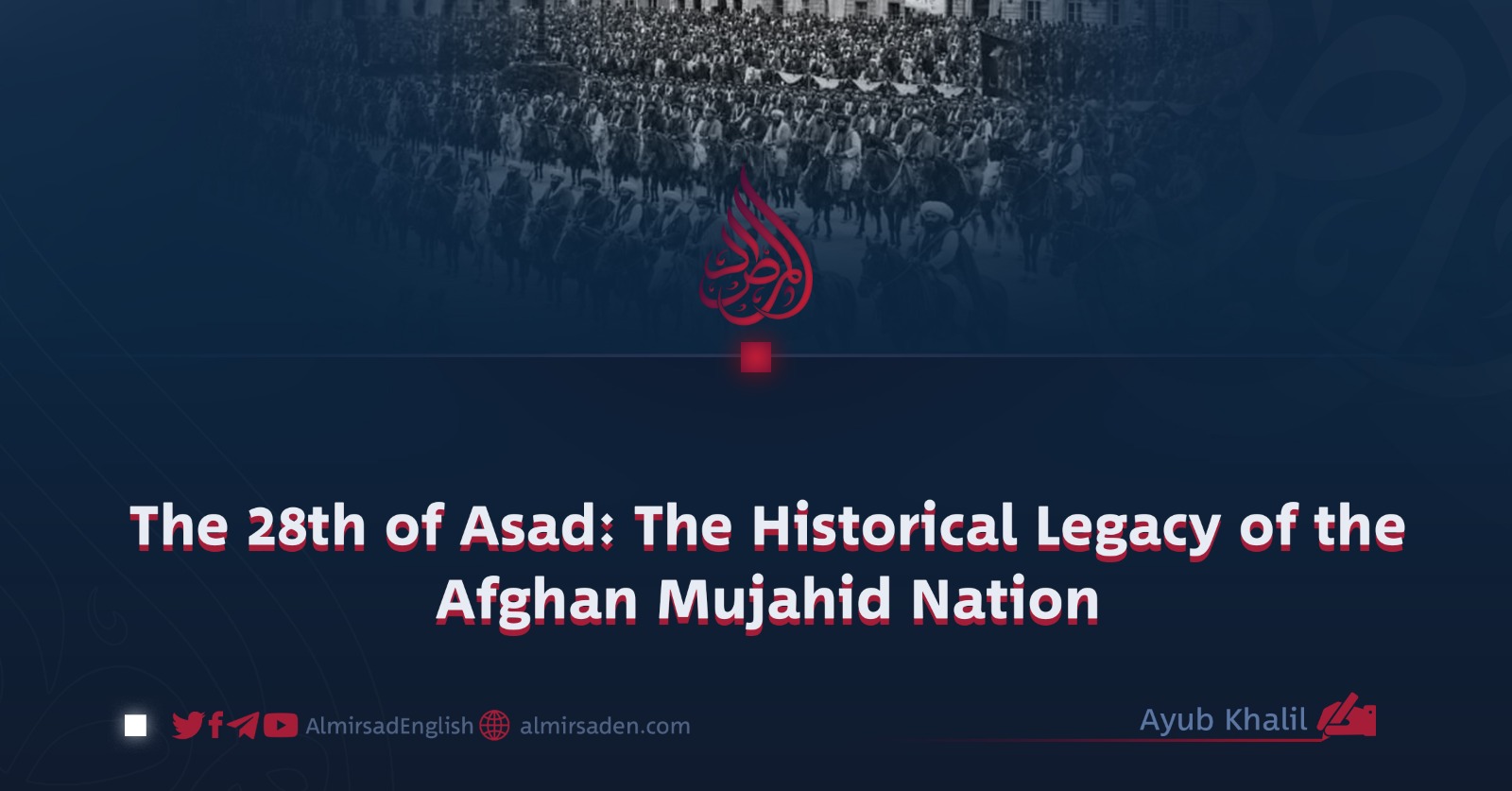
The 28th of Asad, now in its 107th year, is one of the important and proud days in Afghanistan’s modern history. It is tied to the historic process through which the country regained its political independence. The day corresponds to the 28th of Asad, 1298 SH, or August 19, 1919, and is celebrated as Afghanistan’s Independence Day.
During the 19th century, Afghanistan stood between the great rivalry of British India and Tsarist Russia, the old Russian Empire ruled by the tsars. British influence over Afghanistan’s foreign affairs had grown so wide that the question of full political sovereignty and an independent foreign policy became one of the central concerns of the Afghan people.
With the beginning of the Third Anglo-Afghan War in 1919, the question of Afghanistan’s independence entered a new stage. From the beginning of his rule, Amanullah Khan gave particular attention to Afghanistan’s complete political independence. In the first months of his reign, the dispute between Afghanistan and British India turned into war. Later, the way was opened for negotiations.
A Message to the Afghan People:
The 28th of Asad should not be reduced to the remembrance of a single historical event. Independence, in its true sense, means the political will of an Islamic nation, its national sovereignty and its ability to make its own decisions about its future.
A country comes closer to the spirit of independence when it makes decisions about its Islamic and national affairs according to the interests of its own people and on the basis of its Islamic and national values. It must have its own position in the face of foreign pressure and strengthen its will to ensure the welfare, security and progress of its people.
That is why the 28th of Asad should not only turn us back to history. It should also awaken a sense of responsibility toward the future.
Afghanistan’s history teaches us that sovereignty is not protected by slogans alone. It survives through knowledge, unity, a sense of responsibility, economic strength and strong national institutions.
Today, when Afghans remember the 28th of Asad, the message of this day should not be limited to pride in the past. It should also remind us of the responsibility that lies ahead. The real way to honor independence is for the new generation to know its history, learn from the experiences of the past, think deeply about the country’s Islamic values and national interests, and play its part in Afghanistan’s scientific, economic, cultural and social development.
The most important message of this day is that independence should not be celebrated only as something from the past. It must be kept alive through accepting responsibility and helping build the country’s future.
May Allah (SWT) accept, in His great presence, the sacrifices and hardships of the martyrs, Ghazis and the entire Afghan mujahid nation who gave so much for the 28th of Asad and for the history of Afghanistan.