
















By Rafiq Tasal
When evil elements and groups exist in a neighboring country or elsewhere in the region that threaten a nation’s security, its people, its unity, and its stability, the country facing those dangers has every obligation to act, just as the Islamic Emirate of Afghanistan (IEA) did by striking the territory controlled by Pakistan’s military regime and destroying the hostile elements operating there.
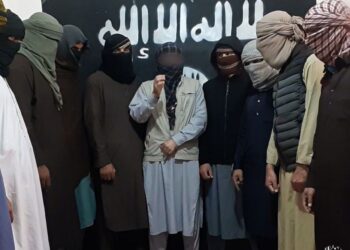
The training, sheltering, and support that Pakistan’s military regime has given to groups threatening Afghanistan can never be accepted or overlooked by the IEA. The Pakistani regime used the Daesh project more than once to serve its own intelligence objectives. The IEA repeatedly warned the world, and warned Pakistan’s politicians and political parties, that Pakistani soil must no longer be used against Afghanistan and that Afghanistan’s security and internal stability must not be threatened through Daesh or any similar project.
Instead of changing course, the regime stayed silent and kept repeating the same failed policy. That left us with no choice but to deal directly with those plotting against our homeland and our system and carry out decisive operations against them.
The Pakistani regime’s training and support for Daesh against Afghanistan and the region shows that it has no sincere intentions toward either Afghanistan or its neighbors. It reflects a policy of deception and sabotage rather than genuine concern for regional security. By backing Daesh, the regime has shown its willingness to spread instability and conflict across the region. Supporting such a group can only mean encouraging harm and destruction against Afghanistan and the countries around it.
The IEA’s air and drone strikes inside Pakistan’s territory, carried out to eliminate a common threat facing both Afghanistan and the region, demonstrate more than just the IEA’s firm resolve. They send a direct message to Pakistan’s military rulers: if they once again train or shelter hostile elements and allow Pakistani soil to be used against Afghanistan, the consequences will be even harsher. The responsibility for whatever follows will rest entirely with Pakistan’s regime.
If Pakistan’s current rulers continue ignoring the principles of good neighborly relations, refuse to respect Afghanistan’s sovereignty, and persist in training and supporting hostile groups such as Daesh, local militias, and anti-IEA fronts, the IEA has a duty to strike those elements wherever they may be, just as it has done now, through decisive and punishing operations aimed at eliminating threats before they pose a greater danger.
If the regime stays silent and refuses to abandon these treacherous policies, the IEA’s future response will be far stronger and far more decisive than what has already been seen.
Instead of making excuses, Pakistan’s military regime should treat what has happened as a warning and adopt a policy that prevents a repeat of its destructive actions. That would serve its own interests far better than continuing down a path that will once again force the IEA to carry out operations of this kind.