













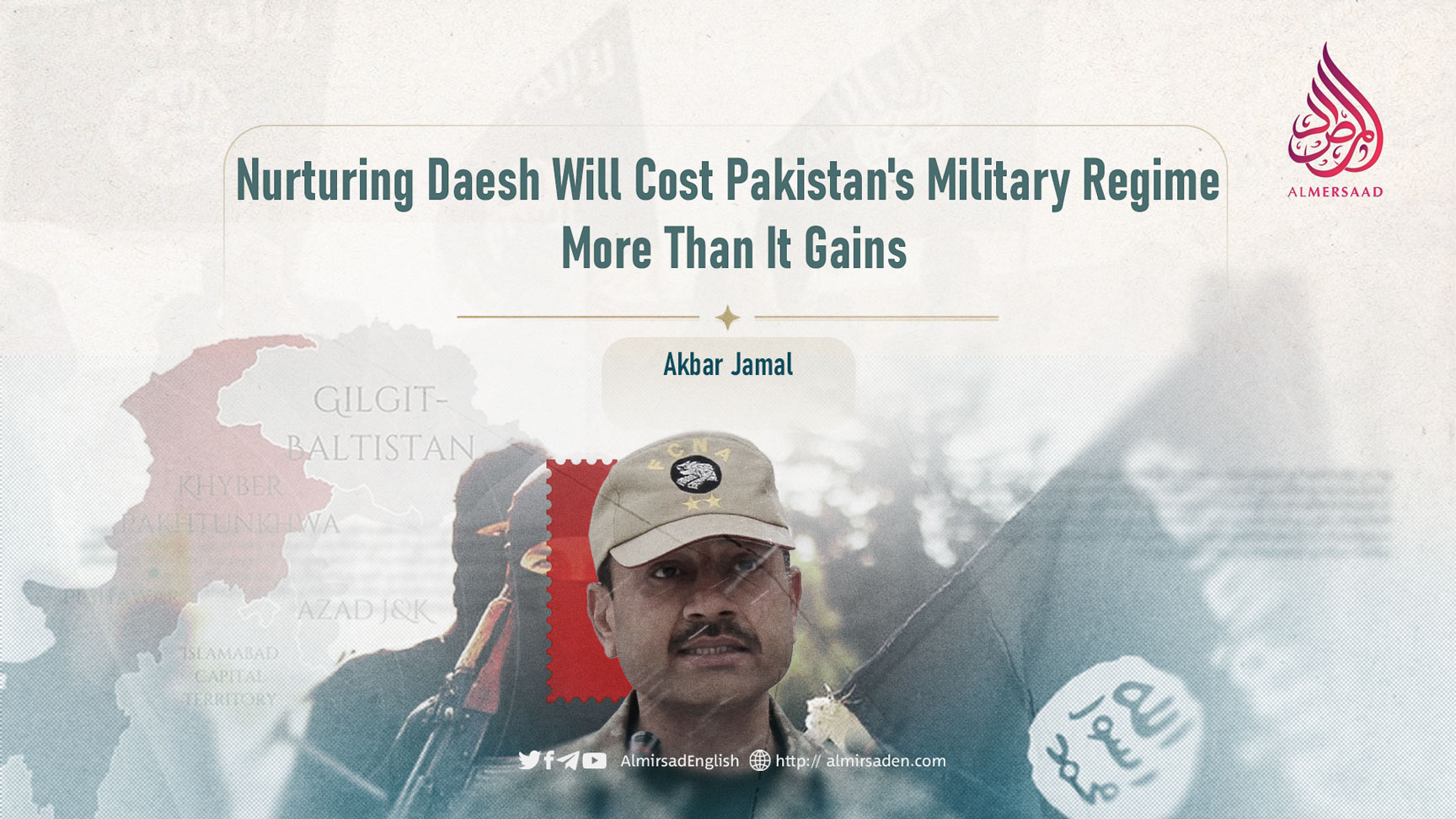
By Akbar Jamal
In the belt linking South and Central Asia, traditional diplomacy is steadily losing its influence. An intelligence and geopolitical chess game has taken its place, where political and security pieces are constantly being rearranged. For years, Pakistan’s military has insisted on blaming the Islamic Emirate of Afghanistan (IEA) for every armed activity allegedly originating from Afghanistan. But the IEA’s own narrative has now entered a new stage. It no longer relies on simple denials or counter-accusations. Instead, it presents its case with ground evidence and technical capabilities.
The biggest shift in this picture is Kabul’s new counter-terrorism narrative, which has put Rawalpindi’s traditional position in a serious strategic dead end. Pakistan has claimed for years that the TTP and other armed groups are based in Afghanistan and attack from there. Recent geopolitical shifts, however, have moved the IEA out of a defensive position and given it the opportunity to present a more active and direct narrative.
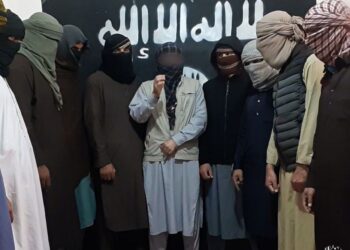
Kabul no longer simply denies that Afghan soil is being used against anyone. It claims that the region’s biggest threat, ISIS-K, has its main base inside Pakistan, not Afghanistan, and that certain internal elements are behind its growth. The international community, particularly China, Russia, and the Central Asian states, no longer reads this as just political positioning. A series of security incidents and emerging evidence has given it real weight.
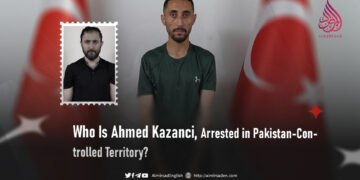
When reports surfaced about the May 16, 2025 arrest of Daesh media spokesman Aziz Azzam from inside Pakistan, and then the news that Turkey’s MIT had captured senior commanders including one known as Muhammad Goran in a covert operation on December 23 of the same year, Kabul’s claims picked up a level of documentation that is hard to dismiss.
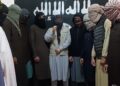
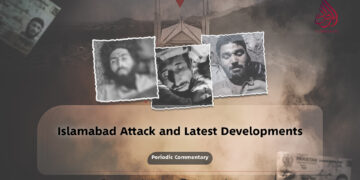
Then came the Daesh suicide attack on a Shia place of worship in Islamabad during Friday prayers, and the attack on prominent religious scholar Maulana Muhammad Idris. These make one thing clear: Daesh is no longer confined to remote tribal mountains. It has an active logistical and operational network inside Pakistan’s cities and sensitive locations, ready to strike whenever it chooses.
The most striking and complicated part of this equation is what you could call the border management trap. In recent years Pakistan’s military has poured trillions of rupees along the Durand Line, running long stretches of fencing, installing electronic surveillance systems, and deploying tens of thousands of troops. All of that creates a serious problem for Pakistan’s own narrative.
If Pakistan’s claim stands, that Daesh is still operating out of Afghanistan and pulling off attacks at this scale, then that fencing, those surveillance systems, and all those security forces become an embarrassment. Daesh fighters crossing the Durand Line despite all of it points to either a security failure or something worse: that gaps in the intelligence environment are being deliberately kept open to serve a political narrative.
Flip it the other way. If Pakistan’s military insists its border control is airtight and fully effective, then the IEA’s argument becomes stronger, that Daesh has its intellectual, financial, and operational base inside Pakistan itself, particularly in the tribal districts of Khyber Pakhtunkhwa and parts of Balochistan. In that case Daesh has no need to cross from Afghanistan. The ground was prepared for it inside Pakistan, with help from within the military.
Beijing and Moscow are watching this narrative battle closely. For China this is not an abstract concern. Protecting CPEC and its major mining investments in Afghanistan requires real regional stability. When Kabul shows it has largely contained Daesh networks on its own soil while pointing to security vacuums inside Pakistan, it pushes Beijing toward a simple conclusion: Pakistan needs to deal with its own internal problems rather than keep pointing across the Durand Line.
Pakistan’s traditional security narrative is now boxed in. If it insists Daesh operates from Afghan territory, it has to account for what its border management has actually been doing. If it admits Daesh’s presence inside Pakistan, it is halfway to confessing its own security system has failed.
Daesh has become a problem Pakistan can neither deny nor fully own, and that trap is only tightening. What is playing out on both sides of the Durand Line has gone far beyond border skirmishes and the usual blame game. It is now a contest of technology, intelligence, and competing narratives, and it is reshaping where this region is headed.
Behind all of it is Pakistan military’s own doing. After the IEA defeated Daesh inside Afghanistan, Pakistan sheltered what was left and tried to point it back at Afghanistan. History has a way of settling accounts. The piece Pakistan’s military raised against the IEA has become the chain around its own neck.