




















Abdullah Atif
After faith, joining a religious group, movement, organization or party is one of the biggest decisions in a person’s life. It demands their thought, their time and their money, and sometimes even life itself is sacrificed for it. For this reason, the question of why we’re tied to a group matters a great deal. We should have a strong answer to this “why,” one backed by sound reasons.
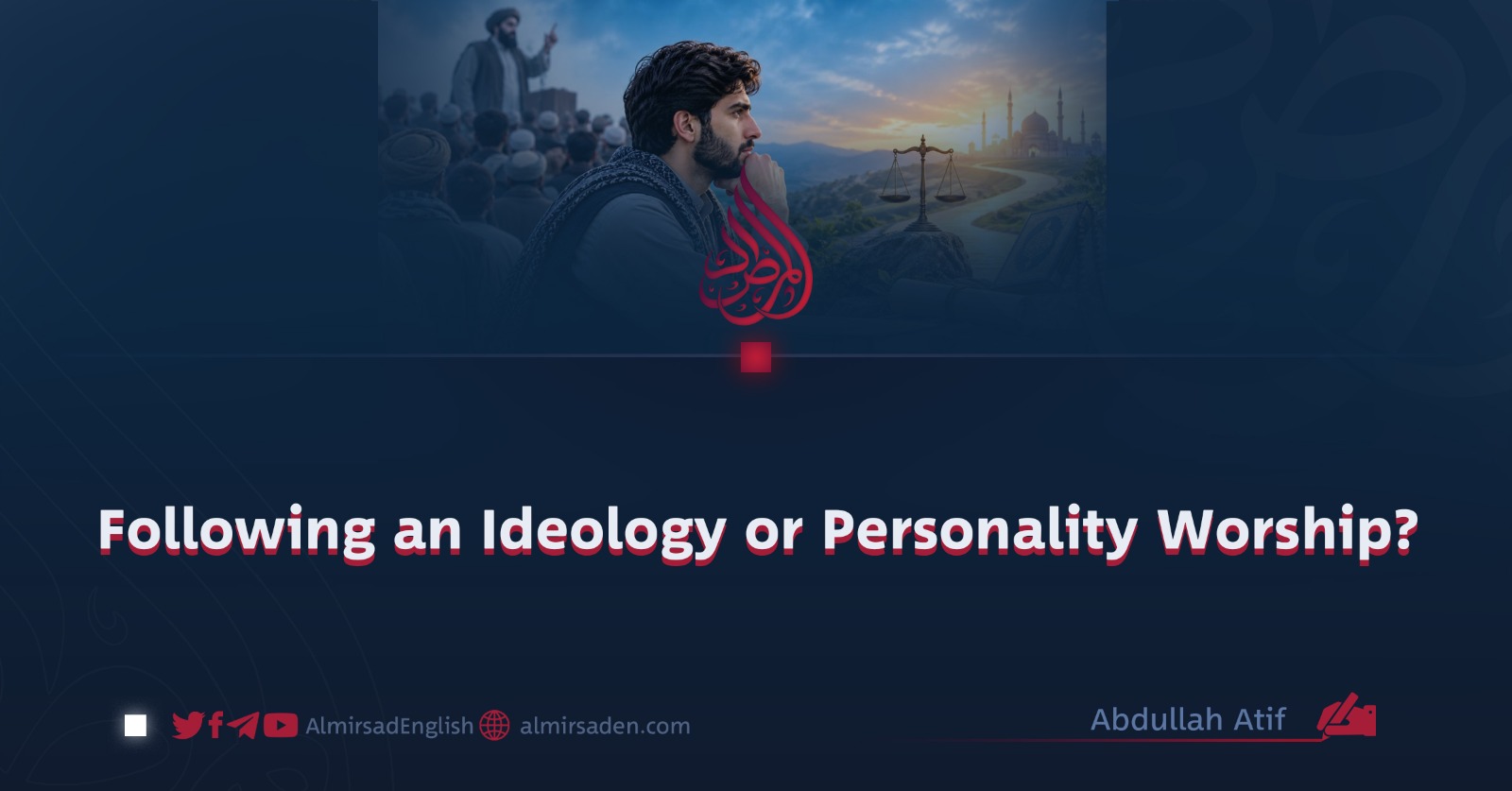
By nature, people come under the influence of personalities. An influential speaker, a brave mujahid or a pious, God-fearing leader draws a person’s attention. Sometimes, out of the intensity of our love and enthusiasm, we consider that personality free of every mistake and sin, and we become such blind followers that we can’t bear even a mild word against him. Yet Islam has forbidden personality worship and stressed following the truth and the principles.
The benefit of attachment based on an ideology is that the true ideology doesn’t change. The religion of Allah (SWT), the principles of the Quran and Sunnah, justice, jihad, da’wah and the implementation of Sharia are values that were true yesterday and are true today. Whoever stands by these principles is on the side of truth, and whoever departs from them is on the side of falsehood, however great a personality he may be. We should repeat this to ourselves again and again, so our hearts accept it completely.
إذا تكرر تقرر في القلب.
Look at what Hazrat Abdullah ibn Mas’ud (RA) says:
“مَنْ كَانَ مُسْتَنًّا فَلْيَسْتَنَّ بِمَنْ قَدْ مَاتَ، فَإِنَّ الْحَيَّ لَا تُؤْمَنُ عَلَيْهِ الْفِتْنَةُ”
“Whoever wants to follow a path, let him follow the path of one who has died, for the living are not safe from fitnah.”
So if you’re tied to a group on the basis of its ideology and principles, rest easy. If tomorrow the group’s amir changes, or a weak person takes over the leadership, your attachment to the group’s original manhaj (methodology) will remain firm and unbroken. For this reason, if, God forbid, the leadership itself one day departs from its original ideology, you won’t have trouble recognizing where the truth lies and which direction to take.
The harm of personality worship, though, is that personalities change. They are only human: they forget, they fear, they become prey to greed and desire, and they can change their stand under the pressure of circumstances. How many people there are who spoke of the rule of Sharia until yesterday but praise democracy and a false system today. How many believed until yesterday in the obligation of jihad, but today, in the name of expediency, announce their disavowal of it.
For this reason, if the basis of your attachment is a personality, you’ll follow that person into falsehood and keep thinking you’re still on the path of religion, when in truth you’re following a person instead of the religion. The Holy Quran points to this very condition:
﴿اتَّخَذُوا أَحْبَارَهُمْ وَرُهْبَانَهُمْ أَرْبَابًا مِنْ دُونِ اللَّهِ﴾
“They had taken their scholars and monks as lords besides Allah.”
In tafsir, it is explained that their taking scholars and monks as lords meant following them blindly in matters of halal and haram.
Another conclusion follows from this. When we criticize a group, express opposition to it or decide to separate from it, the basis should be that the group’s foundational principles and rules conflict with Sharia. It shouldn’t be that one member of the group made a mistake, some worker behaved badly or an official committed corruption, and we take that one person’s mistake as grounds to reject the whole group, its ideology and its activity.
Individuals can be weak and make mistakes anywhere. There were hypocrites in the army of the Messenger of Allah (PBUH) too; did their presence mean jihad should be abandoned? Some of the Sahabah (RA) also made errors of ijtihad; did those mistakes take away their status as Companions? Never! So if an Islamic group stands on the ideology of implementing Sharia, disavowing disbelief and reviving the Sunnah, and one of its members makes a personal mistake, the criticism should fall on that individual, not on the group’s ideology.
For this reason, we should learn to tell an individual’s mistake and an ideology’s deviation apart. An individual’s mistake can be corrected and forgiven, but intellectual misguidance must be rejected, however great a personality it comes from. In brief: an informed, alert Muslim ties himself to an ideology and to principles, not to personalities. He looks at how this group views the Quran and Sunnah, what its manhaj is and what principles it stands on.
If a personality departs from his own ideology, he leaves that personality behind and doesn’t depart from the true ideology. Likewise, when he criticizes, he does so on the basis of principles, not people. If he also criticizes individuals, he doesn’t pin their mistakes on the whole group; his aim is to reform that individual, not to criticize for the sake of criticism.
History bears witness that the nations and peoples that followed principles and ideologies instead of personality worship stayed firm and succeeded, while those who abandoned the ideology and blindly followed personalities ended up broken into pieces.
وَمَا عَلَيْنَا إِلَّا الْبَلَاغُ.