












Salam Najmuddin Amrohi
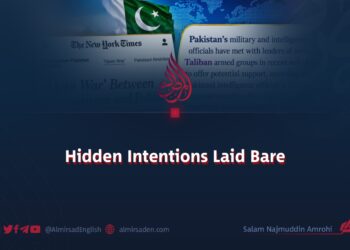
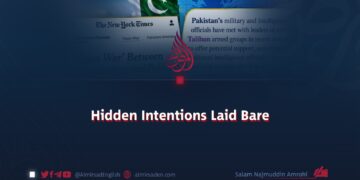
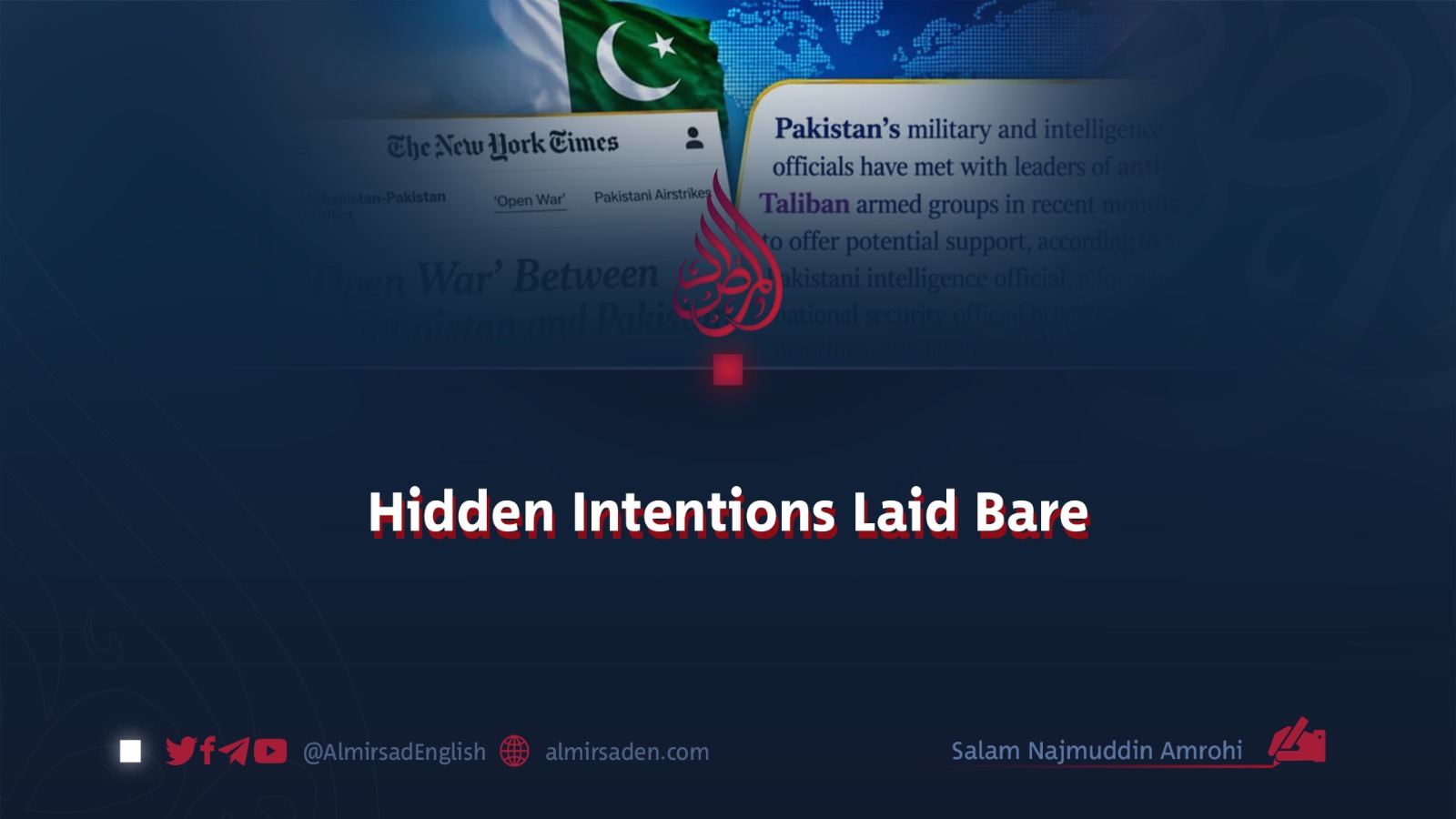
The New York Times has stunned the world with a report that the Pakistani army has asked for help from politicians of Afghanistan’s former failed political administration and from opponents of Afghanistan’s current ruling system. In Pakistan, the New York Times is regarded as a highly credible and reliable newspaper, and Pakistan believes everything it reports without question. According to this report, the Pakistani army has met in recent days with those failed chess players and urged them to come back to the chessboard. These are the people who spent twenty years gambling with their own brothers’ heads, trying to win the game against them. Their hands are red with the blood of innocent people, and to win their game they used all the world’s powers, weapons, cunning and deceit. Yet they ended in failure and despair, and victory never came to them.
Citing its own sources, this newspaper, so highly regarded in Pakistan, wrote that the Pakistani army asked people connected to Afghanistan’s former administration to work as proxy forces, form groups inside Afghanistan and fight, and that it also promised them every kind of help. Separately, Zalmay Khalilzad, America’s former special representative for Afghanistan, claimed in a post on his X account that Pakistan is recruiting people against the Afghan government in order to cause it trouble in every possible way. According to Khalilzad, there are reports that Pakistan is making a full effort on this front, trying to get its hands on people who will fight the current Afghan government so that Pakistan can profit from the conflict.
Around the same time, Pakistan’s representative at the United Nations raised another point. He claimed that the arms and heavy weapons America left behind in Afghanistan are a source of concern for Pakistan and a threat to that country’s security. It’s as if streams of milk were now flowing in Pakistan on every other front, as if it had solved all its internal problems and faced only problems abroad, supposedly coming from a country battered by decades of war that has only just begun to stand on its own feet.
From these three statements and reports, you can guess what intentions the Pakistani military regime has toward its brothers and its neighboring Islamic country, Afghanistan. You can also see why Pakistan is upset with Afghanistan and why it is always trying to attack it. Over the past two or three years, Pakistan has complained again and again at various world meetings and forums that terrorists emerge from Afghanistan, infiltrate Pakistan and carry out attacks there.
The Afghan government made its position clear to the world. Its defense minister said that no terrorism of any kind would originate from Afghan soil, that Afghanistan had given this guarantee in the Doha Agreement to the whole world, Pakistan included, and that it could give every side the same assurance in the future. Interior Minister Khalifa Sahib then formally made a proposal as well: a joint committee along the imaginary Durand Line to monitor infiltration activities from both sides and, in case of a complaint, oblige each side to take practical action.
This position was made clear to the world and was praised and welcomed by all sides, because there was no better way to reassure anyone. The only one who didn’t like it was Pakistan, because under the name of terrorism, Pakistan has other, hidden goals. You can read these goals in the events that began right after the IEA’s victory. First, Pakistan closed the Torkham, Kharlachi and Chaman-Boldak crossings in the very days when it was fresh fruit season in Afghanistan and the fruit was being sent to Pakistani markets. It gave no reason; it just spread some baseless claim.
In the second stage, it stopped the transport of goods coming to Afghanistan by sea. It held thousands of containers at various ports, which caused very heavy losses to Afghan traders. Here too, as before, it acted without any reason. Along with this, it suddenly raised the tax on fruit imports to more than 100 percent, with no prior notice and no agreement.
Worse still, it began forcibly expelling Afghan refugees who had been living in Pakistan for decades. Maybe it looked for some pretext for the expulsions, but forcibly expelling them from their homes and properties, seizing their assets, beating them and throwing them into prisons were horrifying acts that were contrary to both the law and sharia. But what business did they have with sharia and law? They did all of it anyway.
This stage hadn’t even ended when they moved into direct warfare and began bombing Afghanistan. They closed all trade routes. Along the land border they began an unending series of artillery barrages and unprovoked firing. Here too they offered the same old pretext: that all of this was happening because infiltration activities were being carried out from Afghanistan.
This went on for months, and the world watched in astonishment, its head in its hands, waiting for news that some terrorist hideout had been destroyed. Any moment now, any moment now. The world just kept waiting. It dragged on past months into a year, and still no reliable proof came forward. Disgrace was their lot, and disgraced they were. But since they had already started a mission, they turned around and started another game.
They launched an organized propaganda campaign against Afghanistan. They put media figures, religious figures, television spokespeople and people from other parts of society in front of the cameras and had them tell lies that amazed even Satan. Part of this mission was to find people inside Afghanistan who, in return for some gain or out of greed, would speak against the current government, come out into the open and become part of the resistance.
According to the latest reports, this mission has reached the stage described by the New York Times and Zalmay Khalilzad. This means Pakistan’s hidden goals have now come out into the open. What Pakistan says, and wants the world to believe, is an outright lie.
Pakistan’s real aim is to weaken, by every possible means, the system in Afghanistan that was built on Islamic principles after centuries. It is a system in which people from east to west and from south to north have found their hopes realized, and whose echoes of security and peace have reached every corner of the world.
Every oppressed person in the world sees their own image in it like a mirror, and the blood of thousands of martyrs flows through every one of its veins. It is the fulfillment of the hopes and dreams of millions of widows, orphans and helpless people. To weaken this system, Pakistan has resolved to complete this project at any price and uproot it. If lies are needed, it will use lies. If propaganda is needed, propaganda. If it means seeking help from the disbelievers and forces hostile to Islam, even bending its neck and accepting enslavement to them, it will do that too. But time will decide whether Pakistan’s plan succeeds, or whether its flames turn back and burn the hems of the very people who devised it.