
























By Saif al-Din
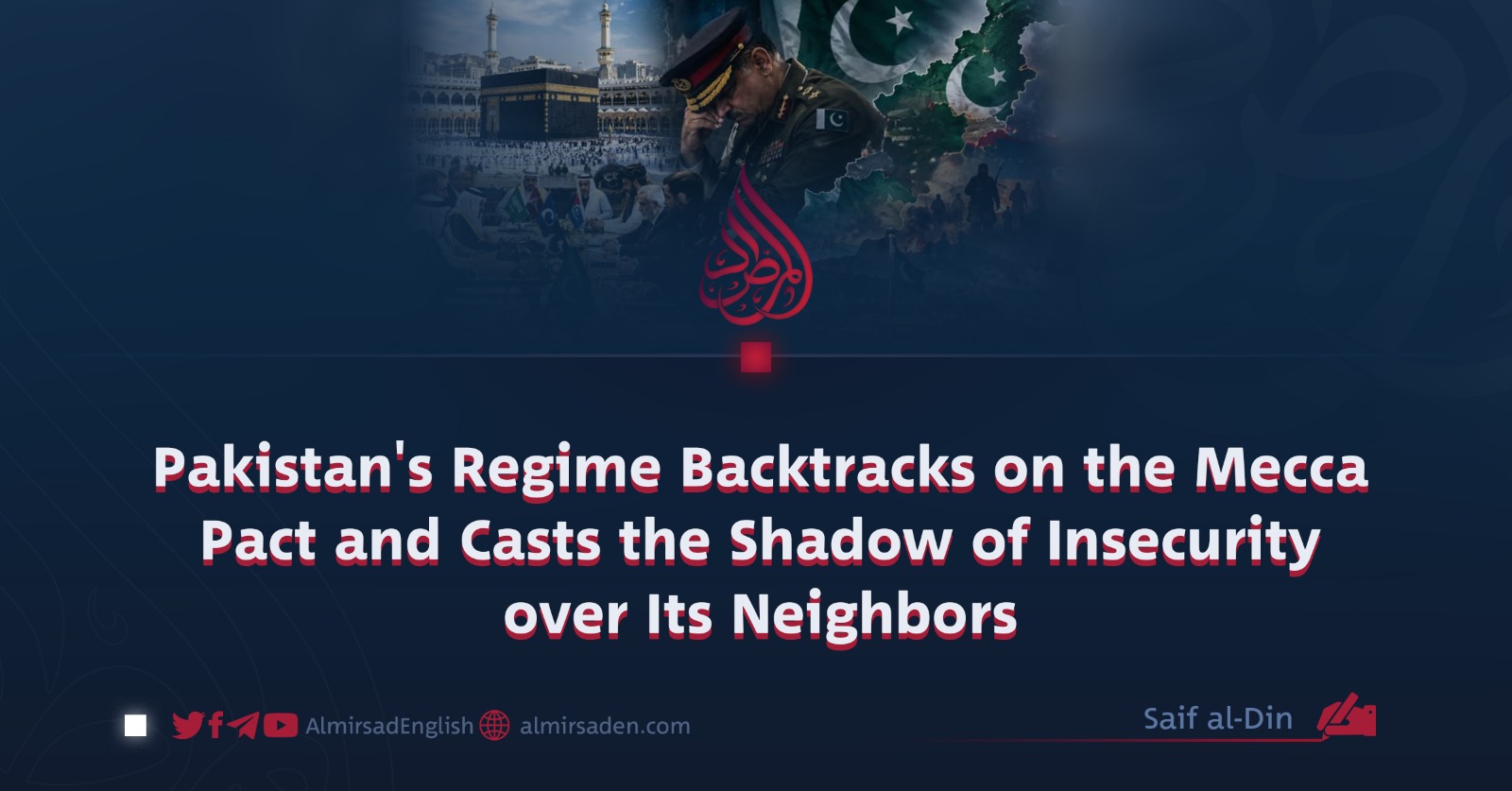
Pakistan’s current political and security situation faces an unprecedented crisis and deep disaster, rooted in its failure to meet external commitments, its financial breach of promises, and severe internal turmoil. On one hand, Islamabad has backtracked on its word and accepted the rules of various international and regional agreements, such as the treaties and principles of the Mecca Pact, contracts with Delta Company, and other financial and development projects, failing, despite its prior pledges, to honour them.
These financial failures and deviations from legal commitments have not only severely damaged the trust of international and Western investors, institutions, and business dealings, but their direct, heavy shadows have also spread across the country’s domestic affairs and political atmosphere. Inside the country, fierce infighting among political and power-hungry groups, bloody struggles over power, growing administrative corruption, and a total lack of governance cohesion have birthed a complex and unmanageable crisis. The ruling military regime and its entire military-intelligence apparatus have been left deeply uneasy, bewildered, and deprived of stability.
When the internal pillars of a helpless regime collapse and it finds itself wrestling with domestic political opponents, it falls back on its old intelligence tricks and destructive tactics to divert minds, contain popular opposition, and escape international judgment. For this reason, to hide its domestic and foreign failures, draw attention away from its borders, and spread instability, Pakistan has intensified its devious and destructive interference in the sovereign territory and affairs of its neighbors, particularly Afghanistan.
A very clear, documented, and undeniable example of this sinister intelligence mindset occurred recently in Kamdesh district of Nuristan province. Pakistani intelligence channels organized and equipped a foul, mixed group built around Daeshi Khawarij and elements of evil and corruption, operating as a joint front to pave the way for widespread insecurity, unrest, and destruction inside Afghan territory.
But by the grace and mercy of Almighty Allah and through the precise preemptive actions and intelligence operations of Afghan security forces, this entire dangerous conspiracy was uncovered and targeted with complete precision before it could be carried out. As a result, all their evil goals and destructive plans were completely neutralized before they could ever take shape.
Following this disgraceful intelligence defeat, and with the Pakistani government’s credibility destroyed in financial, administrative, and social evaluations, their policies are taking an even more extreme and devious direction. Based on deep regional and Western political and security analyses, retreating intelligence regimes that are edging closer to internal collapse and foreign isolation often resort to reckless calculations.
In this regard, it is highly likely, and there is strong reason to believe, that Pakistan will stage fake attacks on very sensitive and critical locations on its own soil. This would serve to cover up its exposed and failed interference, deceive public opinion in the region and the world, and secure fresh financial and military concessions from foreign powers.
Its intelligence circles may well plan and stage dangerous, dramatic, and deceptive attacks inside Pakistan against foreign diplomatic missions, well-known foreign embassies, or key facilities at their own military bases and transport networks. This would allow them to present themselves to the world as the helpless first victim of insecurity and terrorism, while framing the Afghan government and other neighbors with malicious accusations to build a fake cover for their military failures and defeated projects like Kamdesh.
These connected developments and the ongoing situation clearly prove that Pakistan’s recent moves are no accident. They are a desperate attempt by a helpless and crisis-ridden regime to gain control. Backtracking on international commitments, internal government impotence, and intense anxiety among military officials have driven them to reach into their neighbors’ territory to conceal their own failures at home and abroad.
When a regime is forced to execute dangerous scenarios against its own facilities and foreign embassies just to divert attention, it is a clear display of total helplessness and losing its way. Such documented and concrete evidence proves that this system, in its bid for survival, is walking a flawed and declining path that threatens the peace and stability of the entire region.