



Abdullah Ansari
We often judge a decision by its very first day. If a decision looks harsh, we call it a defeat. If it grants a concession, we call it weakness. But the Treaty of al-Hudaybiya, in the life of the Prophet Muhammad (PBUH) shows us that no decision should be judged by appearance alone. Sometimes the real outcome of a decision only becomes clear later.
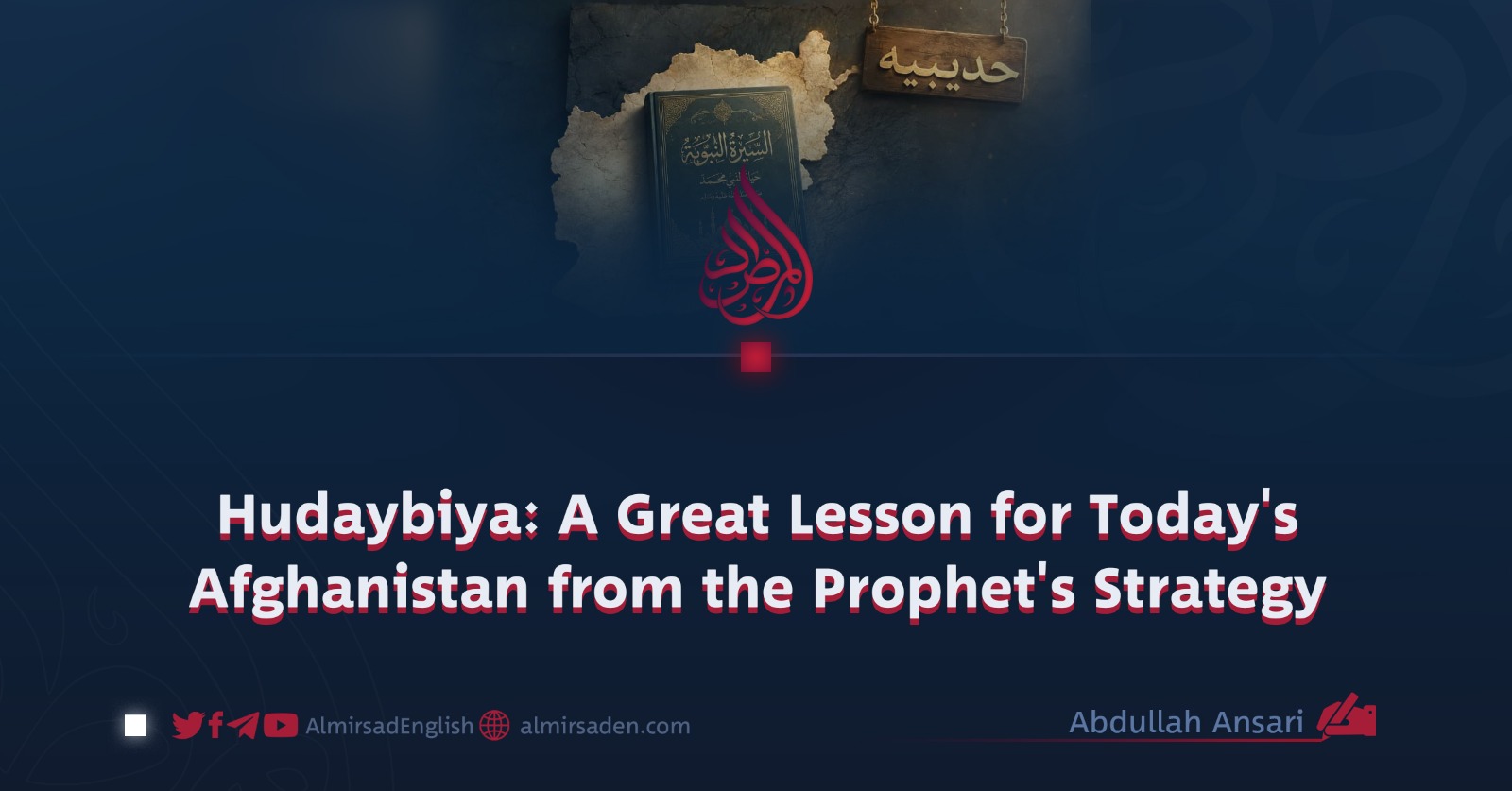
In the sixth year after the Hijrah (6 AH), the Messenger of Allah (PBUH) set out for Mecca with his companions intending to perform Umrah, but the Quraysh refused to let them enter the city. Talks followed, and eventually a peace treaty was reached at Hudaybiya.
Among the treaty’s key terms: the Muslims would not enter Mecca that year, they would come the following year for Umrah and stay in Mecca for three days, there would be no war between the Muslims and the Quraysh for ten years, and the tribes would be free to ally themselves with whichever side they chose. It was also agreed that anyone coming from Mecca to Medina would, under the terms of the treaty, be sent back, but anyone going from Medina to Mecca would not be requested back.
Something very significant happened while the treaty was being written. The Messenger of Allah (PBUH) told Ali (RA) to write “Muhammad, the Messenger of Allah.” The Quraysh’s representative, Suhail ibn Amr, objected, saying that if they had accepted him as the Messenger of Allah, they wouldn’t have kept him out of Mecca in the first place, and that it should instead be written as “Muhammad, son of Abdullah.”
This was extremely hard on the companions, but the Prophet Muhammad (PBUH) accepted this change in the wording for the sake of the greater goal of peace. This didn’t mean the Prophet Muhammad (PBUH) had stepped back from his own mission, it was a clear example of wisdom and strategy in reaching an agreement. An even harder moment came when Abu Jandal (RA) who had been held captive by the Quraysh, made his way to the Prophet Muhammad (PBUH) in chains. His own father, Suhail ibn Amr, demanded that under the terms of the treaty, he be sent back. Abu Jandal (RA) pleaded with the Muslims for help, but the Prophet Muhammad (PBUH) would not allow the treaty to be broken, and gave him assurance of patience and of Allah’s help.
All of this was extremely hard for the companions. Umar (RA) also raised questions, but later accepted the Messenger of Allah’s decision (PBUH). Once the treaty was finalized, the Prophet Muhammad (PBUH) told the companions to sacrifice their animals and shave their heads. Out of deep unease, none of them moved right away. After Umm al-Mu’minin Umm Salamah (may Allah be pleased with her) gave her advice, the Messenger of Allah (PBUH) made his own sacrifice and shaved his head, and the companions followed suit.
But the very thing that at first looked to people like a burden, like a concession, the Holy Quran called a “clear victory.”
(إنا فتحْنا لك فتحا مبينا)
“Indeed, We have given you, [O Muhammad], a clear conquest”
(Surah Al-Fath)
What came out of Hudaybiya?
Once peace was established, the atmosphere of war eased, relations between Muslims and other people broadened, and the ground for spreading Islam became far more favorable. Later, because the treaty was broken, the way was opened for the conquest of Mecca as well. That’s why the Holy Quran called this treaty a clear victory, even though some of its terms looked harsh at first glance.
The example of today’s Afghanistan
If we look at this lesson in Afghanistan’s situation today, one important example is the IEA’s own approach following a long war, focusing on the country’s stability, security, getting institutions running, and strengthening economic foundations.
After decades of war, Afghanistan had reached a point where every day, new war, new death, and new instability blocked the country’s future. Under such conditions, decisions driven by emotion alone could only have pushed Afghanistan further into hardship. But under the IEA, alongside establishing security and institutions, efforts have been underway to develop revenue collection, trade, major roads, mines, electricity, and other economic and infrastructure matters.
Some people criticize the IEA over this and other issues. Their concerns shouldn’t be answered only with insults and accusations, rather, Afghanistan’s future should be proven through action, stability, education, economy, justice, and development. The lesson here is that building a country isn’t done through slogans alone, it requires security, stability, strong institutions, economy, education, and patience.
Today’s Afghanistan also needs to think long-term about its own future instead of relying on emotional judgments. If security holds firm, institutions grow stronger, the economy develops, education expands and strengthens, trade grows, and major projects are completed, the foundations for rebuilding the country will grow stronger still. This is an important message for today’s Afghanistan from the great lesson of Hudaybiya: great goals require patience, wisdom, strategy, education, and a long-term vision.