














By Walid Wyar
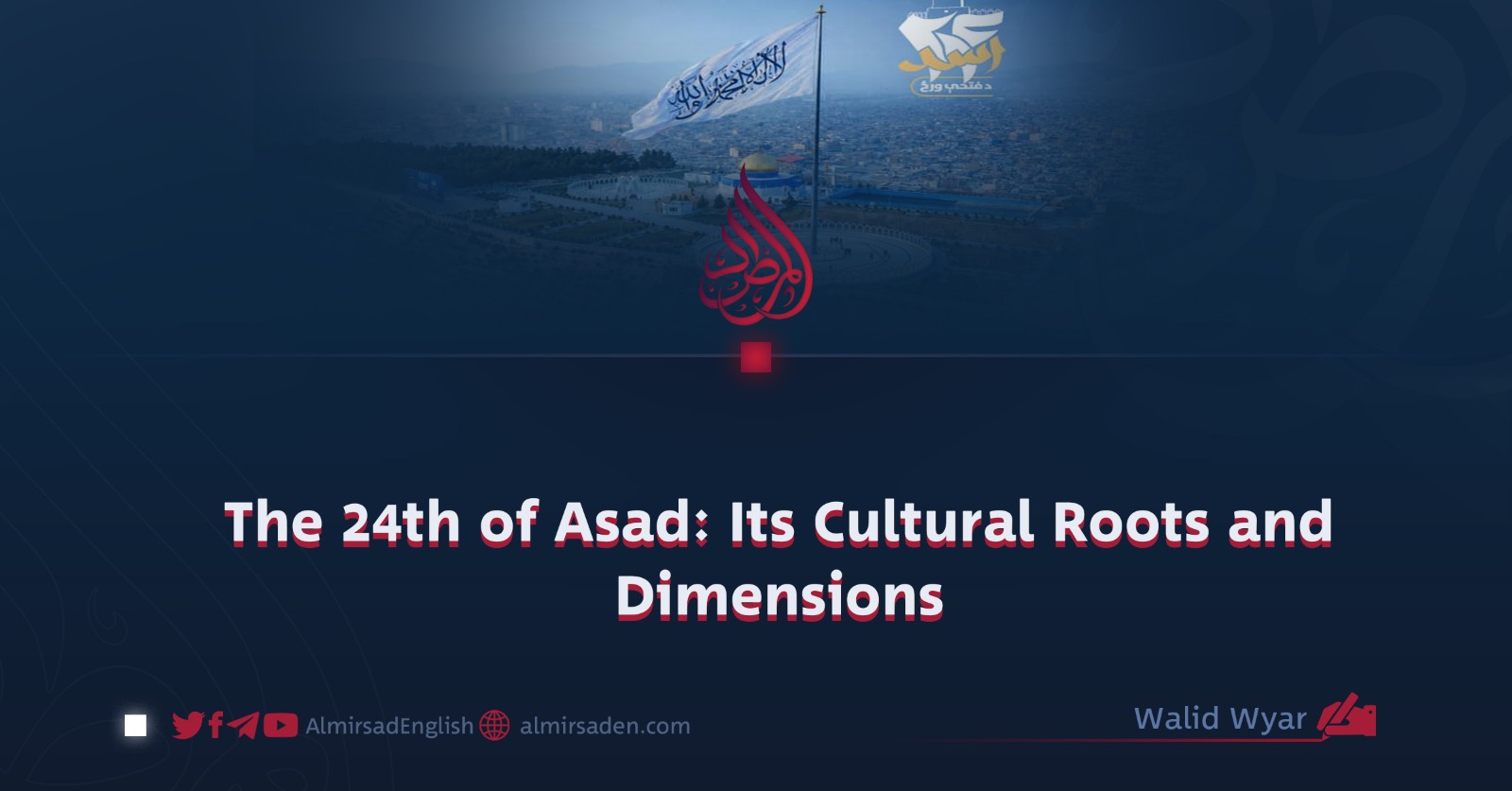
Before discussing the cultural dimensions and roots of the Day of Victory, it is necessary to briefly shed some light on the political and strategic importance of this historic day. As is clear to the whole world, the 24th of Asad is not an ordinary day in Afghanistan’s contemporary history. Nor is it a day that concerns Afghanistan alone. Its consequences are also tied to the fate of the wider world, particularly NATO and America.
Nearly twenty-five years ago, America and its military allies formed a coalition to occupy Afghanistan, even though our country was not a threat to any other state and had no connection to the 9/11 attacks. The real issue was that the Islamic Emirate of Afghanistan (IEA), which had brought an end to the cycle of civil war in Afghanistan, was unacceptable to the West and the American alliance. This purely Islamic system, built on its own values, had no real example at the level of the Islamic countries of the region or the wider world.
On the other hand, intelligence organizations pursuing their own agendas and anti-Islam elements understood that the IEA’s commitment to Islamic values could turn the system into a powerful force in Afghanistan and the region, making it much harder to contain in the future. George Bush, the then U.S. president and one of the founders of the modern Crusader wars, declared that you were either with us or against us; there was no third choice.
With these points in mind, let us return to the main subject. Every struggle is waged with the aim of achieving victory, and the achievements of any struggle determine the direction a society takes in the future. The IEA’s twenty-year struggle was not merely a military movement. It was a national movement whose roots ran through the lives, culture and daily affairs of the people. It was an Islamic and Afghan struggle because the people’s homes, guesthouses and every available resource were placed at the disposal of those fighting the occupation. Without that support, there was simply no possibility that poorly armed and less-equipped fighters could stand their ground against a global military power.
On the contrary, one of the reasons behind the defeat of the domestic and foreign supporters of the twenty-year occupation was that their rule and system had no roots in our land or culture. From no angle could they build a legitimate narrative for their continued rule, and that was why they remained strangers to the people. The language, customs, conduct and other cultural features of the officials brought in from the West with the backing of American and NATO forces never became part of the life or identity of ordinary, suffering Afghans. Everything was foreign and out of step with our cultural values.
Children even fled from their soldiers. Mosques, guesthouses, funerals and wedding ceremonies were bombed because they were seen as gathering places and centers of activity for their opponents. In many cases, there were even incidents in which Afghan women were searched alongside the humiliating searches of men. Such incidents provoked public anger. But that anger came from the ordinary and awakened people, not from the arbakis and puppets whom the occupying forces took along with them and later used as human shields.
For every bullet fired and every gun that went off in the struggle that brought about this day, countless pens were also put to work. Countless sermons were delivered, speeches were made, publications were produced, and songs of freedom and an independent life were sung. Many times, their impact was greater than that of guns and bullets. Now that we are approaching the Day of Victory, this day should not be celebrated merely for the sake of celebration. Its cultural potential should be used to the fullest, and it should be turned into a symbol of strengthening cultural efforts and national unity.
This is not an ordinary day. It is not merely an Afghan epic or a historical event belonging to Afghanistan alone. It is an inspiring day that challenged the military and political strategies of NATO, America and their regional allies, proving to them that systems are not preserved by military backing. They survive through popular support and genuine authority.
There is a need to move beyond empty praise and ceremonial celebrations of this historic day. Serious academic discussions, seminars and conferences should be organized around its history, dimensions and legacy. Research papers, studies and specialized articles should be published so that, on the one hand, they can help enlighten public thinking and, on the other, remain in written form as a record for future generations.
This day should not be reduced to emotional recollections, personal memories and self-praise. It should instead be observed through practical discussions and analysis in schools, madrasas and universities, with attention to preserving its legacy, carrying it forward and protecting it as a national right.
The military strategy, economic initiatives, historical challenges, political judgment, and the IEA’s positive foreign policy and diplomacy should all be studied in this context. Such discussions should even be presented in other international languages so that the countries of the region and the wider world understand that Afghanistan is not a field for the political and competitive games of others. It is a center for stability and cooperation based on mutual respect.
And whenever anyone steps beyond these lines, the result will be another 24th of Asad. Afghans can never accept living under the domination or dictates of others.