



















By Abdul Basir Omari
Because of South Asia’s security challenges, border disputes, and political rivalries, unofficial armed groups have long remained a subject of interest for both regional and international observers. Reports and claims about the support, training, and use of these groups appear time and again. Political and security studies suggest that whenever a state or any other actor relies on irregular armed groups to achieve short-term strategic objectives, it often ends up facing consequences that are both unexpected and damaging.
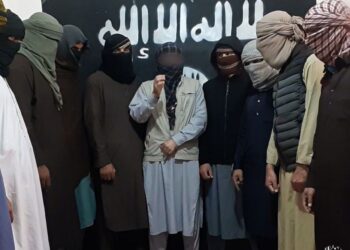
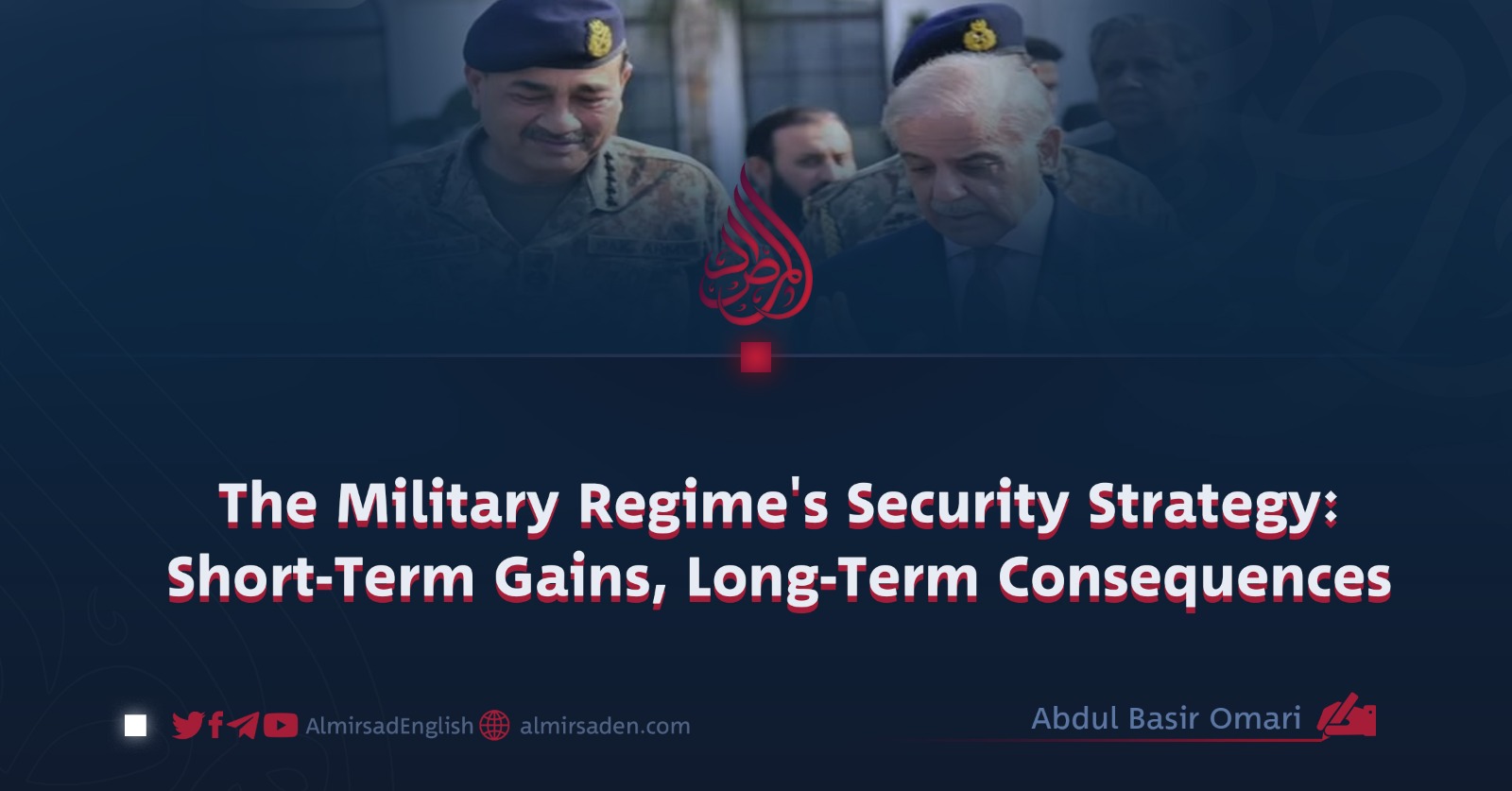
Security analysts believe that Pakistan’s military regime, after security inside the country sank to its lowest point and the authorities failed to restore order, once again turned to one of its familiar methods. It began training the ruthless Arbakis of the collapsed republican government in Afghanistan, men who spent twenty years persecuting believers and who, for very little money, are willing to carry out almost any act of violence or brutality.
By training these Arbakis, the military regime hopes to secure certain short-term advantages for itself. Yet the consequences of this policy are likely to reach far beyond Pakistan and affect the entire region, and perhaps even the wider world.
Some of the short-term gains the regime appears to be seeking include the following:
1. Undermining security in Afghanistan
The military regime hopes that by training the Arbakis it can disrupt the security that now exists in Afghanistan, create internal problems for the Islamic system in power, and exploit any instability for its own benefit. But, by the grace of Allah, Afghanistan’s security cannot be shaken by a handful of defeated gunmen.
2. Using them against the TTP and the Baloch
According to analysts, after failing to defeat the TTP and Baloch separatist groups through direct military operations, the regime is now trying to use the Arbakis against them, pushing them into direct confrontation and using them to carry out crimes against humanity. Even this plan is unlikely to succeed. If the entire Pakistani army, with all its resources and equipment, failed to suppress these armed groups or restore security, it is difficult to see how these hired gunmen will achieve what the army could not.
3. Fueling ethnic divisions
By training the Arbakis, the military regime is also trying to create conflict between Balochistan’s two largest communities, the Pashtuns and the Baloch. Secret killings carried out through these groups are meant to provoke suspicion and hatred between them. The regime has also used the Arbakis to target religious scholars and tribal elders, while presenting those attacks as the work of anti-government armed groups. These are only a few of the short-term gains the regime appears to have in mind.
The long-term consequences of training the Arbakis, however, could be far more serious.
1. The boomerang effect
History has repeatedly shown that every militant group supported by Pakistan’s military regime eventually turned into a threat to Pakistan itself. The Arbakis are unlikely to be any different. The forces being created today could easily become tomorrow’s enemy.
2. Greater international isolation
Open ties with armed groups further damage Pakistan’s reputation in the eyes of the world. They reinforce the country’s image as an unreliable state and could deepen its political and economic difficulties while inviting greater international pressure and sanctions.
3. A new regional threat like Daesh
Security analysts argue that once armed groups are created for political or military purposes, controlling them becomes increasingly difficult. Over time they develop their own goals, ideology, and influence. The result can be another threat like Daesh, one capable of creating fresh instability across Central and South Asia.
4. Lasting hostility between the Baloch and the Pashtuns
Using the Arbakis to drive a wedge between the Baloch and the Pashtuns risks creating long-lasting hatred between two neighboring peoples. Such a policy could push Pakistan toward deeper internal conflict and even further fragmentation.
The military regime’s security strategy, built on training Arbakis and other violent men, is ultimately a self-destructive pursuit of short-term gains. It threatens not only Pakistan’s long-term security, stability, and future but also the peace of the entire region. If the regime is raising violent men today, those same men may well become the architects of its downfall tomorrow. History has taught that lesson time and again.