






Responsible states that emerge from the will of their own people place domestic political stability and national sovereignty above everything else. The foundations of that stability rest on the legitimacy of the ruling system, a clear national position, and a sense of national legitimacy rooted in the country’s geography, history, and culture.
Pakistan’s military regime, which has long claimed to defend national sovereignty and project strength while portraying itself to the world as a victim of terrorism, now finds itself trapped in precisely such a crisis.
Step by step, it is pushing the country toward deeper instability with its own hands. As that instability grows, Pakistan’s standing in the world continues to decline. It no longer has the economic or political capacity to repay the billions it owes, and instead has reached the stage where it survives by asking for yet more loans. Time and again it has turned to America, Saudi Arabia, and the UAE, seeking fresh financial assistance and asking for extensions on the repayment of previous debts.
When a government loses its credibility abroad, the only thing that can keep it standing is legitimacy at home, public support, and the belief among its own people that it has the right to govern. Those are the qualities that allow a state to survive even without outside backing. Unfortunately for Pakistan’s military regime, it possesses none of them.
As a one-party military dictatorship, it has lost the trust of nearly all of the country’s ethnic groups and minorities. The armed resistance in Balochistan, the activities of the TTP, and the growing anger of other groups are clear signs of that reality.
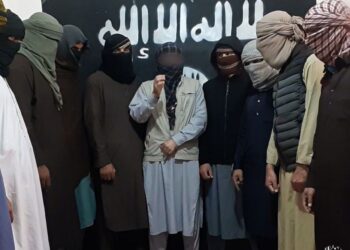
To hide this failure and cover its weaknesses, the Pakistani regime has once again returned to intelligence games and covert schemes. By supporting violent groups based inside Pakistan, former arbakis who fled from Afghanistan, Daeshi Khawarij, and other militant organizations, it tries to conceal its own failures and convince the world that Pakistan is still a victim of terrorism and is fighting against it. In return, it shows little concern over how many Pakistani citizens are killed, how many economic projects are disrupted, or how much the country sinks deeper into instability and international isolation. As long as the military generals can preserve their business interests, secure foreign funding and projects under the banner of counterterrorism, and prolong their grip on power with international approval, the cost is of little consequence to them.
Even many Pakistanis and political analysts inside the country openly acknowledge this reality. They have repeatedly warned the military regime that it is repeating the same failed policies that have already pushed the country toward instability and isolation. Yet those voices are not merely ignored. Those who speak the truth often disappear, are killed under one pretext or another, or are handed severe punishments by courts operating under the influence of the military regime.
The Pakistani regime should understand that these violent groups, former arbakis, and Daeshi Khawarij are nothing more than mercenaries and traitors with no legitimate cause or honorable history. If it continues supporting them, it is not deceiving the world. It is deceiving its own people while ignoring the historical lessons and realities that could ultimately lead to Pakistan’s fragmentation and the suffering of millions.
The time has come for the regime to stop blaming others and using outsiders as scapegoats for its own failures. It must face reality if it hopes to regain international credibility and protect its people and territory by building genuine relations with its neighbors, especially Afghanistan, on the basis of good neighborliness. The region has changed. The world has changed. Pakistan can no longer sustain the interests of military generals, preserve authoritarian rule, and protect their political and commercial ventures through illegitimate interference in Afghanistan, the region, and neighboring countries.