




















By Ajmal Ghaznavi
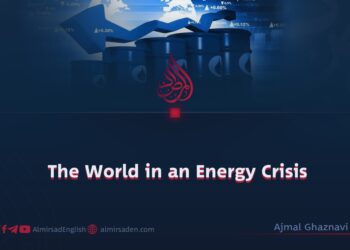
The world is facing an energy crisis that means something far bigger than the ordinary problem of oil prices, production, and transport. War, power, sanctions, and the political goals of major countries have become tangled up with one of the most important pillars of the global economy in such a way that a military conflict in one region can affect people’s lives, markets, and economic futures thousands of kilometers away.
According to a recent Reuters report, countries affected by wars and conflicts produced around 45 million barrels of oil per day in 2025, more than 43 percent of the world’s total oil. Iran, Russia, Libya, and Venezuela are among the major sources of this large share. The report makes clear that pressure on oil production, transport, and refining capacity has increased because of these wars, and the world’s energy market is facing unprecedented strain.
But here’s the most important part of this whole discussion: the entire responsibility for the current energy crisis can’t be pinned only on the war-torn countries. The great powers of the world, the ones who talk about global energy security, free trade, and keeping sea lanes safe, have themselves played a role in creating and expanding this same crisis. In particular, after the US and Israeli strikes on Iran began, one of the world’s most important energy routes fell into serious disorder. Reuters says that before the war, around one-fifth of the world’s oil and a large share of liquefied natural gas passed through the Strait of Hormuz.
Here’s where the real contradiction of the world’s energy crisis comes into view: the very power that claims to protect global energy security is itself caught up in a war that has put a vital artery of the world’s energy supply at risk. If energy security depends on keeping the world’s sea lanes open, then any decision to widen the war is a direct threat to that same security.
Iran, for its part, responded by restricting movement through the Strait of Hormuz. Reuters reports that traffic through the strait has dropped sharply, and oil transport levels have fallen well below where they stood before the war began. The continuing standoff between America and Iran, the threats, the tit-for-tat military moves, have thrown the oil market into an instability where every new development in the war brings fresh fear of rising prices.
So if someone simply says “Iran shut Hormuz and threw the world’s energy market into chaos,” they’re only giving half the picture. The real question is: why was Hormuz shut in the first place? Where did this chain of war actually begin? And how much of a hand do the powers capable of widening this war have in creating this situation?
These questions matter because the energy market isn’t separate from politics. When the world’s major powers ramp up military, economic, and political pressure on oil-producing countries, the energy market feels it too. Sanctions restrict the flow of oil, war damages production and refining centers, and military threats make transport routes unsafe. The result, again, is instability across the world’s markets.
Venezuela’s case is an important piece of this same larger equation. Venezuela holds the world’s largest oil reserves. The US government expanded its pressure and influence over Venezuelan oil in 2026, and talks are now underway for long-term access to and a stake in parts of this country’s oil. Reuters reported on August 27th that the US government is in talks with Venezuela’s transitional government over a deal to take a stake in some of the country’s oil reserves, though the report stresses that no agreement has been finalized yet.
This raises an important question in the current debate over the world’s energy: is energy security a shared security for all countries, or is it a tool for major powers to control resources? If energy security is genuinely meant to be a matter of international cooperation, then political pressure over oil sources, military intervention, and efforts to control weaker countries’ energy wealth shouldn’t be counted as part of the solution. On the contrary, these very actions deepen the roots of the crisis.
The world’s current energy crisis hasn’t come only from falling production, refining capacity has taken damage too. According to Reuters’ latest figures, the world’s oil refining capacity has dropped noticeably because of wars and attacks, and in August 2026 the world’s daily refining throughput was around four million barrels lower than the same period the year before. The result is a worry that goes beyond a shortage of crude oil, toward a shortage of finished fuel products.
This is exactly what reveals the real depth of the crisis. The world doesn’t just want crude oil, it wants gasoline, diesel, jet fuel, and other finished fuel products. If refining centers go offline, having crude oil on hand doesn’t solve people’s problem either. Oil has to be produced, transported, refined, and then delivered to market. Whichever link in this chain gets damaged, the whole system feels it.
For this reason the energy crisis brings pressure on the world’s economy from multiple directions at once. Fuel prices rise, transport costs go up, the cost of industrial production climbs, food transport expenses increase, and the general cost of living for people goes up. In weaker economies this pressure is even more dangerous, because there people’s incomes don’t rise at the same pace as prices do. But the biggest political consequence of this crisis is that it has revealed a new face of energy power to the world. Whoever holds oil has influence over the world’s economy. Whoever controls the routes that carry that oil has influence over the market’s breath, and whoever holds both has real leverage on the stage of world politics.
This is why Hormuz isn’t just a strait, Venezuela isn’t just an oil-producing country, Iran isn’t just a regional power, and the Gulf isn’t just a collection of oil wells. All of these are important points on the map of how the world’s economic power gets divided up. The current energy crisis also reminds the world of another truth: the world’s energy security can’t be guaranteed by the military power of one or two major powers. If a country’s energy security is secured through another country’s war, blockade, and economic weakening, that isn’t security, that’s the start of the next stage of the crisis.
Real security comes when energy sources are diversified, transport routes are safe, countries aren’t tied to a single limited route, and the world’s major powers build shared principles for the fair and secure use of resources instead of principles for controlling them. Alongside this, expanding the world’s other energy sources matters too. Generating electricity from sun, wind, and water, expanding energy storage, and building alternative transport routes could reduce how tightly the whole world’s economy is tied to one region’s war, but this process takes time. Until then, oil remains one of the essential pillars of the world’s economy, and the security of its production and transport stays tied to global stability.
This is exactly where America’s policies, and those of the other major powers, need to be examined. If Washington talks about the stability of the world’s energy market on one hand, while increasing military and economic pressure on oil-producing countries on the other, the world has every right to ask what the real goal of this policy actually is. Is it energy security, or gaining more influence over energy sources and routes?
The ongoing talks over Venezuelan oil, and the war in Iran, make this question even more pressing. Talks for long-term oil access in Venezuela, and war in Iran, are two different faces of the same expanding American influence across two of the world’s most important oil-holding regions. Of course, this shouldn’t be separated from the fact that the Venezuela deal isn’t finalized yet, and Reuters says it doesn’t yet have independent confirmation of it. But the core of this discussion doesn’t turn on one deal. The real issue is the future of how power over the world’s energy sources gets divided.
If energy sources keep becoming the center of political pressure and military rivalry, the world’s economy will always live under the shadow of the next war. And if the energy market becomes subject to war instead of peace, the price of oil won’t be measured only in money, every decision of war will carry a political and human cost alongside it. Today’s world faces a dangerous contradiction: the world’s economy wants energy stability, but most of the world’s energy sources sit in the hands of regions that are themselves centers of major-power rivalry. The world wants safe sea lanes, yet those same lanes sit under the shadow of war and military threats. The world wants cheap oil, yet political pressure on oil sources and markets keeps growing by the day.
So a genuine analysis of the current energy crisis shouldn’t just say “war is disrupting the oil market.” It should also ask: who starts these wars, who expands them, who profits economically from them, and who pays the economic price for them? Without answers to these questions, any analysis of the energy crisis is incomplete.
Today, the ordinary person in the world doesn’t live in the geography of the Strait of Hormuz, doesn’t work in a Venezuelan oil well, and isn’t caught up in Iran’s war, but they feel the war’s effect in their own market, in fuel prices, and in the cost of living. This is the bitterest truth of the global economy: the wars of major powers begin on their own maps, but ordinary people around the world pay the price. Finding new oil alone isn’t enough to end the energy crisis. Ending these wars requires choosing the path of talks over political force, using resources fairly, and building diverse energy sources.
If the world doesn’t learn this lesson, today’s crisis won’t be the last one. Every new war, every new sanction, every new effort that turns energy sources into a tool of political power, can hit the world’s economy with another wave of shock. The world’s current energy crisis isn’t just a story about an oil shortage, it’s a story about power, war, and control over resources. As long as wars are fought in the name of energy security, the world’s energy security won’t be secured, because the very hand that claims to be putting out the fire, if it’s the one blowing on it, will only make the fire burn bigger and spread further.