








By: Akbar Jamal
The history of Afghanistan, which occupies a unique geopolitical position as a link between the Indian subcontinent and Central Asia, demonstrates that the political developments of this land have always had a profound impact on international affairs. After a long twenty-year struggle and the end of foreign occupation, when the system of the Islamic Emirate of Afghanistan (IEA) came to power in Afghanistan, the most significant question for the world was how the new leadership in Kabul would shape its relations with other countries and upon what framework and policy those relations would be based.
Today, Afghanistan’s foreign policy is being pursued with a level of maturity, moderation, and adherence to the principles of Islamic Sharia that not only represents the national interests of the Afghan people but is also regarded as an important guarantee for lasting peace and stability in the region. Unfortunately, however, this positive development is viewed with suspicion by certain military and intelligence circles in some countries, particularly within Pakistan’s military establishment. They continually attempt to portray Afghanistan to global powers as a potential threat, efforts that neither correspond to realities on the ground nor conform to standards of logic.
The first and most fundamental principle of the IEA’s foreign policy is adherence to the rulings of Islamic Sharia and the political and diplomatic principles established during the Prophetic era. Islam is a comprehensive religion that permits the establishment of peaceful, commercial, and political relations with all countries, whether Muslim or non-Muslim, and in certain circumstances even regards such relations as necessary. The pages of Islamic history testify that after establishing the Islamic state in Madinah, the Messenger of Allah (PBUH) concluded agreements with various non-Muslim tribes and kingdoms. Among the most prominent examples are the Constitution of Madinah (Mithaq al-Madinah) and the Treaty of Hudaybiyyah.
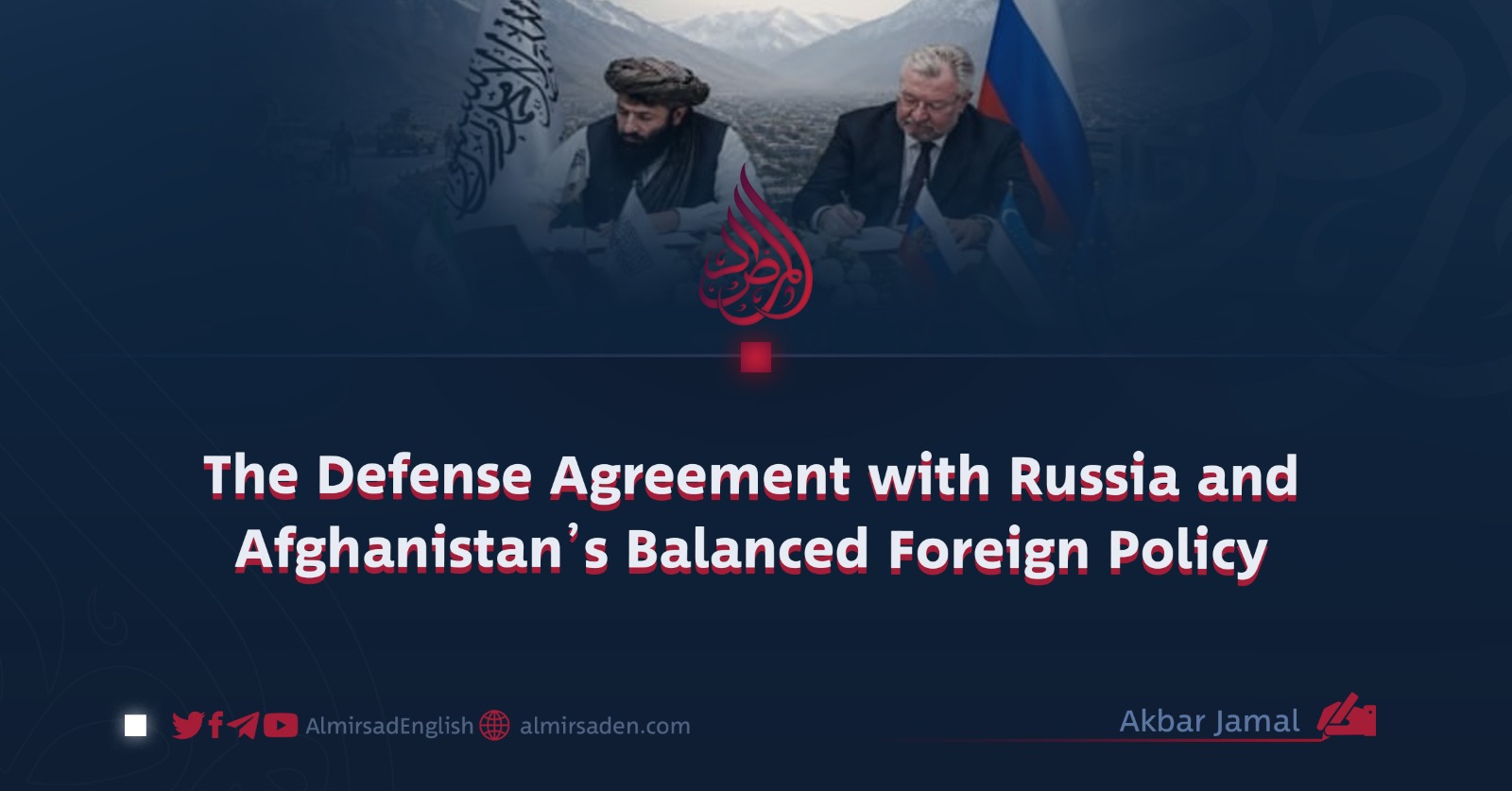
In light of these Sharia-based precedents, the IEA is prepared to engage with any country on the basis of mutual respect, equality, and balanced engagement, provided that such a country respects the rights of the Afghan people and Afghanistan’s national sovereignty. The recent security and defense cooperation with Russia, as well as economic and mining projects with China, are all measures that have been undertaken within the principles and frameworks defined by Islamic Sharia. The objective of these partnerships is to strengthen the country’s defensive capabilities and to prevent foreign aggression and interference.
It is particularly important to note that Afghanistan’s current foreign policy is not part of any global bloc, nor is it directed against any specific axis. Rather, it is a fully independent and non-aligned policy.
Unlike the former puppet governments, which were formed according to the wishes of foreign powers and turned Afghan territory into an arena for political and diplomatic rivalries, the present system defines Afghanistan as a sovereign and independent state.
The expansion of relations with Russia and China does not in any way mean that Kabul has chosen a path of confrontation or hostility toward the United States or the Western world. The IEA has clearly stated that it seeks positive political and economic relations with all countries, including Western states, provided that they do not interfere in Afghanistan’s internal affairs or in its Islamic system.
Rather than becoming an instrument for the objectives of any global power, Afghanistan seeks to transform itself into an important transit hub for regional trade and economic activity. The development of energy and transportation projects aimed at connecting Central and South Asia is a clear example of this vision.
Although the IEA’s foreign policy is constructive, balanced, and centered on peace, Pakistan’s military and governing establishment has recently sought to present the international community, particularly the United States, with a manufactured threat perception regarding Afghanistan.
Pakistan’s military promotes the narrative that Afghanistan’s defense relations with Russia could potentially lead to a new security crisis in the region. However, if the issue is assessed in a logical and realistic manner, this position may be viewed as a major and serious diplomatic miscalculation on the part of Pakistan’s military establishment, because its primary objective is to divert international attention away from its own political, economic, and security failures.
For a long time, Pakistan’s ruling circles have sought financial and political concessions from Western countries by using the “Afghan card.” Even today, they are still attempting to use the same longstanding approach to demonstrate their strategic importance and security relevance to the United States. Such a policy is not only weak from a moral perspective, but is also at odds with the interests of lasting peace and stability in the region.
Contrary to Pakistan’s propaganda, the reality is that a strong, stable, and self-reliant Afghanistan in terms of defense serves as a guarantee for the security and stability of the entire region. Kabul’s security and defense engagement with Russia, China, and other regional powers is not intended for aggression against any country; rather, it is aimed at safeguarding Afghanistan’s territory and preventing foreign interference.
The IEA has repeatedly assured the international community and has demonstrated in practice that Afghan territory will not be used for activities directed against any other country.
Therefore, viewing Afghanistan’s legitimate defensive measures with suspicion and portraying them as a threat by Pakistan’s military establishment may itself contribute to creating new security risks in the region. The foreign policy of the IEA is based on realism, national interests, and, above all, the established principles of Islamic Sharia.
The international community should seek to understand Afghanistan not through the perspectives of other countries or particular military narratives, but through direct and sincere engagement with Kabul’s official position and leadership.
Likewise, global powers should recognize that the doubts and propaganda spread by Pakistan’s military establishment largely reflect its own financial and political interests, whereas the IEA’s primary objective is the welfare of the Afghan people, economic development, and regional peace. Any country that extends a hand of friendship to Afghanistan on the basis of mutual respect and non-interference will find Kabul to be a reliable, principled, and committed partner.