






Abdullah Atif
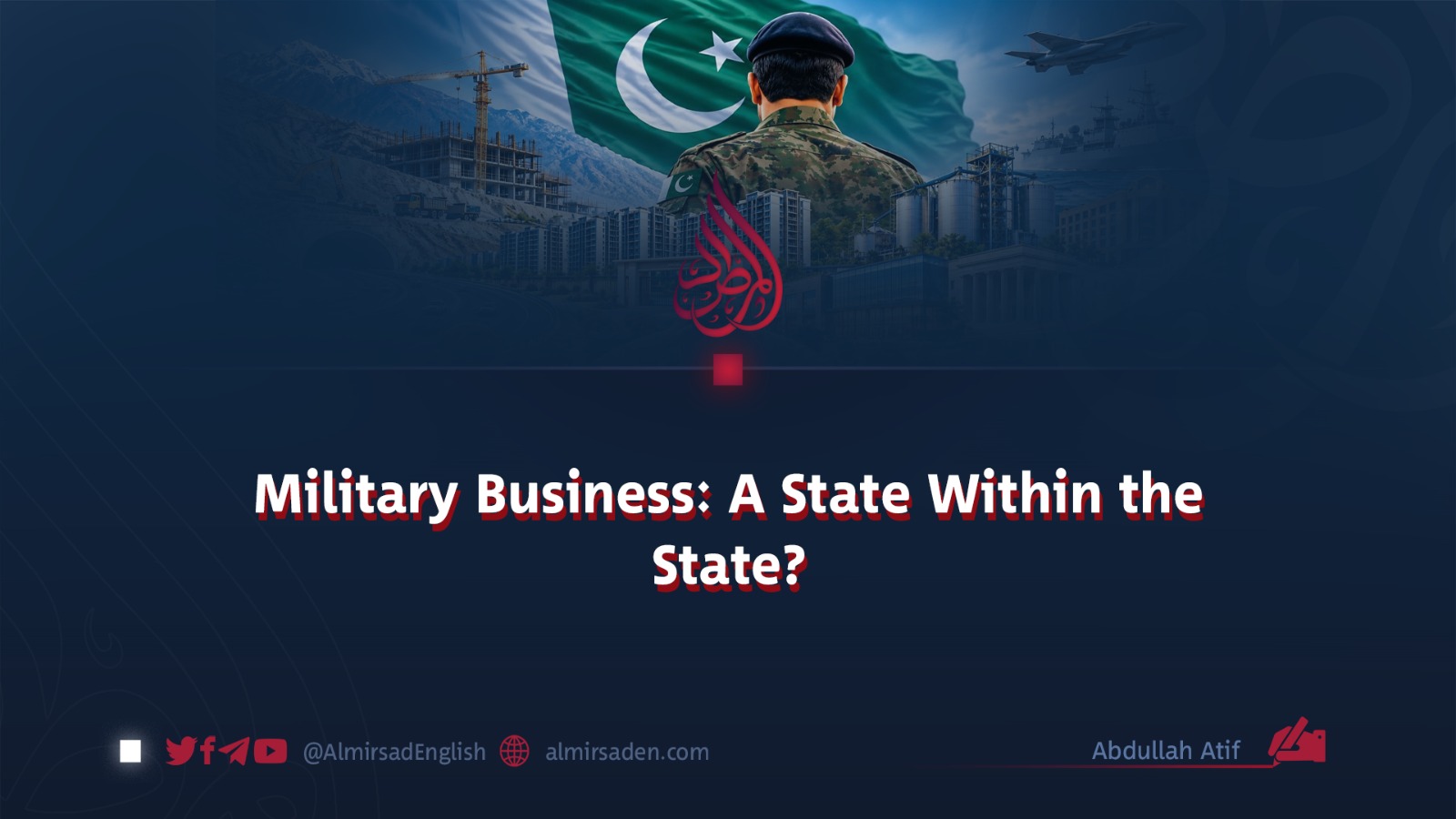
In Pakistan, the army has always been presented as the “guardian of national sovereignty and territorial integrity.” The phrase is repeated in every speech, every textbook and every announcement. But one question remains, and it grows deeper and more serious as time passes: when and how did the guardian become the owner?
When an institution whose basic duty is guarding the country’s borders also builds roads, collects tolls on them, runs banks, sells cement, produces sugar, buys hotels, extracts minerals and builds housing societies on the most valuable land in the cities, it is no longer just a military body. It becomes a state within the state.
This is more than an accusation; it comes down to figures and numbers. These numbers show who has the largest undeclared hold on Pakistan’s economy. Let’s look at what the guardians of national sovereignty are really busy with. Keep in mind that this is only a brief sample!
1. The Frontier Works Organization (FWO)
The FWO was founded in 1966. The Karakoram Highway is counted among this body’s major achievements. Today, though, the FWO isn’t just a road-building body; it has turned into a machine for making money from roads. In 2014 the Lahore-Islamabad motorway was handed to a company linked to the FWO for twenty years. Then in June 2022, the collection of tolls on six motorways was given to the FWO for ten years, without open bidding. How much revenue these toll plazas bring in is a separate question.
But if we estimate it over twenty years:
– Average toll: 2,200 Pakistani rupees, since not every vehicle travels the whole way from Lahore to Islamabad; some drive only half of it. The toll for a full journey by car is now 1,430 rupees and for a trailer 7,980 rupees.
– Annual growth: a 10 percent rise in toll rates and a 3 percent rise in traffic.
Twenty-year calculation. Annual revenue for 2026:
35,000 vehicles × 2,200 rupees × 365 days = about 28 billion rupees a year.
At the start of 2014, the annual figure was about 6.3 billion rupees; by the middle of the period, in 2026, it stands at about 28 billion; and by the end of 2034 it reaches about 76 billion. Total estimated revenue over twenty years: about 600 billion rupees.
Even if we assume lower traffic, the revenue is still estimated at no less than 350 billion rupees, and if traffic is heavier, it goes above 900 billion rupees. The Auditor General’s report of February 2026 exposed many aspects of this body’s activities. A contract worth 12 billion 200 million rupees, which should have been finished in eight months, still had no system installed three years later, yet 88 percent of the money had been paid.
Total revenues of 39 billion rupees had not been assessed by any independent body. Three and a half billion rupees stayed in the FWO’s hands for three months with no penalty. Its accounts hadn’t been audited for twelve years, it hadn’t answered the parliamentary committee, and permission had been sought from GHQ, but a year passed with no reply! Is this what’s called accountability? Is this transparency?
In September 2025, the FWO signed an agreement on mines and mineral deposits with an American company at the Prime Minister’s House. The first phase of the agreement was worth 500 million dollars. In other words, the body set up to build roads now has a share in the country’s mineral deals too.
Here is a simple point worth noticing. When toll rates go up, transport costs go up, and when transport costs go up, the prices of flour, vegetables and all other goods rise with them. The economic pressure on people grows heavier. The FWO’s profit comes, directly and indirectly, out of people’s pockets.
2. The National Logistics Corporation (NLC)
The NLC, set up in 1978, is today building a 52-kilometer rail corridor from Karachi port to Pipri, with an investment of 400 million dollars. It is also moving goods from China to the United Arab Emirates through Khunjerab, a route claimed to have cut the transit time from 30 days to 10. An agreement with a Portuguese company on mineral exploration is also in its hands.
So the country’s logistics, and one main artery of its trade, are in the hands of a military institution, the very institution known as the guardian of national sovereignty.
3. The Defence Housing Authority (DHA)
The Defence Housing Authority has handed over 2,085 plots in Lahore’s Phase 9 Prism. For Phase 10, which covers about 180,000 kanals of land, work on the master plan is under way, while files for the project are already being sold.
The DHA is also expanding in Islamabad, in areas such as Margalla Enclave, Gandhara City and D-13, E-13 and F-13. In Karachi, its Phase 8 waterfront project is counted among the most expensive. In Multan, Quetta, Gujranwala and Bahawalpur too, files for new projects are on offer.
The real question is where the army gets so much land. A military officer gets the chance to obtain plots according to his post and rank, while an ordinary person struggles through long installment plans to buy land. Is this protecting national sovereignty, or trading in land?
4. The Fauji Foundation
Fauji Fertilizer is working on a Thar coal-based urea production project worth 1.12 billion dollars. It is expected to produce 717,000 tons of urea a year from 2031. Mari Petroleum has claimed it saved 2.6 billion dollars in 2025 alone, and the latest news is that the Fauji Foundation has bought 19.7 percent of the shares of the company that owns Pearl Continental Hotels for 6 billion 550 million rupees. So now the army will run hotels too. The FFC also took part in the bid to buy Pakistan International Airlines (PIA).
The basic question here is this: when fertilizer, oil, gas, cement, food products and hotels are all under the army’s influence, what will civilian traders and investors do? Can the private economic sector in Pakistan have any chance of independent activity and growth?
5. The Army Welfare Trust
Askari Bank has more than 720 branches and 974 ATMs and made a profit of 22.8 billion rupees in 2025. Work is now under way to convert it into an Islamic bank, giving it the form of Islamic banking. Besides this, Askari Cement, Askari’s sugar mill in Badin, Askari Seeds, Askari Guards, Askari Aviation and Askari Oil are part of this body’s business activities.
So its money is run by its own bank, its sugar produced by its own mill, its security supplied by its own guards and its petrol sold at its own pumps. Well then, the defense of the country’s national sovereignty goes on! And this is no laughing matter.
6. The Shaheen Foundation, the Bahria Foundation, the CSD and the SCO
The Shaheen Foundation: FM 100 radio, schools, advertising and petrol pumps.
The Bahria Foundation: large commercial centers and a university in Karachi, Lahore and Islamabad.
The CSD: large supermarkets across the country, where ordinary people can shop too.
The SCO: one of the large mobile and internet networks in Azad Kashmir and Gilgit-Baltistan.
So the air force runs radio, the navy builds shopping centers and the army runs supermarkets, and that is how they protect national sovereignty.
The Core Intellectual Problem: Three Major Contradictions
First contradiction: the treasury is the people’s, the profit is the army’s!
In the name of national sovereignty and territorial integrity, the Pakistani army receives a large share of taxpayers’ money, and it also earns profit from business activities. Yet, it is claimed, the standards of taxation and accountability that apply to ordinary traders and private companies are not applied to the profits and business activities of these institutions.
In 2014, the Competition Commission of Pakistan itself said that government concessions had given the FWO a 30 percent edge. In such conditions, how can private contractors compete with this body freely and on equal terms?
Second contradiction: the land is the people’s, the mines are the army’s!
In many cases, claims about how land is acquired and its mineral deposits extracted raise serious questions about how revenue is shared and what the state gets. So mineral agreements are signed at the Prime Minister’s House, yet the role of the FWO and the army leadership in carrying them out and making the decisions is also in question.
Third contradiction: mountains of wealth in three years!
Even a big businessman, a famous celebrity or a successful investor can’t easily gain in three years the wealth an army officer can gain by the time he retires in the form of plots, files, DHA, army companies and commercial centers. So the question is: where does this wealth come from?
It can’t be explained by salary alone; behind it lies a system of privileges that needs to be examined transparently. Because of this situation, their business system does well, while the ordinary people’s economic system faces a severe crisis and collapse.
Conclusion: the state must become a state again!
As long as the army is involved in business, the possibility of its meddling in politics won’t go away. As long as the army buys and sells land, the question of its influence over parliament’s independence and the course of political decisions will remain. And as long as the army’s budget and business activities are shielded from independent audits and full accountability, hopes of mending and reforming Pakistan’s economy will face serious obstacles.
The question now isn’t whether the problem exists. The real question is who will solve it. Parliament, which itself is under the influence of this system? The judiciary, which is struggling to stay independent of this force? Or the people, who are themselves victims of the economic and political consequences of this system?
History shows that no institution gives up its power and privileges of its own accord; limiting power requires legal, political and popular pressure. This can’t be done by one article or one speech; it takes a long intellectual and political struggle. The first step in that struggle is for the people to understand the difference between a guardian and an owner.
The real question is: is the army there to protect the state, or the state to protect the army and its interests? The rest is for the reader to decide. Our duty is only to convey the message.