

















Ehsan
In Islamic thought, a decree is more than an administrative order or a political decision. When the Amir al-Mu’minin (HA) issues one, the first question is: what is its source and basis in Sharia?
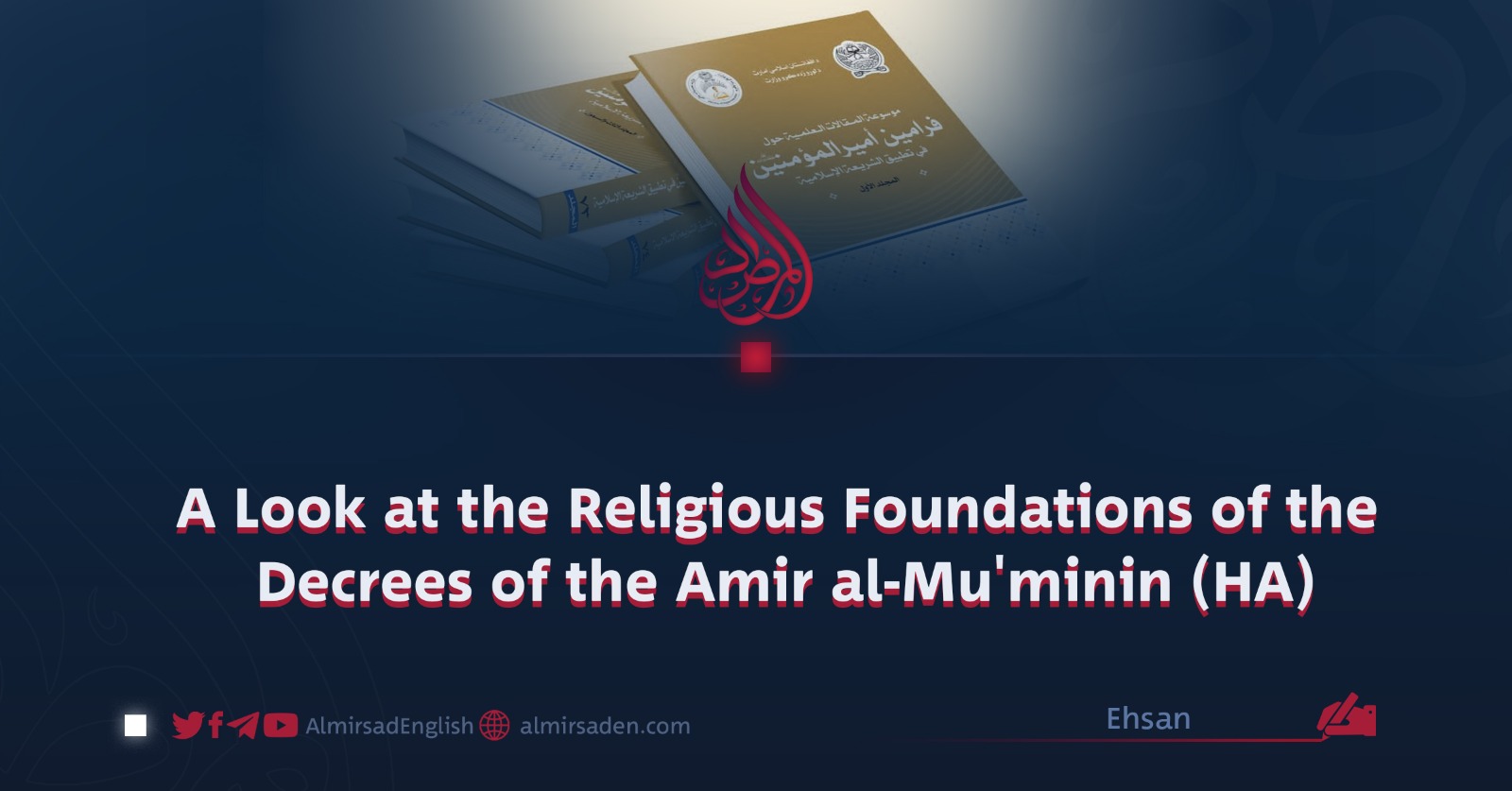
The leader of the Islamic Emirate of Afghanistan (IEA), Sheikh al-Islam Hibatullah Akhundzada (HA), has said plainly: “The laws and decrees of the Islamic Emirate are not the opinions of a few people. They are the religion of Allah (SWT) and all the Islamic rulings that call people to the religion of Allah (SWT).” This statement treats a decree as more than a government decision. It gives it the standing of a religious document, which makes a study of its Sharia foundations necessary.
1. The Division of Decrees into Worship and Dealings
The IEA leader (HA) has said that decrees are issued in two parts: “One part is the glorification and worship of Allah (SWT), which includes prayer, fasting and the other rulings of worship; the other part concerns rulings related to Allah’s (SWT) mercy and compassion toward His creation.” This division recalls the classical method of fiqh, which separates worship from dealings.
In the IEA’s view, though, the second part isn’t confined to dealings in the technical sense of fiqh. It also covers the wider moral meaning of mercy and compassion, including the rights of orphans, widows, people with disabilities and the needy. This joins fiqh with morals, and rights with mercy.
2. Obedience as a Sharia Duty
The IEA’s Central Dar al-Ifta has published a treatise titled “The Effects of Obedience on Strengthening the Sharia System.” In it, obeying the Amir is put on the same level as obeying Allah (SWT) and His Messenger (PBUH).
This argument has its roots in the Quranic verses that call believers to obey those in authority (ulu al-amr). In the approach (manhaj) of Ahl al-Sunnah wal-Jama’ah, obedience to a ruler is obligatory on the condition that it doesn’t mean disobeying Allah (SWT) or conflict with the rulings of Sharia, as the hadith says:
“لا طاعة في معصية الله”
“There is no obedience in disobedience to Allah.”
The hadith stresses this very principle. In the IEA’s view too, the decrees rest on religious texts and in practice don’t conflict with Islamic Sharia.
3. Hanafi Fiqh as the Reference and the Framework for Implementation
The IEA leader generally calls the decrees Islamic rulings, and on the executive side, the Law on Preachers directs preachers to follow the Hanafi madhhab.
This stress on Hanafi fiqh, the madhhab accepted by the majority of Ahl al-Sunnah wal-Jama’ah in Afghanistan, places the decrees’ Sharia basis within a recognized school that most of the people accept. The approach has a history in Islamic jurisprudence too: to keep affairs orderly and consistent, Muslim rulers in various regions relied on the madhhab that most of the local people followed.
Establishing a school of fiqh as the reference protects the decrees from scattered, personal interpretations and gives them unity and applicability. In principle, the decrees rest on the general concept of Islamic rulings, but in their application they rely on the Hanafi interpretation. This distinction between the general Sharia basis and the method of application is a natural, accepted principle in the Islamic approach to governing. In this way the decrees have broad support within Sharia on the one hand and, on the other, a clear framework for implementation.
4. The Decrees’ Link to Public Interest and Justice
The decrees issued so far stress the avoidance of ethnic, regional and linguistic discrimination, and forbid arrogance, pride, oppression and betrayal. In Islamic fiqh these concepts have a clear place under the principles of maslaha (public interest) and justice. For the jurists of Ahl al-Sunnah wal-Jama’ah, particularly in Imam al-Shatibi’s manhaj, maslaha is a Sharia objective that the Lawgiver took into account when legislating rulings, and not a secular matter. For this reason, decrees that stress preserving the unity of the Muslim ummah and preventing oppression and division find strong Sharia support under the maqasid al-Sharia (the objectives of Sharia).
Seen this way, the Amir’s decree is more than a government order. It also expresses the Sharia objectives that the sacred Lawgiver set for the well-being and security of Muslim society. The decrees of the Amir al-Mu’minin (HA) therefore hold a firm place, explainable in terms of basis, form and objective, in the juristic and value system of Ahl al-Sunnah wal-Jama’ah, and they can be counted a useful model for administering a Muslim society effectively on the basis of the sacred Sharia.
The religious foundations of the Amir al-Mu’minin’s (HA) decrees come down to four things: the division between worship and dealings, the principle of obedience resting on religious texts, the authority of Hanafi fiqh as the framework for implementation, and the link to public interest and justice. What joins the four into one coherent system is the principle the IEA’s leadership has stressed: a decree isn’t the human opinion of a few people; it is the religion of Allah (SWT).
This principle has a strong doctrinal basis in the theological manhaj of Ahl al-Sunnah wal-Jama’ah, and it places the IEA’s decrees in the line of rulings and aims that the sacred Lawgiver legislated for human well-being. The scholarly conference in Kabul is also a worthwhile opportunity to clarify and study these foundations. It can build more precise, documented knowledge of the Amir al-Mu’minin’s (HA) decrees in light of the Sharia texts and the juristic approach of Ahl al-Sunnah wal-Jama’ah, and it can be a useful step toward deeper religious understanding and stronger unity of the Muslim ummah.