


















Part 1
Dr. Humam Sultani
A Scholarly and Sharia Assessment of the Rights of Women and Children, Nikah and Inheritance, Wedding Customs, Funeral and Condolence Rites, Hajj and Umrah and Other Matters of Social Life
Introduction
Islam is a comprehensive system of life. Its guidance covers a person’s individual life, worship and morals, and it also takes in the family, society, the economy, education and moral upbringing, human rights, social responsibilities and every part of the state system. The main aim of Islamic Sharia is to protect religion, life, intellect, lineage, and property, establish social justice, fulfill the rights of Allah’s servants, and eliminate oppression and injustice.
Real reform of a society is only possible when its social affairs are organized on justice, benevolence, Sharia principles and human rights instead of inherited customs, tribal practices and personal desires. In the family system especially, protecting the rights of women, children, orphans, widows, the weak and the economically needy is among the basic responsibilities of every Muslim society.
Afghanistan’s social structure also needs particular attention in this area. In various regions there are customs passed from generation to generation that, over time, came to be regarded as a matter of social necessity, tribal honor and standing, even though some of them conflict with clear rulings of Sharia, violate human rights and push families into economic hardship. Forced marriage, depriving women of inheritance, seizing the mahr money, walwar (bride price) and other extra financial demands, wasteful spending at weddings, putting the heavy burden of hosting on the bereaved family and showy ceremonies after returning from Hajj and Umrah are clear examples.
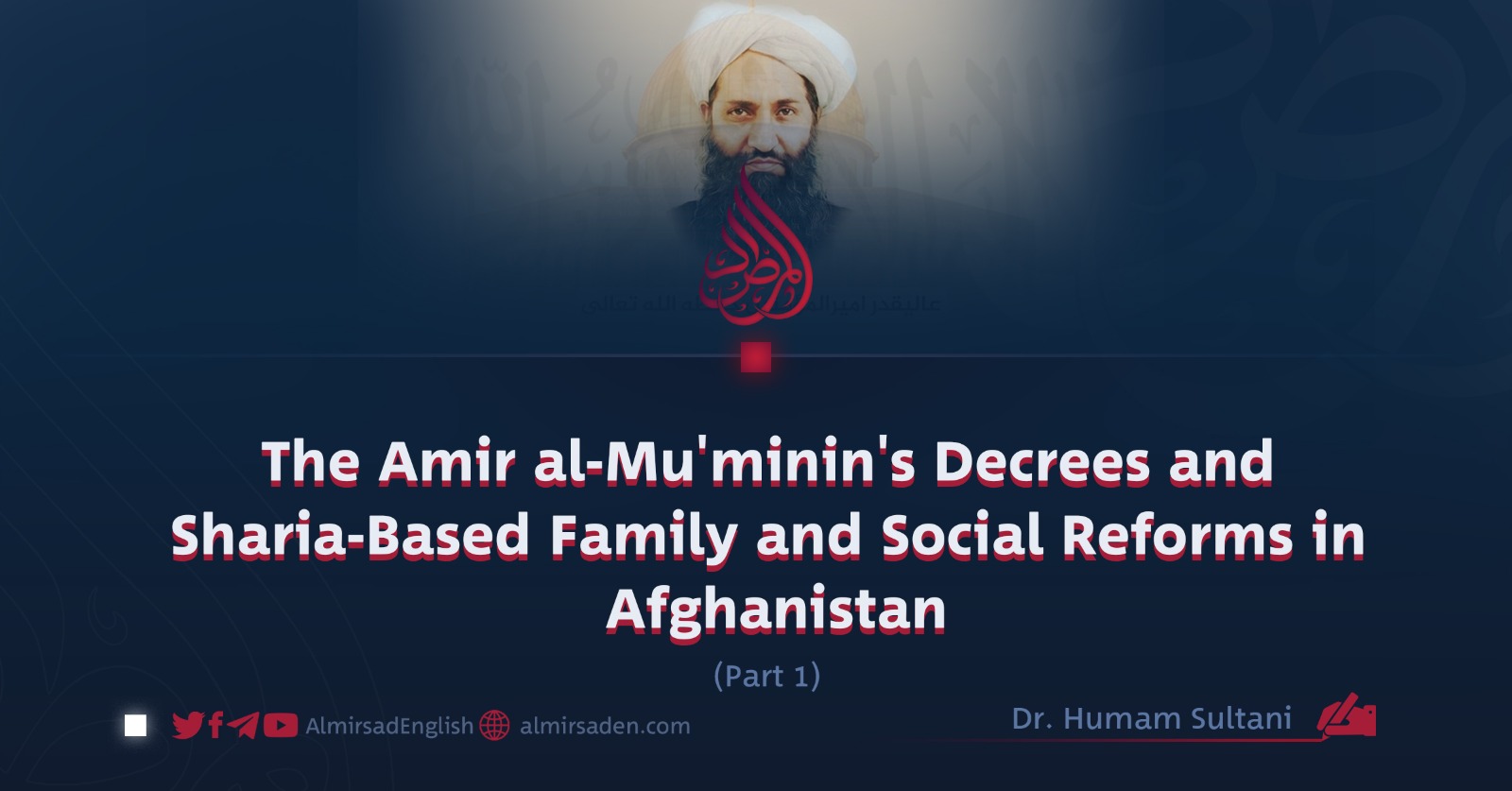
The Amir al-Mu’minin of the Islamic Emirate of Afghanistan, Sheikh al-Quran wal-Hadith Mawlawi Hibatullah Akhundzada (HA), has issued decrees at various times giving guidance on a number of these social matters. These decrees matter because they give state-level guidance for reforming social problems directly tied to people’s daily lives, family stability, financial rights and social morals.
But in a research-based, scholarly assessment, three matters should be examined separately from one another:
First: What does the decree order? Second: What is the Sharia basis of that ruling? Third: What practical change has come in society from implementing that ruling?
In this article, the subjects of these decrees are surveyed systematically, and their Sharia evidence, social significance, reform aims and the needs of practical implementation are examined.
Section One: Women’s Rights and the Protection of Family Life
1\. Decree No. 83/Vol 1 on Women’s Rights
The Foundational Decree
The decree of the Amir al-Mu’minin, Sheikh al-Quran wal-Hadith Mawlawi Hibatullah Akhundzada, issued on women’s rights holds particular weight in family and social reform in Afghanistan.
Decree number: 83/Vol 1, serial number 1432
This decree sets out six fundamental rights of women:
First: A woman’s consent in Nikah
An adult woman can’t be forced into nikah without her consent. It’s the responsibility of the father, brother and the family’s other guardians to give weight to the woman’s opinion and consent in the matter of nikah.
The Messenger of Allah (PBUH) said:
“لَا تُنْكَحُ الْأَيِّمُ حَتَّى تُسْتَأْمَرَ، وَلَا تُنْكَحُ الْبِكْرُ حَتَّى تُسْتَأْذَنَ”
“A widow or divorced woman must not be married until she is consulted, and a virgin must not be married until her permission is sought.” [Sahih al-Bukhari, Book of Marriage, Hadith 5136; Sahih Muslim, Book of Marriage, Hadith 1419]
The aim of this ruling is that nikah not be treated as merely a family or tribal decision, and that it be recognized as a Sharia contract in which the woman’s consent is essential.
Second: Giving women away in settlement of family disputes is forbidden
The decree gives guidance on reforming a custom under which, in some tribal areas, a girl was handed to another family to settle murder, enmity, war or family disputes. This act conflicts with a woman’s dignity, freedom and Sharia rights. An innocent woman must not be made to bear the consequences of another person’s crime or a dispute between families.
Allah (SWT) says:
﴿وَلَا تَزِرُ وَازِرَةٌ وِزْرَ أُخْرَىٰ﴾ (Al-An’am 164)
“And no bearer of burdens will bear the burden of another.”
Third: A widow’s right to Nikah
After her husband’s death or a divorce, a woman can’t be forced into nikah with anyone else without her consent. Within Sharia limits, she has the right to decide whether and whom to marry.
Allah (SWT) says:
﴿فَلَا تَعْضُلُوهُنَّ أَنْ يَنْكِحْنَ أَزْوَاجَهُنَّ إِذَا تَرَاضَوْا بَيْنَهُمْ بِالْمَعْرُوفِ﴾ (Al-Baqarah 232)
“Do not prevent them from remarrying their [former] husbands if they agree among themselves on an acceptable basis.”
In its own context, this verse concerns a divorced woman’s remarriage to her former husband. It also shows, though, that wrongly obstructing a woman’s right to nikah is forbidden.
Fourth: The mahr is the woman’s personal property
The decree makes clear that a woman’s mahr is her personal right under Sharia. Her father, brother, paternal uncle or another relative can’t seize this property without her consent.
Allah (SWT) says:
﴿وَآتُوا النِّسَاءَ صَدُقَاتِهِنَّ نِحْلَةً﴾ (An-Nisa 4)
“And give the women [upon marriage] their [bridal] gifts graciously.”
This ruling carries particular weight for reforming the social practices in which a heavy mahr is set in the woman’s name but family members take the money into their own hands.
Fifth: A woman’s right to inheritance
The decree directs that women shouldn’t be deprived of inheritance. Daughters, sisters, mothers and widows are each entitled to their respective shares of an estate, according to their Sharia relationship and the presence of other heirs.
Allah (SWT) says:
﴿لِلرِّجَالِ نَصِيبٌ مِّمَّا تَرَكَ الْوَالِدَانِ وَالْأَقْرَبُونَ وَلِلنِّسَاءِ نَصِيبٌ مِّمَّا تَرَكَ الْوَالِدَانِ وَالْأَقْرَبُونَ﴾ (An-Nisa 7)
“For men is a share of what the parents and close relatives leave, and for women is a share of what the parents and close relatives leave, be it little or much – an obligatory share.”
This verse sets a share in inheritance for both men and women. For this reason, depriving a woman of inheritance merely because she goes to another family after marriage, or leaving her share in her brothers’ hands, isn’t right under Sharia.
Sixth: Justice among several wives
In the case of polygamy, the decree recommends fulfilling the wives’ rights and observing justice.
Allah (SWT) says:
﴿فَإِنْ خِفْتُمْ أَلَّا تَعْدِلُوا فَوَاحِدَةً﴾ (An-Nisa 3)
The aim of this ruling is that the permission to marry several women should not become a means of depriving any wife of her rights or of injustice toward her.
Positive Results and Social Effect of This Decree
This decree is regarded as an effective step in protecting women’s Sharia rights in nikah, dignity, property ownership, inheritance and married life. Implementing it has paved the way for preventing forced marriages of women, the loss of inheritance rights and wrongful interference in nikah matters. The decree also has considerable value for strengthening the family’s foundation, protecting women’s Sharia rights and spreading justice and fairness in society.