







Part 9
Dr. Humam Sultani
The Salafi Scholars’ Pledge of Allegiance, the Martyrdom of the IEA’s Scholars and Officials and the Exploitation of Religious Disagreements
One notable aspect of the accusations spread about relations between the Islamic Emirate of Afghanistan (IEA) and the various religious and juristic groups in Afghanistan is that in many cases, the historical events and evidence that show mutual cooperation, understanding and political trust are ignored. In particular, some circles present the relationship between Salafi scholars and the IEA as if the two had been enemies of each other from the start, and as if no possibility of cooperation or agreement had ever existed between them. In my view, this general picture doesn’t fully reflect historical facts, because the history of these relations includes many examples of pledges of allegiance (bay’ah), meetings, cooperation and mutual contact.
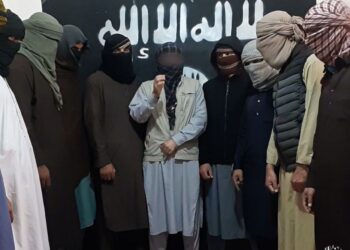
In March 2020, a representative delegation of Afghan Salafi scholars, led by Sheikh Abdul Aziz Nuristani, announced a pledge of allegiance and loyalty to the IEA. According to reports, 32 influential Salafi scholars and commanders took part in that meeting. This wasn’t merely a ceremonial visit. It showed that support for the IEA wasn’t limited to Hanafi and Deobandi scholars; influential Salafi figures had also expressed their cooperation and connection with it.
Later, in August 2021, when the IEA returned to power, delegations of Salafi scholars met with the IEA leaders as well. In these meetings, they discussed mutual cooperation, religious activities, peace and security and other social matters. Given these events, the claim that all of Afghanistan’s Salafi scholars oppose the IEA is historically wrong. The real fact is that the IEA and Salafi scholars share a considerable record of cooperation and understanding, one that a propaganda narrative of sectarian enmity can’t erase.
It’s worth noting that not all members of any religious group hold the same political and social position. The views and priorities of scholars, religious figures and ordinary followers can differ from one another. For this reason, the conduct of one individual or group shouldn’t be attributed to a whole school of thought, and responsibility for it should fall only on that individual or group. By the same principle, the Salafi scholars and figures who chose the path of cooperation and pledging allegiance to the IEA can’t be overlooked either.
In Islamic history, juristic disagreement is nothing new. The imams of the four madhhabs disagreed on many secondary issues, yet those disagreements strengthened the tradition of scholarly research, reasoning and ijtihad within the ummah. The differences in the scholarly methodologies (manhaj) of Imam Abu Hanifa (rh), Imam Malik (rh), Imam Shafi’i (rh) and Imam Ahmad ibn Hanbal (rh) remain, but their services to jurisprudence are part of the ummah’s shared scholarly heritage. For this reason, making a juristic disagreement a tool of mutual enmity, malice or takfir conflicts with the spirit of the Islamic scholarly tradition.
Allah (SWT) says:
﴿إِنَّمَا الْمُؤْمِنُونَ إِخْوَةٌ فَأَصْلِحُوا بَيْنَ أَخَوَيْكُمْ وَاتَّقُوا اللَّهَ لَعَلَّكُمْ تُرْحَمُونَ﴾ (Al-Hujurat 10)
“The believers are but brothers, so make settlement between your brothers. And fear Allah that you may receive mercy.”
This Quranic guidance teaches Muslims to choose the path of reform, justice and brotherhood alongside their disagreements. For this reason, it’s not right to look at a Muslim with suspicion, count him an enemy or call him untrustworthy only because he belongs to another juristic madhhab. Differences of opinion and madhhab shouldn’t turn into enmity; Muslims should deal with one another with mutual respect and fairness.
The Scholars and Officials of the IEA Targeted by Daesh
The second aspect of this discussion is that in its terrorist attacks, the Daeshi Khawarij haven’t targeted only Salafi scholars. Scholars, religious figures and government officials connected to the IEA have also become victims of this group’s terrorism. Sheikh Rahimullah Haqqani was martyred in a suicide attack in Kabul on August 11, 2022. Mawlawi Mujib ur-Rahman Ansari fell victim to a suicide attack at the Guzargah mosque in Herat on September 2, 2022.
The governor of Balkh, Mawlawi Mohammad Dawood Muzammil, was martyred on March 9, 2023, in Mazar-i-Sharif; the deputy governor of Badakhshan, Mawlawi Nisar Ahmad Ahmadi, on June 6 of the same year in Faizabad; and the Minister of Refugees and Repatriation Affairs, Haji Khalil ur-Rahman Haqqani, on December 11, 2024, in Kabul, each in a Daesh attack. Daesh claimed responsibility for all of these attacks.
These incidents make plain that Daesh terrorism isn’t limited to one juristic or religious circle. It has also targeted scholars, religious figures and government officials from various schools of thought, including those who opposed this group’s ideas and terrorist acts. This shows that Daesh’s enmity isn’t aimed at one madhhab; the group’s arbitrary ideological standard supplies a pretext to attack any opponent.
Allah (SWT) says:
﴿وَمَنْ أَظْلَمُ مِمَّنْ مَنَعَ مَسَاجِدَ اللّٰهِ أَنْ يُذْكَرَ فِيهَا اسْمُهُ وَسَعَىٰ فِي خَرَابِهَا﴾ (Al-Baqarah 114)
“And who are more unjust than those who prevent the name of Allah from being mentioned in His mosques and strive toward their destruction.”
Targeting mosques and worshippers is a grave form of this same injustice. Attacking places of worship and killing innocent people at prayer isn’t just an assault on human life; it’s open opposition to the sanctity of religious rites.
The IEA’s Relations with the Shia
Part of Afghanistan’s religious and social fabric is the Shia population. After the IEA returned to power, Shia religious and social representatives met with the new government’s officials, offered their cooperation for the country’s peace and stability and kept up their relations in administrative matters.
On the other hand, Daesh Khorasan (ISIS-K) has also targeted Shia places of worship and civilians in Afghanistan in bloody attacks. The suicide attack on October 15, 2021, at the Bibi Fatima Mosque in Kandahar is one painful example, in which more than fifty people were killed. This incident made clear that Daesh terrorism doesn’t target one religious group alone; ordinary people and worshippers from various schools of thought have also fallen victim to its attacks.
It is stated in the Holy Quran:
﴿وَلَا يَجْرِمَنَّكُمْ شَنَآنُ قَوْمٍ عَلَىٰ أَلَّا تَعْدِلُوا ۚ اعْدِلُوا هُوَ أَقْرَبُ لِلتَّقْوَىٰ﴾ (Al-Ma’idah 8)
“And do not let the hatred of a people prevent you from being just. Be just; that is nearer to righteousness.”
The demand of this verse is plain: disagreement and opposition can never justify injustice toward anyone. In dealing with every religious and sectarian group, the principles of justice and fairness must be kept in mind in all circumstances.
The Lands of Religious Institutions and the Question of State Land
In Afghanistan, disputes over bringing some religious institutions, madrasas and other buildings under state control, or over their ownership, have also been raised within the framework of religious disagreements. In this matter, it’s necessary to recognize one foundational distinction. If a piece of land is state property and an official of the previous government, misusing his powers, illegally handed it over to a person, organization or religious institution, then recovering that land is, at root, a legal and administrative question. The mere fact that the institution concerned is connected to a particular religious school of thought can’t make this step sectarian enmity.
Under previous governments in Afghanistan, there were problems of the illegal seizure of state lands, illegal distribution and the transfer of state property by influential people. For this reason, steps to recover state lands should be examined in light of their legal history.
In the same way, if an institution’s ownership is established under Sharia and law, protecting it is also required. Merely because an institution was built in a particular period or is tied to a particular madhhab, its ownership can’t be treated as suspect. Likewise, illegal seizure of state land can’t be called lawful merely because a religious or sectarian institution has been built there. In both cases, ownership documents, legal status and Sharia principles should be the standard for the decision.
In Islamic Sharia, wrongly stripping a person or institution of lawful ownership is not permitted. The Messenger of Allah (PBUH) said:
“مَنِ اقْتَطَعَ شِبْرًا مِنَ الْأَرْضِ ظُلْمًا، طَوَّقَهُ اللّٰهُ إِيَّاهُ يَوْمَ الْقِيَامَةِ مِنْ سَبْعِ أَرَضِينَ”
“Whoever unjustly usurps even a handspan of land, Allah will encircle his neck with it from seven earths on the Day of Resurrection.” (Sahih al-Bukhari 2453; Sahih Muslim 1612)
This hadith shows the great sin of illegal land seizure and its consequences. By this same principle, the illegal seizure of state land is a matter for accountability, and so is the wrongful confiscation of a person’s or religious institution’s lawful property. For this reason, if a religious institution really has been built on state land illegally, action can be taken against it under law. But if its ownership is established under Sharia and law, wrongly confiscating it isn’t permitted either.
State Order, Religious Diversity and the Demand for Fairness
Lasting peace and religious harmony in Afghanistan can be strengthened when all peace-loving people are assured that the protection of their lives, property and lawful religious activities isn’t conditional on their juristic or religious affiliation. A government’s religious policy can’t be judged only by the juristic basis of its judicial system. It should also be seen how the people tied to various schools of thought are treated in practice, and how far their lawful rights are protected.
From all these events and pieces of evidence, it’s clear that it’s wrong to count Daesh terrorism as limited to one religious or sectarian group, because in this group’s attacks, scholars, religious figures and ordinary Muslims from various religious groups have been targeted. Likewise, the Salafi scholars’ pledge of allegiance, the relations of government officials with the Shia and the legal disputes over religious institutions shouldn’t be assessed from one single viewpoint. Each matter has its own background, nature and evidence, and a fair conclusion can be drawn from it only in their light.
For this reason, blaming Daesh’s crimes on one madhhab, and calling every disagreement and complaint religious persecution without investigation, both conflict with scholarly and Sharia fairness. The right path is that where injustice is proven it should be admitted, and where an accusation is baseless the truth should be made clear on the basis of evidence. This same principle prevents religious disagreements from becoming a tool of political propaganda and helps secure fairness toward all sides.