




Arsala Hassan
Pakistan’s name doesn’t rest on the military regime alone. Millions of people live there too, and most of these people are Muslims. Alongside the rites and symbols of Islam, they also share a great many customs, cultures, and traditions with the rest of the world’s Muslims, and with Afghans in particular.
They’ve lived as neighbors to Islamic countries for years, and alongside that, either they themselves or peoples of other countries have gone to them as migrants. Pakistan’s own people, like other Muslims, deserve every life facility and right that should be theirs. One of these rights is the nature of the system ruling over the people, which should be fully Islamic, and the rulers over the people should be people who give them all their rights in life.
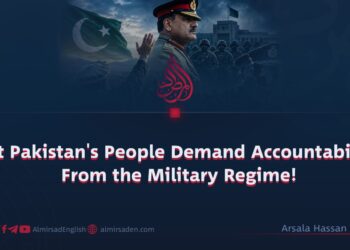
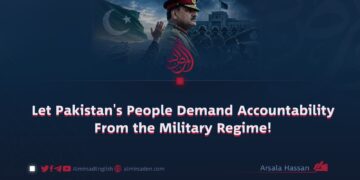
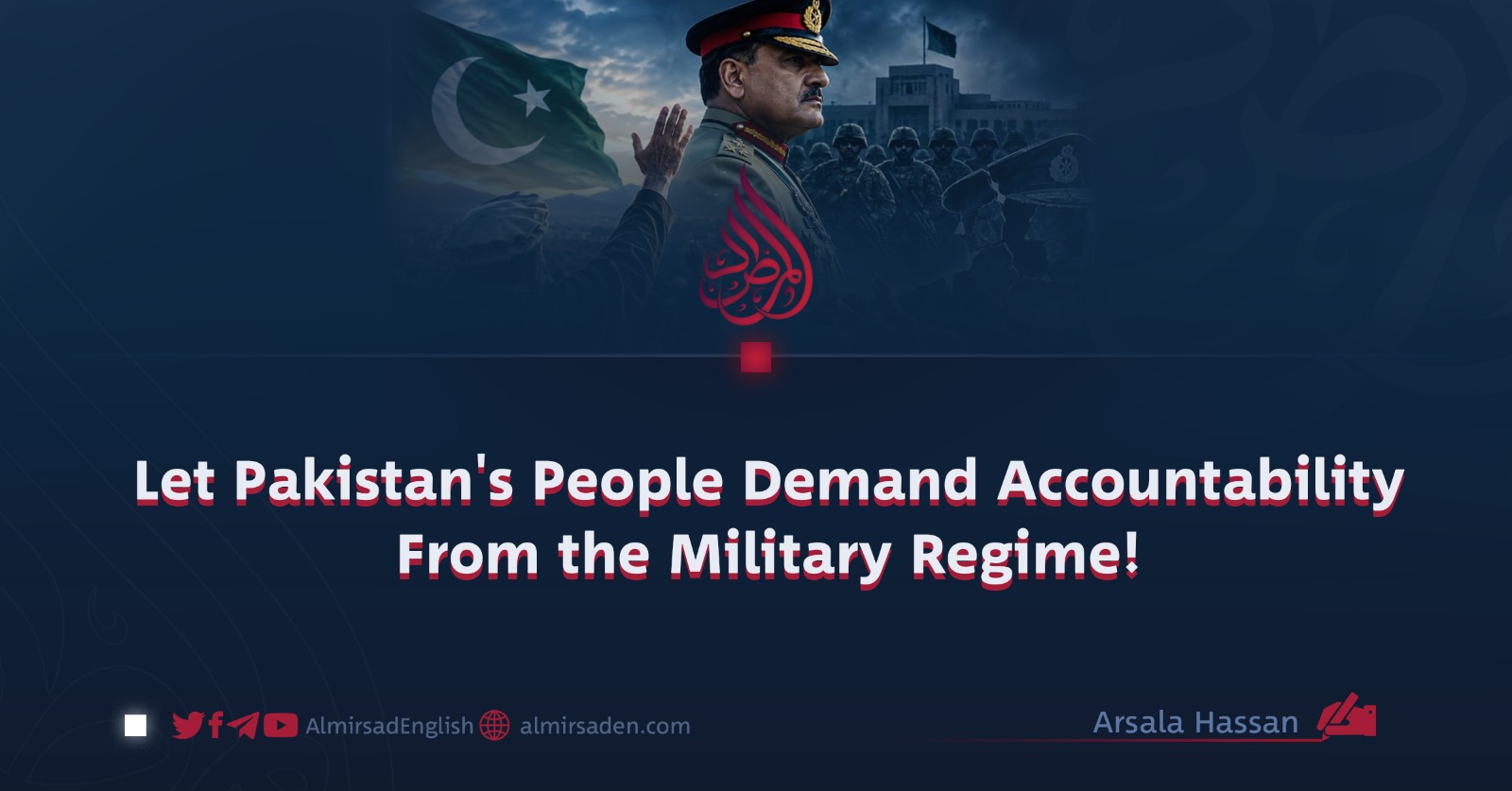
Their lives should be protected, their honor, their property, their intellect, their faith, everything that counts as a rightful claim for Muslims should be safeguarded. Instead, a regime rules over Pakistan’s disputed soil that has completely deprived its own people of all the rights listed above.
Instead of maintaining peaceful, mutually respectful relations with the countries of the region and its own neighbors, and building a secure governance for its own people, Pakistan’s military regime takes on other anti-Islamic, anti-peace projects, uses them against its own people and against its neighbors, and secures its own wretched existence and extracts tribute through them.
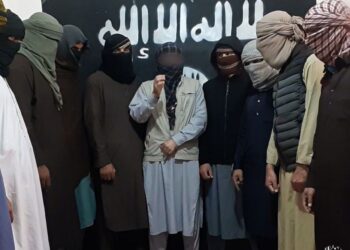
They’ve made every kind of room for terrorism on their own soil. They keep various terrorist groups, train them, and build camps for them to live and hide in. Daesh and the wicked remnants who fled Afghanistan’s former collapsed Republic organize themselves there, are trained along the Durand Line, have posts built for them, and are then used against the people of Afghanistan and Pakistan both, which is a major danger not just for Afghanistan and Pakistan, but for the whole region.
The military regime’s recent airstrikes on Afghan soil raise, once again, the worrying prospect of the crisis between Afghanistan and Pakistan entering a dangerous stage. The number of civilians, women, and children martyred and wounded in these strikes is worrying. Pakistan’s own people should ask themselves: can one country’s internal security problems really be solved by bombing another country’s villages, homes, civilian infrastructure, and people?
Pakistan has for years been facing insecurity, unemployment, political crisis, economic pressure, and rising security incidents. Instead of searching for the roots of these problems within its own land, it instead dumps the blame onto others. Expanding the war toward Afghanistan creates further problems for Pakistan’s own people too: war eats up the budget, weakens the economy, damages investment and trade, and puts people’s lives on both sides of the line at risk.
But the solution to this problem isn’t targeting civilians’ homes in the name of fighting terrorism. If some specific terrorist target exists, proof of it should be presented, and necessary measures should be taken, in keeping with the rules of war, to protect civilians.
The 2026 Mecca Pact, an agreement between Saudi Arabia, Turkey, and Pakistan, defines an attack on one member as an attack on all. Pakistan’s regime is using this as a tool, pursuing its own wretched goals under these very pure names. Regarding any kind of expanding military tension against Afghanistan, this question also needs to be raised: don’t these kinds of actions clash with Pakistan’s regional stability, its new defense commitments, and the principles it has declared for its relations with Islamic countries?
Pakistan’s people should understand that their own economic problems can’t be solved by killing Afghan children; their security isn’t secured by bombing another country; and spilling Muslim blood on both sides of the line can’t build the region’s future.
The people of Pakistan and Afghanistan share a common history, faith, culture, trade, and family ties. Managing disputes, protecting civilians, and economic cooperation serve the interests of the people of both countries, not expanding the war.