




















Ajmal
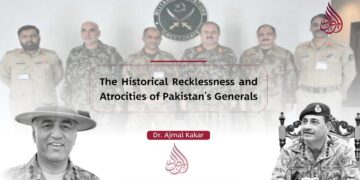
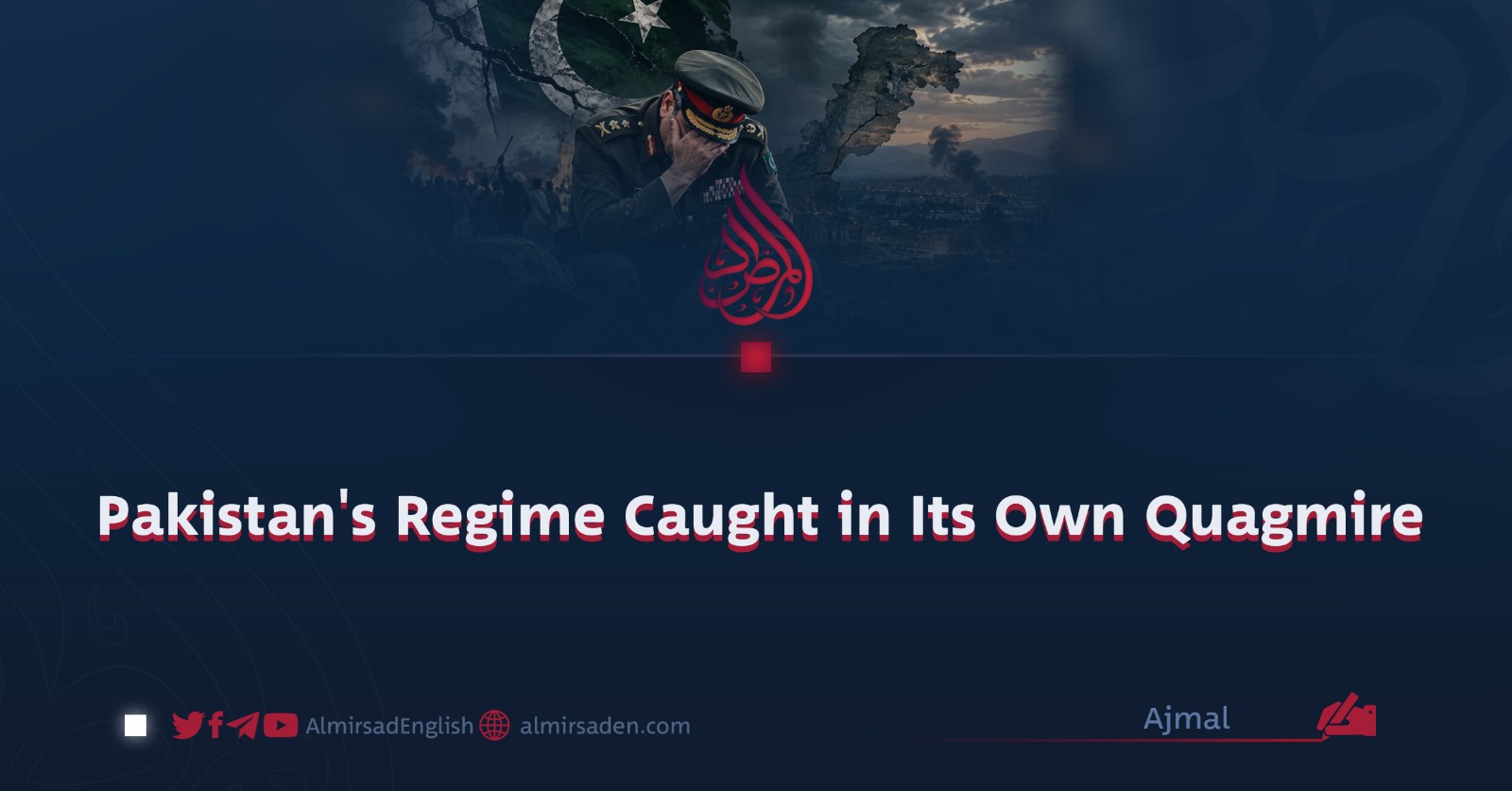
In recent years, Pakistan’s military regime has proven again and again that it seeks its survival not through honesty with its own people, but through concealment, sowing division, and inventing imaginary enemies. Now that this regime has sunk into a swamp of political, economic, and internal security crises, it is once again trying to point the finger at its northern neighbor to turn the Pakistani people’s attention away from its own domestic troubles. This old, worn-out tactic no longer fools even world opinion, let alone the people of Pakistan themselves, who have understood quite well by now that the real actors in this show are the same men sitting behind closed doors in the halls of power in Islamabad.
One of the clearest goals of this policy is to cover up the Pakistani army’s major security failures. The explosions, the attacks by militant groups, and the rising insecurity in Khyber Pakhtunkhwa and Balochistan are all plain signs of the structural weakness and incompetence of this country’s security institutions. Rather than have Pakistani officials answer for these failures, they prefer to blame Afghanistan, divert public opinion, and free themselves from the burden of responsibility.
Beyond this, Pakistan’s military regime has also shown a double and contradictory approach to its obligations under the “Mecca Joint Defence Agreement.” Not only did Pakistan take no effective military step in practice to defend its ally, but its officials also carefully avoided any explicit commitment to military action, despite the fact that the Pakistani army chief had earlier declared that “Pakistan’s commitment to Saudi Arabia’s security is unconditional and will go to the furthest extent.” But out in the field, Islamabad showed that it does not even honor its own public, written commitments to Riyadh, and instead wants to look engaged by carrying out cowardly attacks on Afghanistan, so it can slip out from under its obligations to Riyadh.
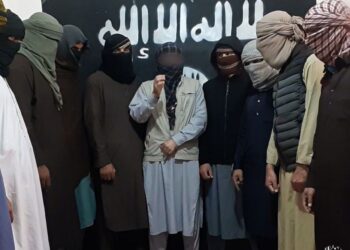
For its part, the Islamic Emirate of Afghanistan (IEA) has always tried to play a constructive role in securing the region. From its serious fight against terrorist groups to preventing Afghan soil from being used against neighbors, all of this stands as proof of Kabul’s good faith. But Pakistan’s regime has not only ignored these steps, it has, through its hidden and open support for ISIS and other extremist groups, turned itself into the very source of instability in the region. The wicked project of evil and corruption that was designed with the cooperation of certain Pakistani circles has now failed, and the same designers have been forced to step directly into carrying out attacks themselves once again.
The most dangerous scenario now on the table is that the ISI might carry out explosions of its own among protesters in Islamabad, or arrange drone attacks, and then blame Afghanistan for them. These devilish plots, designed to wage psychological war and justify failure, show the depth of this regime’s desperation and helplessness. But it should be understood that the era of such dirty games has come to an end, and the region’s public opinion will no longer be fooled by these repeated scenarios.
It must be said plainly that Afghanistan today is not the Afghanistan of yesterday. The IEA’s military capabilities have grown remarkably in recent years, and it has the ability, should it become necessary, to strike any point inside Pakistan. The coordinates of all important military installations, military infrastructure, advanced military equipment, and important civilian infrastructure in Pakistan are already in the hands of Afghan forces, and the Afghan Air Force will strike them at the earliest opportunity, at the right time. This is a real threat, and Pakistan’s military regime should take it seriously.
Pakistan’s military regime should know that it will face severe punishment for its crimes. History has shown that no power has ever managed to stand firm against truth and justice. The people of Pakistan are themselves victims of their army’s destructive policies, and a day will come when both the Afghan nation and the Pakistani nation settle accounts with these criminals. Miscalculations will carry a heavy price, and this regime will, sooner or later, pay for all its mistakes.
What has plunged Pakistan into a swamp of its own making today is not the conspiracy of foreign enemies, but a pile of wrong decisions, contradictory policies, and shelter given to groups that were themselves once tools of pressure against others and have now turned around to bite them. This country, through its hidden and open support for terrorism, its repeated violations of international commitments, and its preference for factional interests over national security, has laid the very ground for its own isolation.
The path to peace and cooperation remains open, but not from a position of weakness and not by continuing its double-dealing policies. If Pakistan’s regime is truly looking for lasting security for itself and the region, it must stop supporting terrorism, fulfill its commitments, and respect Afghanistan’s national sovereignty. Otherwise, the dark shadows that have fallen over Islamabad today will not take long to turn into a devastating storm.