





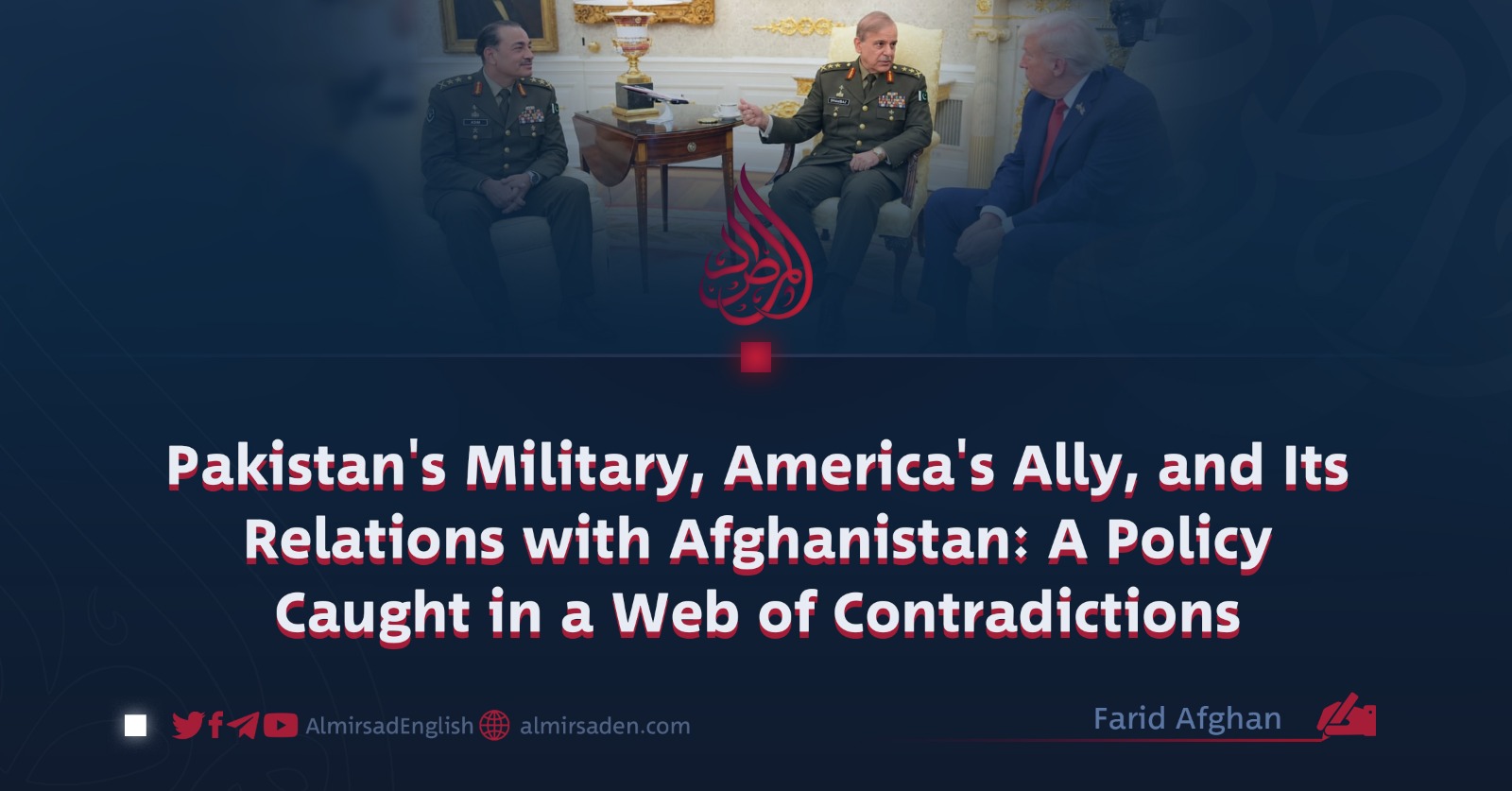
Farid Afghan
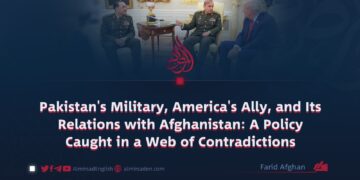
On the chessboard of world politics, when the pieces move, it’s usually the language of interests being spoken, not the language of principles. But when the talk is all principles and the actions are all interest, such a deep contradiction emerges that it can grind any state’s diplomatic standing straight into the dust.
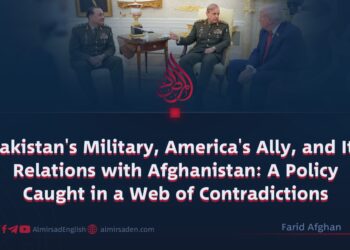
Between August and October 2025, the arena of Pakistan-Afghanistan relations put on exactly this kind of spectacle, one that laid bare, for the whole world to see, the contradictions running through Pakistan’s military and political ruling circles. Afghanistan, once called Pakistan’s own “strategic depth,” has now become such a puzzle for that country’s foreign policy that Islamabad, trying to solve it, keeps getting more tangled in its own web.
The story starts in August 2025. A visit to Pakistan had been scheduled for Afghanistan’s Foreign Minister Amir Khan Muttaqi, and both countries had made official announcements about it. At the time, Pakistan was also chairing the UN Security Council’s “Taliban Sanctions 1988 Committee.” One basic principle of diplomacy is this: if you’re hosting someone, you clear the way for them to come. As chair of that committee, Pakistan prepared the travel waiver documents exempting Afghanistan’s Foreign Minister from travel restrictions, but when the moment came to actually welcome him at home, the visit was cancelled or postponed at the very last minute.
It’s exactly like someone sending an invitation to a guest, even getting him a visa, but then, when the guest reaches the doorstep, shutting the door on him because of some family dispute or fear of the neighbors, and telling him, “Now isn’t a good time.” Behind this cancellation was pressure from the Pakistani army. The army wanted to show its own people that it held a hard line against Kabul on the issue of TTP, but in doing so it did serious damage to Pakistan’s own political and diplomatic credibility.
This contradiction later turned into a full-blown storm when, in October 2025, this same Afghan foreign minister made a historic six-day visit to New Delhi, India. This was the very same trip for which the committee chaired by Pakistan, alongside Russia, had also helped facilitate the travel clearance.
In other words, the guest Pakistan had refused to host in its own home was, thanks to the very permission granted under Pakistan’s own chairmanship, now walking the red carpet at the home of Pakistan’s traditional rival, India. This situation stirred up sharp frustration and anger inside Pakistan. In response, the Pakistani military held a press briefing where diplomatic etiquette was thrown out the window entirely. The army’s spokesman reached back into the pages of history for stories of Ghori, Ghaznavi and Somnath, and taunted the Afghan authorities: “Your fathers and forefathers were idol-breakers, but today you’re shaking hands with idol-worshippers.”
That wasn’t the language of a responsible institution belonging to a nuclear state. It sounded more like the language of rude street kids who, after losing a game, turn to personal insults and taunts. This is exactly where the biggest intellectual contradiction of Pakistan’s ruling circles comes into view, and we can understand it through three simple examples: if shaking hands with a non-Muslim government, or one aligned with Hindutva ideology, is a religious sin or a betrayal of history, then Pakistan itself has been America’s biggest ally for decades.
China, an openly atheist state, is the friend whose friendship Pakistan calls “higher than the Himalayas and sweeter than honey.” If the Pakistani army can swing between friendships with Washington and Beijing for its own economic and defense interests, and beg for ten billion dollars in charity, then why can’t Afghanistan, which needs its own economic reconstruction, turn to New Delhi or Moscow for its own survival?
One thing Pakistan’s military ruling circles say is that they’re fighting terrorism and won’t compromise on it at all. But on the other hand, these same circles have also advocated at UN meetings for the world to formally recognize the Islamic Emirate of Afghanistan (IEA). It’s exactly like someone appearing in court during the day, giving arguments before a judge in support of bail for an accused person, only to appear on television that same night calling that very defendant the world’s biggest criminal and demanding his execution.
One of Pakistan’s feet stands on Washington’s doorstep, asking for IMF loans and international aid; the other foot stands on the region’s own ground, where it’s forced to maintain relations with Afghanistan and China. Because of this same geopolitical pressure, whenever America glares at it, the Pakistani army pulls away from the IEA, and whenever domestic security worsens, the entire blame gets dumped on Kabul.
These contradictions in Pakistan’s military and political ruling circles have turned this country’s foreign policy into a spectacle. The world no longer takes Islamabad’s words seriously, because everyone knows there’s no fixed foundation of principle here. When you try to buy cheap fame through emotion, religion, and history, and shape your own people’s mindset at home, the harsh realities of global geopolitics eventually bring you face to face with your own truth.
The very Afghanistan Pakistan called its “strategic depth” for twenty years is now so close, diplomatically and commercially, to India and the surrounding world, that this closeness has come to outweigh even Pakistan’s own geographic proximity to Afghanistan. And in this whole game, Pakistan’s army finds itself alone, caught in the contradictions of its own words.