


Akbar Jamal
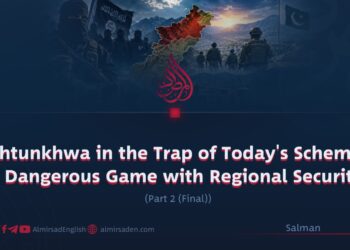
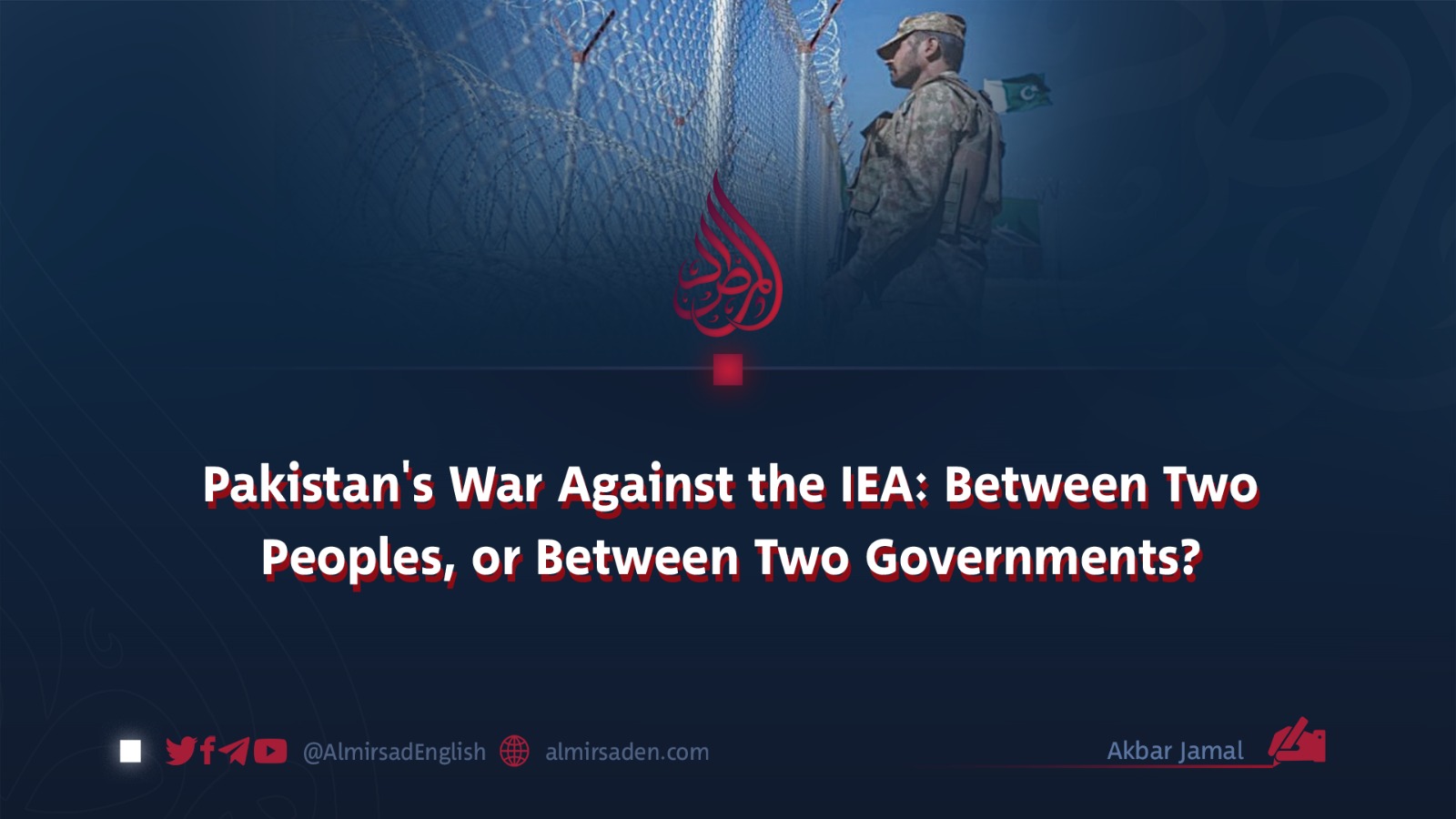
On both sides of the Durand Line, in that grey air where the smell of gunpowder spreads and the crack of artillery can be heard, a question rises in the hearts of ordinary Muslims living on both sides of the line, a question that shakes them from within. People ask each other, bewildered and anxious: what kind of war is this, being fought on the soil of Muslims who all recite the same kalima? Is this a war between two brothers who share one faith, one history, one culture, one qibla? Or is it just a political and border dispute between two states?
But when we sink this worry and this question down to its root, and clear away the geographic and historical dust covering it, this truth comes into plain view: this is neither ethnic enmity between two peoples, nor merely the traditional border clash between two neighboring countries. At its foundation, this is a clash between two opposing systems, two different ways of thinking, two separate sets of priorities.
To untangle this knot, before anything else, we have to accept this truth: the Islamic Emirate of Afghanistan (IEA) neither wants war with Pakistan, nor has it ever chosen the path of war itself. Kabul’s approach and conduct is clear proof of this. It wants lasting peace with Islamabad, mutual respect, and stronger trade and diplomatic ties.
From the IEA’s point of view, Pakistan isn’t some foreign or alien land, whatever the nature of its political and military ruling class, it’s an awake and living Muslim region as far as its people are concerned. Towers of learning and faith have stood there for centuries, its mosque rows are full, its scholars are respected, and the symbols of Islam are honored in its streets and lanes. Beyond that, the ties of kinship stretched between these two lands are strong enough that no political storm can tear them apart. Whether it’s historical bonds or political and trade needs, tribal kinship or geographic continuity, the people on both sides of that line live intertwined lives.
Take, for example, the tribes settled on both sides of the Durand Line, their situation is like one house with a temporary wall thrown up in the middle of its courtyard. Some members of one family live on the Chaman or Torkham side, others on the far side. Their grief, their joy, their markets, even their graveyards, are shared. In such a situation, no wise leader could make the mistake of becoming fuel for war’s fire.
That’s exactly why, every time tension has risen along the Durand Line, or provocative actions have taken place, the IEA has drawn on great patience, careful judgment, and a cautious response. The IEA understands well that if this spark turns into flames even once, innocent Muslims on both sides will get caught up in it, and this needless tension will turn into a destructive disaster whose only beneficiaries will be the region’s own ill-wishers.
If, God forbid, this tension turns into full-blown war, the damage on both sides would be so devastating that even imagining it makes a person tremble. Take Afghanistan alone, the Afghan people have watched gunpowder smoke for more than four decades, carried hundreds of thousands of coffins, and endured the hardships of exile. They’ve only just caught their breath in peace, and after decades of sacrifice, the sun of an Islamic system has finally risen here. War would mean putting this precious blessing of peace at risk, and turning back the whole process of progress and reconstruction to square one all over again.
On the other side, if we look at it from Pakistan’s angle, this war would be like a wealthy merchant’s very last bet, one that drags him into total bankruptcy. It is no secret how fragile Pakistan’s economy currently is. Its entire economic structure leans on the crutches of foreign loans and aid. On one hand it goes to China begging for old debts to be forgiven, on the other it asks Gulf countries, particularly Saudi Arabia, for long-term oil credit, and then it turns to America’s ruling circles, saying: “After 9/11, we sacrificed ninety thousand of our own civilians and soldiers in your so-called ‘war on terror,’ so in exchange for these services, you owe us billions of dollars in financial relief.”
When a country’s economic condition gets to the point where an ordinary person’s two daily meals become an unattainable dream, and poverty and destitution grow so severe that people search for a way out of their troubles in suicide, taking on a war in such a state is like chopping off your own foot with an axe. Pakistan’s internal social and economic crisis has become like a pile of gunpowder that only needs a single spark to ignite. People’s trust in their own ruling class has collapsed to such a degree that their patience has run dry, and things have reached the point of death and killing.
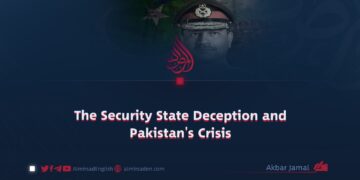
When we lay all these facts and this evidence out in front of us and examine the real nature of this war, the matter becomes as clear as the sun. This war isn’t between the Afghan and Pakistani peoples, nor is it a conventional war between two Muslim states, at its foundation, it’s a clash between two different paths and two different worldviews. On one side stands Afghanistan’s system, built on the rule of Islamic sharia, independence, and dignity. On the other stands the self-serving system of Pakistan’s military and political ruling class, which for decades has served as a tool for the interests of the West, America in particular.
You don’t need to turn back very old pages of history to understand this. After 9/11, when America unjustly attacked Afghanistan, Pakistan’s military ruling class, in exchange for its own short-term interests and dollars, agreed to become a frontline ally of the American coalition. It’s a plain fact how large a hand Pakistan’s military bases and logistical support had in the bombing campaign against the Afghan people and the system forced upon them. And when America, after twenty long years of struggle, suffered a heavy defeat in Afghanistan and withdrew in failure and despair, the old arrangement and its influence between the Pakistani army and America never disappeared.
The biggest and clearest proof of this comes from statements that have come out from inside Pakistan itself, admissions made in their own words. Ever since tensions were once again stirred along the Durand Line, many of Pakistan’s so-called politicians, analysts, and the operators of the army and intelligence services’ social media accounts have been claiming, with excitement and enthusiasm: “What America couldn’t do in twenty years, our brave army did in a few days!”
Stop for a moment and think about the deep meaning of that sentence. America didn’t come to Afghanistan to teach or educate, or to spread Islam. It came, as an oppressive tyrant, to destroy the Islamic system and prop up its own puppet regime, and it failed shamefully at that. Now, when supporters of the Pakistani army and its official position proudly say that what America couldn’t do in twenty years, the Pakistani army did in a few days, what other clear meaning can be taken from this except that whatever evil and anti-Islamic objective America left unfinished when it fled, Pakistan’s military regime has now taken on the responsibility of carrying that same false goal forward?
This is the point every Muslim needs to reflect on with insight and an open mind. Once these two different intellectual and political lines become fully clear, the matter stops being just about defense or ethnic and national sentiment, it becomes a test of thought and belief. It’s a lasting principle of Islamic sharia and human history that when a person stands in support of an idea, a system of truth or falsehood, and a particular line, he is counted among the people of that same line.
Worldly gain, slogans of ethnic pride, or short-term political interest can lead a person astray, but in the eternal system of the afterlife, judgment will rest on this very question: did this person support a system that serves falsehood, or did he stand shoulder to shoulder with a system built on truth and Islam?
For this reason, it’s obligatory on every believer to understand this fundamental distinction clearly, to set their religious and moral position without falling under the influence of propaganda, and to keep in mind that on the Day of Judgment, everyone will be raised alongside whichever line they chose to stand with in this world.